Global Hotspots of Mycorrhizal Fungal Richness Remain Largely Unprotected Amid Growing Climate Risks

The hidden biological infrastructure that sustains terrestrial life is facing a critical conservation gap that threatens global food security and climate stability. According to a landmark study led by the Society for the Protection of Underground Networks (SPUN), more than 90 percent of the world’s most significant mycorrhizal fungi biodiversity hotspots are located in ecosystems that currently lack any form of legal protection. The research, published in the journal Nature, warns that the continued neglect of these "ecosystem engineers" could severely undermine international efforts to reduce carbon emissions and build resilience against extreme climate events.
Mycorrhizal fungi form symbiotic relationships with the roots of nearly all land plants, creating vast subterranean networks that facilitate the exchange of nutrients for carbon. Despite their fundamental role in maintaining the health of forests, grasslands, and agricultural soils, these organisms have historically been excluded from global conservation agendas. The new findings from SPUN suggest that the loss of these networks would not only lead to a decline in biodiversity but would also trigger a cascade of ecological failures, including slower forest regeneration and the collapse of crop productivity.
The Biological Foundation of Terrestrial Life
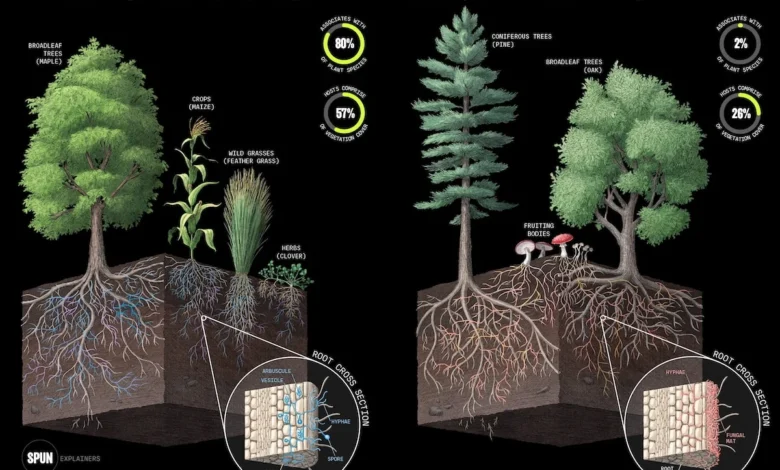
To understand the gravity of the conservation gap, it is necessary to examine the functional role of mycorrhizal fungi. Scientists categorize these organisms into two primary groups: arbuscular mycorrhizal (AM) fungi and ectomycorrhizal (EcM) fungi. AM fungi typically penetrate the root cells of grasses and many tropical trees, while EcM fungi wrap around the roots of temperate and boreal forest trees.
For over 450 million years, these fungi have been the silent partners of the plant kingdom. As Dr. Toby Kiers, Executive Director of SPUN, noted in a report shared by The Guardian, the colonization of land by plants was only possible because of these fungal networks. By breaking down minerals and scavenging for nitrogen and phosphorus, fungi provide plants with the essential building blocks for growth. In return, plants provide the fungi with carbohydrates produced through photosynthesis.
This ancient partnership does more than just feed plants; it builds soil structure and regulates the global carbon cycle. Current estimates suggest that mycorrhizal fungi are responsible for drawing more than 13 billion tons of carbon into the soil annually. This figure represents approximately one-third of the global emissions generated from burning fossil fuels. When these networks are disrupted—whether through intensive tillage, chemical fertilization, or land clearing—the stored carbon is released back into the atmosphere, and the soil’s ability to support life diminishes.
Mapping the Subterranean Frontier
The study represents the first large-scale scientific application of a mapping initiative launched by SPUN in 2021. To visualize the distribution of these underground communities, researchers analyzed a massive dataset consisting of over 2.8 billion fungal DNA sequences collected from 130 countries. By combining this genomic data with machine learning and environmental variables, the team created high-resolution, predictive maps of mycorrhizal biodiversity.

These maps have revealed that fungal diversity is not uniformly distributed but is concentrated in specific "hotspots" that house unique and endemic species. Some of the most significant communities were identified in the Guinean forests of West Africa, the temperate rainforests of Tasmania, and the Cerrado savanna in Brazil. However, the data also highlighted a troubling reality: only 9.5 percent of these critical areas fall within existing protected zones.
Dr. Michael Van Nuland, lead data scientist at SPUN and lead author of the study, emphasized that these maps are more than just academic tools. They provide a quantitative roadmap for conservationists who have traditionally focused exclusively on above-ground biomass. "Food security, water cycles, and climate resilience all depend on safeguarding these underground ecosystems," Van Nuland stated.
Overcoming Fungus Blindness in Conservation Policy
The historical exclusion of fungi from environmental policy is often referred to by experts as "fungus blindness." While mountains, oceans, and forests have been mapped and protected for centuries, the life beneath the soil has remained largely invisible to policymakers. Dr. Merlin Sheldrake, a biologist and impact director at SPUN, noted that the new atlas helps alleviate this blindness, providing the data necessary for fungi to be integrated into international treaties like the Convention on Biological Diversity.
The implications of ignoring these networks are profound. In agricultural settings, healthy fungal networks act as a natural defense system, protecting crops against pathogens and improving nutrient uptake. In the context of the climate crisis, these networks increase the resilience of plants to drought and heat stress. Without them, ecosystems are far more vulnerable to the "climate extremes" that are becoming increasingly frequent.
The research team argues that the disruption of these networks accelerates a feedback loop: as the climate warms, soil health declines; as soil health declines, the earth loses its capacity to sequester carbon, further accelerating warming. Protecting the "planetary circulatory system" of carbon and nutrients is therefore seen as a prerequisite for any successful climate mitigation strategy.
A Global Effort: The Underground Explorers
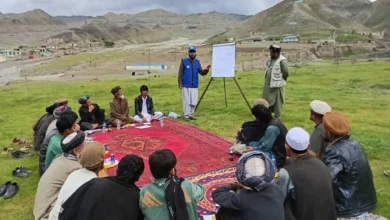
The publication of the Nature study is part of a broader, ongoing effort to document the world’s soil biodiversity. SPUN has mobilized an international network of 96 "Underground Explorers" from nearly 80 countries. This team, supported by more than 400 scientists, is currently sampling some of the most remote and politically complex regions on Earth, including Bhutan, Mongolia, Pakistan, and parts of Ukraine.
The scale of the task is immense. Despite the billions of sequences already analyzed, researchers estimate that they have sampled only 0.001 percent of the Earth’s surface. Nevertheless, the current dataset already includes 40,000 specimens representing approximately 95,000 mycorrhizal fungal taxa. Each new sample helps refine the predictive models used to identify where conservation interventions are most urgently needed.

The initiative has garnered support from high-profile advisors, including renowned primatologist Jane Goodall, authors Michael Pollan and Paul Hawken, and Fungi Foundation founder Giuliana Furci. Their involvement underscores a growing consensus that soil health is a cross-disciplinary issue that links conservation, agriculture, and human health.
Strategic Implications for Restoration and Policy
One of the most practical applications of the SPUN maps is in the field of ecological restoration. Historically, reforestation projects have often failed or underperformed because they focused solely on planting trees without considering the soil microbiome. Dr. Alex Wegmann, a lead scientist at The Nature Conservancy, pointed out that restoration practices have been "dangerously incomplete" because of this above-ground bias.
With high-resolution fungal maps, restoration managers can now identify what a healthy, diverse mycorrhizal community should look like for a specific region. This allows for more "informed" restoration, where soil can be inoculated with native fungi to ensure the survival and growth of replanted vegetation.
From a policy perspective, Jason Cremerius, SPUN’s chief strategy officer, suggested that underground biodiversity should become as fundamental to decision-making as satellite imagery is today. The goal is to establish "underground conservation corridors" that protect the continuity of these networks across different landscapes. Such corridors would prevent the fragmentation of fungal communities, which is essential for the long-term migration of plant species as they shift their ranges in response to a changing climate.
Conclusion: The Path Forward
The findings presented by SPUN and their collaborators serve as a wake-up call for the global environmental community. The revelation that 90 percent of mycorrhizal hotspots are unprotected suggests that current conservation strategies are missing a vital piece of the ecological puzzle.
As the world grapples with the dual crises of biodiversity loss and climate change, the "dark matter" of the biological world—the fungi beneath our feet—may hold the key to a sustainable future. The transition from "fungus blindness" to proactive underground conservation is no longer just a scientific preference; it is a necessity for maintaining the life-support systems of the planet.
The Society for the Protection of Underground Networks continues its mission to ensure that these invisible engineers are given a seat at the table in global climate negotiations. As Dr. Toby Kiers concluded, the maps reveal exactly what is at stake: "These maps reveal what we stand to lose if we fail to protect the underground." For a world increasingly defined by instability, the stability provided by these ancient fungal threads may be the most valuable resource we have yet to protect.
Related posts: