Global Hunger Rates Decline Overall but Surge Across Africa and Western Asia as Food Price Inflation Persists

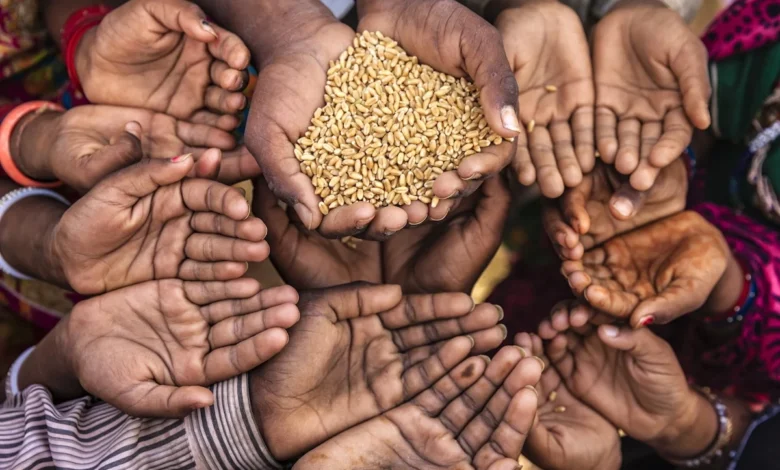
The state of global food security remains a tale of two worlds as significant progress in some regions is overshadowed by deepening crises in others, according to the latest edition of The State of Food Security and Nutrition in the World (SOFI) report. Published jointly by five specialized United Nations agencies—the Food and Agriculture Organization (FAO), the International Fund for Agricultural Development (IFAD), the United Nations Children’s Fund (UNICEF), the World Food Programme (WFP), and the World Health Organization (WHO)—the 2025 report reveals that while the total number of people facing hunger globally has seen a modest decline, the situation is deteriorating rapidly in Africa and Western Asia.
In 2024, approximately 8.2 percent of the global population, or roughly 673 million people, suffered from hunger. This figure represents a slight improvement from the 8.5 percent recorded in 2023 and the 8.7 percent in 2022. Despite this downward trend on a global scale, the sheer volume of those suffering remains significantly higher than pre-pandemic levels. The report estimates that between 638 and 720 million people faced hunger last year, highlighting the staggering scale of the challenge facing the international community as it nears the 2030 deadline for the Sustainable Development Goals (SDGs).
Regional Disparities: Progress and Regression
The 2025 SOFI report paints a stark picture of regional divergence. Asia, the world’s most populous continent, has seen notable improvements. Undernourishment in the region fell to 6.7 percent in 2024, a significant drop from the 7.9 percent reported just two years prior. Similarly, Latin America and the Caribbean have continued their recovery from a 2020 peak of 6.1 percent, with undernourishment rates falling to 5.1 percent, affecting approximately 34 million people.
However, these gains are contrasted by a "steady and alarming" rise in hunger across Africa. In 2024, the proportion of the African population facing hunger surpassed 20 percent, impacting an estimated 307 million people. This means that one in every five people on the continent is currently suffering from food deprivation. The situation in Western Asia is equally concerning, where hunger levels rose to 12.7 percent, affecting more than 39 million people. Many of these regions are currently grappling with prolonged conflicts, economic instability, and the intensifying effects of climate change, which have collectively disrupted local food systems.
FAO Director-General QU Dongyu emphasized that while the global decrease is encouraging, the unevenness of the progress is a call to action. "SOFI 2025 serves as a critical reminder that we need to intensify efforts to ensure that everyone has access to sufficient, safe, and nutritious food," Dongyu stated. He called for collaborative and innovative work with governments and communities to address the specific hurdles faced by vulnerable populations in persistent hunger zones.
A Chronology of Global Food Insecurity (2019–2025)
To understand the current state of global nutrition, it is necessary to examine the sequence of events that have shaped the last five years. The trajectory of global hunger was relatively stable, albeit high, until 2019. However, a series of global shocks created a "polycrisis" that derailed years of progress.
2019–2020: The Pandemic Shock
Before the COVID-19 pandemic, the number of undernourished people stood at approximately 589 million. The pandemic triggered massive disruptions in global supply chains, led to widespread job losses, and forced governments to implement lockdowns that restricted movement and trade. By the end of 2020, global hunger surged, adding tens of millions to the ranks of the undernourished.
2021–2022: The Conflict and Climate Catalyst
As the world began to emerge from the pandemic, Russia’s invasion of Ukraine in early 2022 sent shockwaves through global commodity markets. Russia and Ukraine are among the world’s largest exporters of wheat, maize, and sunflower oil, as well as critical fertilizers. The conflict led to a spike in energy and food prices. Simultaneously, 2022 saw extreme weather events, including historic droughts in the Horn of Africa and devastating floods in Pakistan, which crippled local agricultural production.
2023–2024: The Inflationary Aftermath
While global supply chains began to stabilize in 2023, the lingering effects of high food price inflation continued to plague low-income nations. Median global food price inflation, which was 2.3 percent in December 2020, peaked at 13.6 percent in early 2023. In low-income countries, the impact was even more severe, with inflation reaching 30 percent in May 2023. By 2024, while the total number of hungry people began to dip, the cost of a healthy diet remained out of reach for billions.
The Economic Barrier: Affordability of Nutritious Food
One of the most critical metrics highlighted in the SOFI 2025 report is the affordability of a healthy diet. While hunger refers to the lack of sufficient calories, food insecurity also encompasses the inability to access food that provides necessary vitamins and minerals.

Globally, the number of people unable to afford a healthy diet fell to 2.6 billion in 2024, down from 2.76 billion in 2019. However, this global improvement masks a worsening situation in the world’s poorest nations. In low-income countries, the number of people who could not afford a healthy diet rose to 545 million last year, compared to 464 million five years ago. In lower-middle-income nations (excluding India), the figure climbed from 791 million to 869 million over the same period.
In many low-income countries, a staggering 72 percent of the population—roughly 544.7 million people—cannot afford the basic requirements for a nutritious diet. This economic barrier has long-term implications for public health, as poor nutrition leads to a host of chronic conditions and developmental issues.
Impact on Child Development and Public Health
The human cost of food insecurity is most visible in the world’s youngest populations. UNICEF Executive Director Catherine Russell pointed out that over 190 million children under the age of five are currently affected by undernutrition. This condition can lead to stunting (low height for age) and wasting (low weight for height), both of which have irreversible consequences for physical and mental development.
"This robs them of the chance to live to their fullest potential," Russell said. She urged for a strengthening of social protection programs and increased education for parents regarding locally produced nutritious foods and the importance of breastfeeding.
WHO Director-General Dr. Tedros Adhanom Ghebreyesus noted that while there has been "good progress" in reducing stunting and supporting exclusive breastfeeding in recent years, the persistence of malnutrition remains a global health emergency. The report suggests that the "triple burden" of malnutrition—undernutrition, micronutrient deficiencies, and overweight/obesity—is increasingly coexisting within the same communities and even the same households.
Strategic Policy Responses and the Path to 2030
The UN agencies warn that the world is significantly off track to meet the Sustainable Development Goal of Zero Hunger by 2030. Current projections indicate that 512 million people will still be chronically undernourished by the end of the decade, with nearly 60 percent of them residing in Africa.
To reverse this trend, the SOFI 2025 report outlines several key policy recommendations:
- Monetary Policy: Implementing transparent and credible monetary policies to contain inflationary pressures and stabilize local currencies against global shocks.
- Social Protection: Establishing time-bound and targeted fiscal measures, such as cash transfers and school feeding programs, to shield the most vulnerable households from price spikes.
- Agrifood Transformation: Investing in agricultural research and development (R&D) to boost productivity and resilience. This includes improving market information systems and developing infrastructure for transportation and production.
- Rural Investment: IFAD President Alvaro Lario emphasized the need for "rural and agricultural transformation." He noted that these investments are essential not just for food security, but for global stability, as food scarcity is often a primary driver of migration and conflict.
Analysis of Global Stability and Food Security
The findings of the 2025 report suggest that food security is no longer just a humanitarian issue but a core component of geopolitical stability. The concentration of hunger in Africa and Western Asia—regions already prone to political volatility—creates a feedback loop where food insecurity fuels conflict, which in turn further destroys food systems.
The disparity in recovery between high-income and low-income nations also highlights a growing "nutrition gap." While wealthier nations have the fiscal space to subsidize food and support their citizens through economic downturns, low-income nations are often forced to choose between servicing international debt and feeding their populations.
The SOFI 2025 report serves as a definitive roadmap for the challenges ahead. While the slight decline in global hunger offers a glimmer of hope, the deepening crisis in Africa and the persistent unaffordability of healthy diets for billions suggest that the "Zero Hunger" goal remains an elusive target. The international community’s ability to coordinate on trade, climate action, and financial aid will determine whether the progress seen in Asia and Latin America can be replicated in the regions currently left behind.
Related posts: