Oil and Gas Expansion in the Democratic Republic of Congo Threatens Vital Gorilla Habitats and Global Climate Stability

The Democratic Republic of the Congo (DRC) is currently at a critical environmental and geopolitical crossroads as the government moves forward with plans to open more than half of its landmass to oil and gas exploration. According to a comprehensive new report titled "Forests to Frontlines: Oil Expansion Threats in the DRC," published by Earth Insight in partnership with several environmental organizations, the central African nation has initiated an auctioning round for 52 oil blocks. This expansion, which follows a previous and highly controversial 2022 auction of 30 blocks, now places approximately 306 million acres of intact tropical forest and vital wildlife habitat under direct threat of industrial degradation.
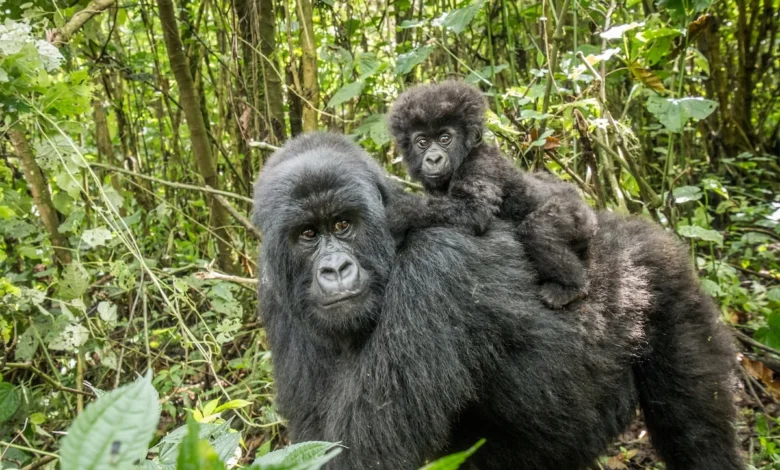
The scale of the proposed development is unprecedented, covering roughly 53 percent of the country’s total land area. The implications of this move extend far beyond national borders, as the DRC holds some of the world’s most significant carbon sinks and biodiversity hotspots. Environmental scientists and human rights advocates warn that the project could release a "carbon bomb" into the atmosphere while simultaneously decimating the habitats of some of the planet’s rarest species, including the mountain gorilla, the eastern lowland gorilla, and the bonobo.
The Ecological Significance of the Congo Basin
The DRC is the custodian of the majority of the Congo Basin, the second-largest tropical rainforest on Earth after the Amazon. This region is often referred to as the "second lungs of the planet" due to its immense capacity for carbon sequestration. The Earth Insight report highlights that the towering rainforest canopies and winding river systems form a rich mosaic of life that is essential for global climate regulation.
Among the most sensitive areas targeted for drilling are the Cuvette Centrale peatlands. This vast complex is the largest tropical peatland system in the world, storing an estimated 30 gigatons of carbon—an amount equivalent to approximately three years of total global fossil fuel emissions. If these peatlands are disturbed by the construction of roads, pipelines, and drilling rigs, the resulting drainage and decomposition of organic matter would release massive amounts of carbon dioxide and methane, significantly undermining international efforts to limit global warming to 1.5 degrees Celsius.
Furthermore, the DRC is a global epicenter for biodiversity. It is the only country in the world where bonobos—our closest primate relatives alongside chimpanzees—live in the wild. It also provides a final stronghold for the eastern lowland gorilla and the endangered mountain gorilla. The proposed oil blocks overlap with 20.5 million acres of officially protected areas and 21.3 million acres of Key Biodiversity Areas (KBAs). The fragmentation of these landscapes would not only lead to direct habitat loss but also increase the accessibility of these remote regions to illegal poaching and logging.
A Chronology of Oil Ambitions in the DRC
The current push for hydrocarbon expansion is the culmination of several years of shifting government policy in Kinshasa. While the DRC has long been a site of mineral extraction—most notably cobalt and copper—the shift toward large-scale oil and gas licensing has accelerated recently.
- 2005-2021: During this period, the DRC focused primarily on its mining sector while maintaining a public stance on forest conservation, often seeking international "REDD+" (Reducing Emissions from Deforestation and Forest Degradation) funding to preserve its canopy.
- July 2022: The DRC government launched a controversial auction for 30 oil and gas blocks. This move was met with immediate international backlash from climate scientists and environmental NGOs, who pointed out that many blocks overlapped with Virunga National Park and the Cuvette Centrale.
- 2023-2024: Despite protests, the government maintained its right to exploit its natural resources for economic development, citing the need to alleviate poverty and improve national infrastructure.
- 2025: The latest licensing round marks a massive expansion of the 2022 initiative. The government has added 52 new blocks to the list, bringing the total area under threat to over half of the country’s territory. This round includes areas within the newly established Kivu-Kinshasa Green Corridor, an irony not lost on environmental monitors.
Data Analysis: The Overlap of Industry and Conservation
The Earth Insight report provides a data-driven look at how the proposed oil blocks conflict with existing conservation commitments. The analysis reveals that 64 percent of the DRC’s pristine forest is now covered by oil concessions.
One of the most striking findings concerns the Kivu-Kinshasa Green Corridor. This corridor was originally envisioned as a sustainable development model and a climate solution intended to link protected areas and promote ecological integrity. However, the report finds that 72 percent of this corridor now intersects with oil blocks. This overlap effectively nullifies the corridor’s purpose, as industrial oil extraction is fundamentally incompatible with the goals of a "green" ecological zone.

The human cost is equally staggering. Earth Insight estimates that the auction blocks are home to approximately 39 million people. This includes hundreds of forest-based and Indigenous communities whose livelihoods, cultural identities, and food security are tied directly to the health of the rainforest and its river systems. For these communities, the arrival of oil companies often brings displacement, pollution of water sources, and the erosion of traditional land rights.
Stakeholder Reactions and Civil Society Opposition
The Congolese government, led by President Félix Tshisekedi and the Ministry of Hydrocarbons, has defended the auctions as a matter of national sovereignty. Officials argue that the DRC has a right to utilize its fossil fuel reserves to generate revenue, much like Western nations have done for over a century. They contend that the international community has failed to provide sufficient financial compensation for the DRC’s role in carbon sequestration, leaving the country with little choice but to monetize its oil and gas.
However, this stance is being fiercely challenged by domestic civil society. Pascal Mirindi, a campaign coordinator for "Notre Terre Sans Pétrole" (Our Land Without Oil), expressed deep concern over the lack of coherence in government policy. Mirindi noted that the government cannot simultaneously promote ecological corridors and sell off the very land those corridors are meant to protect. "We will not remain silent while certain people organize themselves to sell off our future," Mirindi stated, emphasizing that the Congolese people are the primary sovereign over these lands.
International organizations have also weighed in. Anna Bebbington, a research manager at Earth Insight, warned that the development of these fragile ecosystems would have "devastating impacts" on land rights and the global fight against climate change. The report was produced in collaboration with the Rainforest Foundation UK and the DRC-based Coalition des Organisations de la Société Civile pour le Suivi des Reformes et de Action Publique (CORAP), signaling a united front between local and international advocates.
Broader Implications and the Path Forward
The expansion of oil and gas in the DRC represents a major setback for the Kunming-Montreal Global Biodiversity Framework, which aims to protect 30 percent of the planet’s land and water by 2030. As one of the world’s primary biodiversity "megadiverse" countries, the DRC’s actions carry heavy weight in whether these global targets can be met.
Furthermore, the financial viability of these oil blocks remains a subject of debate among economic analysts. As the world transitions toward renewable energy, there is a significant risk that these projects could become "stranded assets"—infrastructure that loses value before it can provide a return on investment. The environmental cleanup costs and the social unrest often associated with oil extraction in sensitive regions could far outweigh the short-term economic gains.
The Earth Insight report concludes with a series of urgent recommendations. It calls for the DRC government and its international partners to:
- Cancel the 2025 licensing round and cease all future hydrocarbon expansion in ecologically sensitive areas.
- Respect Indigenous Rights: Ensure that the rights of local communities are upheld and that they have the legal power to give or withhold "Free, Prior, and Informed Consent" (FPIC) regarding projects on their lands.
- Align Financing: International donors and financial institutions must align their support with the DRC’s climate and biodiversity commitments, offering viable economic alternatives to fossil fuel extraction.
- Increase Transparency: Improve environmental governance by involving civil society in the decision-making and monitoring processes.
As the auction process moves forward, the global community is watching closely. The fate of the Congo Basin—and the millions of people and rare species that call it home—now hangs in the balance, caught between the immediate pressures of industrial development and the long-term necessity of planetary survival.
Related posts: