
Brazil Not Testing Cows Bird Flu Despite Dairy Cases Us
Brazil’s Avian Flu Testing Stance Amidst Dairy Cattle Infections: A Growing Concern
Brazil’s decision to eschew widespread testing of its cattle population for avian influenza, despite confirmed cases in dairy herds, presents a significant divergence from international best practices and raises considerable public health and economic anxieties. While the virus, specifically highly pathogenic avian influenza (HPAI) H5N1, has been predominantly associated with poultry, its recent spillover into mammals, notably dairy cattle, marks a critical evolutionary step for the pathogen. This shift necessitates a reevaluation of surveillance and diagnostic strategies, a reevaluation Brazil appears to be resisting, at least on a broad scale for its bovine population. The implications of this stance are far-reaching, impacting not only the agricultural sector and consumer confidence but also the nation’s biosecurity preparedness and its standing in global trade.
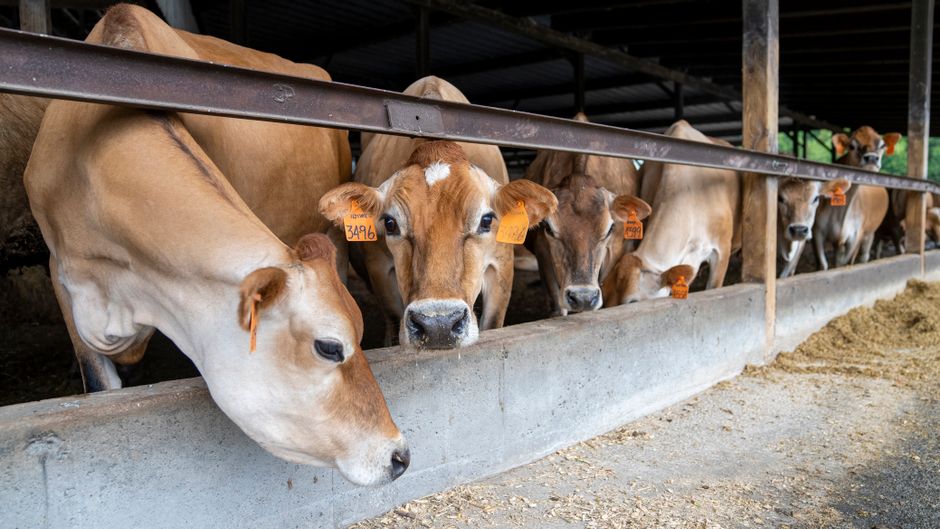
The initial detection of HPAI in Brazilian dairy herds in late March 2023 sent ripples of alarm through the scientific community and agricultural stakeholders. The affected animals exhibited symptoms consistent with the virus, including decreased milk production, lethargy, and neurological signs. Crucially, these were not isolated incidents; multiple farms across different states reported infections, underscoring the potential for wider dissemination within the cattle population. The veterinary response, while addressing the immediate outbreaks through isolation and biosecurity measures on affected farms, has largely sidestepped a comprehensive, nationwide testing regime for asymptomatic or mildly symptomatic cattle. This approach is predicated on the assumption, largely supported by preliminary data, that the virus’s pathogenicity in cattle is relatively low, with most infected animals recovering without significant mortality. However, this assumption, while perhaps reassuring in the short term, overlooks the fundamental principles of infectious disease control.
The primary rationale for widespread testing, even in cases of presumed low pathogenicity, is rooted in early detection and containment. Asymptomatic or subclinically infected animals can act as silent reservoirs and vectors, facilitating the virus’s spread to new herds and potentially to other susceptible species, including humans. By not proactively screening a broader swathe of the cattle population, Brazil risks allowing the virus to establish a more entrenched presence, making future containment efforts exponentially more difficult and costly. The absence of routine surveillance for HPAI in cattle leaves a critical blind spot in the nation’s biosecurity framework, hindering the ability to accurately assess the true extent of the outbreak and to implement targeted interventions. This is particularly concerning given the interconnectedness of agricultural supply chains and the potential for undetected infections to move across state and international borders.
From an epidemiological perspective, the argument for proactive testing is compelling. Understanding the prevalence and distribution of the virus within the cattle population is essential for building accurate mathematical models of transmission, identifying high-risk areas, and developing effective mitigation strategies. Without this data, policymakers are operating with incomplete information, potentially leading to misallocation of resources and delayed or ineffective responses. The scientific community has consistently advocated for robust surveillance systems for emerging infectious diseases, and HPAI in cattle represents precisely such an emerging threat. The cost of implementing a comprehensive testing program, while not insignificant, is likely to be far outweighed by the economic and social costs of a widespread, uncontained outbreak.
The economic implications of Brazil’s current approach are substantial. The country is a global powerhouse in both poultry and beef production, and any disruption to these industries due to animal disease outbreaks can have severe international repercussions. Consumer confidence is a fragile commodity, and news of HPAI infections in cattle, even if not directly posing a significant threat to human health, can lead to heightened consumer apprehension and boycotts. Furthermore, importing countries often impose trade restrictions and import bans on products from nations experiencing animal disease outbreaks, regardless of the perceived risk to human health. Brazil’s reluctance to conduct extensive cattle testing could jeopardize its access to lucrative international markets, impacting export revenues and the livelihoods of countless farmers and workers. The World Organisation for Animal Health (WOAH) and other international bodies generally recommend proactive surveillance and reporting, and a deviation from these norms can lead to international scrutiny and potential trade disputes.
The potential for zoonotic transmission, though currently considered low for H5N1 in cattle, cannot be entirely dismissed. While human cases linked to infected cattle have been rare and generally mild, the continuous adaptation and evolution of viruses are a well-documented phenomenon. The more the virus circulates in a new host population, the greater the opportunity for it to acquire mutations that could enhance its transmissibility or pathogenicity in humans. Brazil’s lack of widespread cattle testing leaves a gap in monitoring for such potential evolutionary shifts, making it harder to detect early signs of increased zoonotic risk. The precautionary principle, a cornerstone of public health policy, suggests taking preventive action in the face of potential harm, even in the absence of complete scientific certainty.
International collaboration and knowledge sharing are also crucial in managing emerging zoonotic diseases. By not fully participating in a global effort to monitor and understand HPAI in cattle, Brazil risks isolating itself from valuable scientific insights and best practices. Other countries that have experienced similar outbreaks have implemented varied testing strategies, and a more open and collaborative approach from Brazil could contribute significantly to the global understanding of this evolving threat. The lack of transparency in reporting and surveillance can breed mistrust and hinder coordinated international responses to potential pandemics.
The poultry industry in Brazil, which has a robust and well-established surveillance system for avian influenza, also faces indirect risks from the situation in the dairy sector. If HPAI becomes endemic in cattle, it could serve as a persistent reservoir that occasionally spills back into poultry populations, reintroducing the virus into an industry that has invested heavily in control measures. This would create a cycle of recurring outbreaks, undermining decades of efforts to control avian influenza and posing a constant threat to Brazil’s vital poultry exports. The interconnectedness of these agricultural sectors means that a weakness in one can expose vulnerabilities in others.
The Brazilian Ministry of Agriculture, Livestock, and Food Supply has stated that its current approach is guided by scientific evidence indicating low pathogenicity and recovery rates in cattle. They emphasize that resources are being prioritized for diagnostic tests and control measures on affected farms, as well as for continued monitoring of the poultry sector. While this focus on direct interventions is understandable, it overlooks the proactive and preventative value of broad surveillance. The argument that testing every cow is impractical or overly expensive fails to acknowledge that targeted, risk-based surveillance strategies can be employed, focusing on areas with higher reported cases or on animals exhibiting even subtle signs of illness. Furthermore, advancements in diagnostic technologies are continually reducing the cost and increasing the speed of testing, making comprehensive surveillance more feasible than ever before.
Moreover, the ethical considerations of animal welfare also come into play. While the intention might be to minimize disruption, an unmonitored spread of a novel pathogen within a population can lead to prolonged suffering for infected animals. Early detection through testing allows for more timely and effective interventions, potentially reducing the duration and severity of illness. The narrative of prioritizing economic interests over comprehensive disease monitoring raises questions about the broader societal responsibilities of a nation with such a significant agricultural footprint.
In conclusion, Brazil’s current strategy of largely abstaining from widespread avian influenza testing in its dairy cattle population, despite confirmed infections, represents a significant departure from established biosecurity principles. While the perceived low pathogenicity in cattle may offer a degree of comfort, it creates a critical blind spot in surveillance, hindering early detection, containment, and accurate assessment of the epidemic’s true scope. This stance carries substantial economic risks by potentially jeopardizing international trade and consumer confidence, and it leaves a gap in monitoring for potential zoonotic shifts in the virus. A more proactive, comprehensive, and internationally aligned approach to surveillance and testing in cattle is not merely a recommendation; it is a crucial necessity for safeguarding Brazil’s agricultural sector, public health, and its position in the global economy. The long-term implications of neglecting this emerging threat could far outweigh the perceived short-term costs of implementation.
