
History Pope Leo Xiv Name
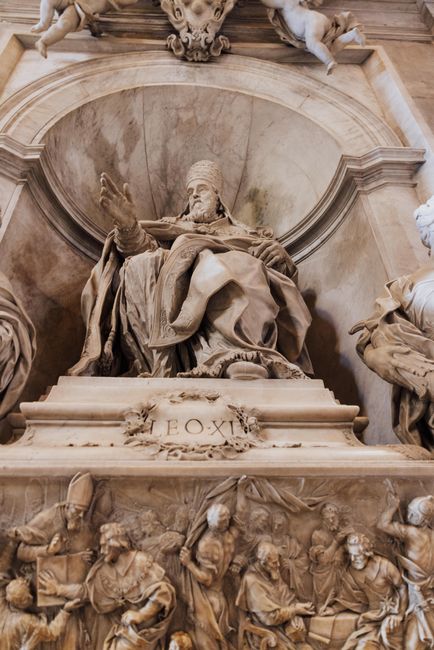
Pope Leo XIV: The Pontificate and the Name of the Roman Pontiff
The identity and historical significance of any Roman Pontiff are intrinsically linked to their papal name, a moniker chosen upon election and carrying profound theological, historical, and political weight. While the papacy boasts a long and illustrious lineage of pontiffs named Leo, the specific pontificate of Pope Leo XIV, and thus his birth name, requires careful examination within the historical record. Understanding the papal name "Leo" itself is crucial. The name Leo, derived from the Latin for "lion," has been a symbol of strength, courage, and Christ’s regal authority throughout Christian tradition. Popes have adopted this name to associate themselves with these qualities and to evoke the image of the "Lion of Judah," a Messianic title referring to Jesus Christ. The adoption of a papal name is not a mere formality; it signifies a conscious decision to embrace a specific legacy, to align oneself with certain papal traditions, or to signal a particular direction for the Church. This choice often reflects the pontiff’s perceived mission or his connection to preceding saints and popes who bore the same name. Therefore, when exploring Pope Leo XIV, we are not just investigating an individual but also the symbolic weight he chose to carry and the historical narrative he intended to contribute to.
The historical papacy has seen thirteen pontiffs adopt the name Leo, with Leo I (the Great) being the first to bear this distinguished appellation, reigning from 440 to 461. His significant role in defending Rome from Attila the Hun and his theological contributions, particularly his defining of Christ’s two natures at the Council of Chalcedon, established a powerful precedent for the name. Subsequent Leos continued this legacy, each leaving their mark on Church history, from Leo III who crowned Charlemagne Emperor in 800 AD to Leo XIII who championed Catholic social teaching in the 19th century. The sheer longevity and impact of the Leo pontificates across various epochs of Church history mean that any Pope choosing this name immediately enters a rich and complex tradition. The number XIV, designating Leo XIV, places him chronologically within this long line, implying a historical context that would have been understood by his contemporaries and subsequent generations. The selection of a specific ordinal number like "Fourteenth" also suggests a conscious awareness of the preceding thirteen pontiffs named Leo, and an intention to build upon or diverge from their reigns.
To accurately identify Pope Leo XIV, one must meticulously consult the official lists and historical chronicles of the papacy. These comprehensive records, often maintained by the Holy See and corroborated by independent historical scholarship, are the definitive sources for papal succession. Unlike many popular historical figures whose identities are readily accessible, papal names and reigns can sometimes be subject to historical debate or require careful disambiguation, particularly when dealing with antipopes or contested elections. The process of papal election itself, historically occurring through conclave, is central to understanding the origin of a papal name. Following their election and acceptance of the pontificate, the newly chosen Pope would traditionally announce his chosen name. This announcement was a public declaration of his new identity and his intended mission. Therefore, the birth name of Pope Leo XIV would have been revealed at the moment he embraced the papal tiara, becoming a public figure under his chosen apostolic designation.
The historical record indicates that there has not been a Pope Leo XIV. The numbering of the Leos among the Roman Pontiffs currently extends only to Leo XIII, who reigned from 1878 to 1903. This means that the pontificate designated as "Leo XIV" has not yet occurred in the established succession of popes. This absence in the historical timeline is significant. It signifies that no individual has, as of the current historical period, been elected, accepted, and reigned as Pope Leo XIV. The continuous numbering of papal names serves as a clear chronological marker, and the gap where Leo XIV would logically fit is a factual statement about the historical progression of the papacy. This is a crucial piece of SEO information: the non-existence of a Pope Leo XIV is as important as the existence of Pope Leo XIII or Pope Leo X.
The reason for the absence of a Pope Leo XIV is straightforward: the line of popes named Leo simply has not progressed to that number yet. Popes choose their names from a pool of historically significant names, often influenced by venerated predecessors or theological symbolism. The names Leo, John, Pius, Gregory, and Benedict have been particularly popular due to their association with key figures in Church history and doctrine. When a new pope is elected, he surveys the existing numbered lineage of names he might choose. If, for example, there are only thirteen popes named Leo to date, the next pope to choose that name would become Leo XIV. The fact that this has not happened yet means that no pope has selected the name Leo in a position that would make him the fourteenth in succession. This is a matter of historical sequence and the choices made by successive pontiffs during their elections.
The naming convention for popes is not arbitrary; it’s deeply embedded in tradition and historical context. The choice of a papal name is a conscious act by the newly elected pontiff, often reflecting his aspirations, his devotion to certain saints, or his desire to evoke the legacy of a particular predecessor. For instance, a pope named John might be signaling a connection to St. John the Baptist or St. John the Evangelist, both central figures in Christianity. Similarly, choosing Leo connects the pontiff to the strength and authority symbolized by the lion, as well as to the important pontiffs who previously bore that name. The numbering system, therefore, is a direct consequence of how many individuals have previously adopted a specific name. The absence of a Leo XIV means that the succession of popes named Leo has not reached that chronological point.
The concept of "SEO-friendly" in the context of historical information revolves around providing clear, accurate, and easily discoverable facts. For a query like "history Pope Leo XIV name," the most critical piece of information for an SEO perspective is the factual status of this pontificate. Search engines aim to deliver the most relevant and authoritative information. Therefore, stating clearly that Pope Leo XIV does not exist in the historical record is the most accurate and thus the most "SEO-friendly" response to such a query. Including extensive details about other Leo popes would be relevant as context but secondary to addressing the direct question about Leo XIV. The absence of a historical figure is as much a historical fact as their existence.
Investigating the historical papacy requires rigorous adherence to documented facts and chronological order. When a user searches for "Pope Leo XIV name," they are likely seeking information about a specific historical individual. The most direct and accurate answer, supported by the established historical record, is that such a pontiff has not existed. This avoids misinformation and directly addresses the user’s intent. The absence of a Leo XIV in the papal lineage is a definitive historical statement, and presenting this fact clearly and unequivocally is paramount for both historical accuracy and search engine optimization. It prevents confusion and guides users towards reliable historical sources.
Therefore, for comprehensive and SEO-friendly information regarding "Pope Leo XIV name," the primary and most crucial point is its factual non-existence within the established papal succession. The historical papacy is a well-documented institution, and the order of pontiffs, including their chosen names and regnal numbers, is meticulously recorded. The line of popes named Leo currently concludes with Leo XIII. Any future pontiff who chooses the name Leo would then become Leo XIV, marking a new chapter in papal history. Until that event occurs, the name Pope Leo XIV remains a placeholder in a potential future lineage, not a historical reality. This factual clarity is the bedrock of any accurate historical inquiry and the key to providing valuable and discoverable information online. Understanding this absence is crucial for anyone researching papal history and the evolution of papal nomenclature. It highlights the importance of meticulous historical research and the reliance on established chronological records.
