
Category History Of Popes
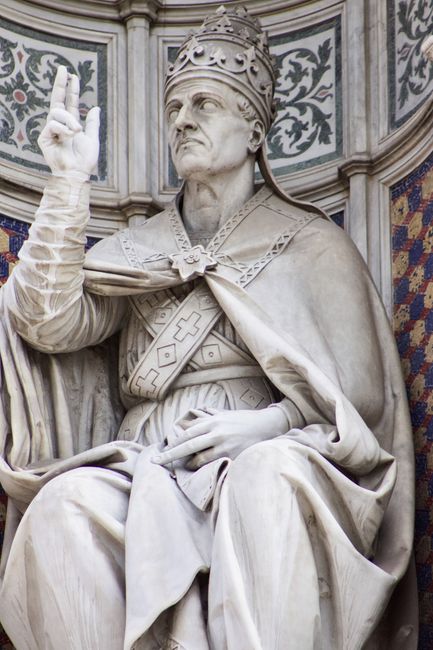
The Papal Office: A History of Continuity and Change
The papacy, the office of the Pope, has a history stretching back nearly two millennia, a testament to its enduring influence and adaptability. From its humble origins as the Bishop of Rome to its current status as the spiritual leader of over a billion Catholics worldwide, the papacy has undergone profound transformations, shaped by theological developments, political upheavals, and evolving social landscapes. Tracing the history of the papal office reveals a complex tapestry of leadership, governance, and spiritual authority, characterized by periods of both immense power and significant challenge. Understanding this historical trajectory is crucial for comprehending the role of the Catholic Church in global history and its ongoing relevance in the modern world.
Early Papacy and the Primacy of Rome (c. 1st – 6th Centuries CE)
The foundation of the papacy is traditionally linked to the Apostle Peter, who is believed to have been martyred in Rome and designated by Jesus as the "rock" upon which His Church would be built (Matthew 16:18). While the precise nature of Peter’s authority and its transmission to his successors is a subject of ongoing theological debate, the early Church in Rome quickly gained prominence. The city’s imperial significance and its status as a center of early Christian activity contributed to the growing authority of its bishop. Early popes, such as Clement I, Ignatius of Antioch, and Irenaeus of Lyons, in their writings, evidenced a deference to the Roman See, hinting at a developing primacy.
The concept of papal primacy, the belief that the Pope holds supreme authority over the entire Christian Church, began to crystallize during this period. While not universally accepted in its later, more defined form, the Roman bishop’s pronouncements carried significant weight. Councils like the Council of Nicaea (325 CE) began to establish a hierarchy of patriarchal sees, with Rome holding a preeminent position. However, the authority of the Pope was not absolute and was often exercised in consultation with other bishops and in dialogue with the broader Church.
The period also saw the papacy grapple with doctrinal disputes, most notably Arianism. Popes like Leo I (440-461 CE) played a crucial role in defining orthodox Christology, famously articulating the doctrine of two natures in Christ in his Tome, which was instrumental at the Council of Chalcedon (451 CE). The "Petrine doctrine," emphasizing the continuity of Peter’s authority through the Roman bishops, was increasingly articulated and defended, providing a theological basis for the papacy’s claims.
The Fall of the Western Roman Empire (476 CE) and the Rise of the Papacy as a Temporal Power (6th – 10th Centuries CE)
The collapse of the Western Roman Empire marked a turning point for the papacy. In the ensuing power vacuum, the Popes, already possessing significant moral and spiritual authority, began to assume temporal responsibilities. They became de facto rulers of Rome and its surrounding territories, providing a measure of stability and order in a fragmented landscape. This period saw the papacy increasingly involved in political affairs, acting as mediators between warring factions and even raising armies.
Pope Gregory I (590-604 CE), also known as Gregory the Great, is a pivotal figure in this transition. He is credited with organizing Roman defenses, negotiating with invaders, and initiating extensive missionary efforts, most notably the mission to England led by Augustine of Canterbury. Gregory’s pontificate exemplified the burgeoning role of the Pope as a political and administrative leader, laying the groundwork for the eventual Papal States.
The Donation of Constantine, a forged imperial decree claiming to grant vast territories to the Pope, though later exposed as a fraud, nevertheless served to bolster the papacy’s temporal claims for centuries. The coronation of Charlemagne as Holy Roman Emperor by Pope Leo III in 800 CE solidified the symbiotic relationship between the papacy and secular power, an alliance that would shape the political landscape of Europe for centuries. This era witnessed the papacy wielding considerable influence over kings and emperors, often through the threat of excommunication.
The Investiture Controversy and the Gregorian Reforms (11th – 13th Centuries CE)
The growing entanglement of the papacy with secular rulers led to significant tensions, most notably the Investiture Controversy. This struggle, primarily between the Pope and the Holy Roman Emperors, concerned the right to appoint bishops and other church officials. Secular rulers sought to control these appointments to consolidate their power, while the papacy asserted its exclusive right, arguing that these appointments were spiritual matters.
Pope Gregory VII (1073-1085 CE) was the driving force behind the Gregorian Reforms, a sweeping program aimed at strengthening the papacy and purifying the Church. These reforms sought to eliminate simony (the buying and selling of church offices), clerical marriage, and lay investiture. Gregory VII famously excommunicated Emperor Henry IV, forcing the emperor to seek penance at Canossa. While the controversy was not fully resolved during Gregory’s pontificate, it fundamentally altered the balance of power between the Church and state, establishing the papacy as a significant independent force.
The zenith of papal power was arguably reached in the 13th century under Pope Innocent III (1198-1216 CE). He exercised considerable authority over European monarchs, acting as an arbiter in international disputes and intervening in the political affairs of numerous kingdoms. The Fourth Lateran Council (1215 CE), convened by Innocent III, codified a vast array of church laws and doctrines, solidifying the papacy’s administrative and theological leadership. The Crusades, while ostensibly religious wars, also served to demonstrate and expand papal influence.
The Avignon Papacy and the Great Western Schism (14th – 15th Centuries CE)
The late Middle Ages witnessed a series of crises that significantly challenged the papacy’s authority and prestige. The Avignon Papacy (1309-1376 CE) saw seven successive popes reside in Avignon, France, rather than Rome. This move was largely influenced by the French monarchy, leading to accusations of French domination and a decline in the papacy’s universal appeal.
The return of the papacy to Rome was followed by the Great Western Schism (1378-1417 CE), a period of division within the Catholic Church. Two, and at times three, rival popes claimed legitimacy, each supported by different European powers. This schism eroded public confidence in the papacy and led to widespread confusion and disunity. The Council of Constance (1414-1418 CE) finally resolved the schism by deposing the rival claimants and electing a single Pope, Martin V. However, the schism left deep scars and contributed to a growing questioning of papal authority.
The Renaissance Papacy and the Protestant Reformation (15th – 16th Centuries CE)
The Renaissance period saw a resurgence of papal power and patronage of the arts and sciences. Popes like Nicholas V, Sixtus IV, and Julius II transformed Rome into a magnificent cultural center, commissioning iconic works of art and architecture. However, this period was also characterized by worldly concerns and political maneuvering, with some popes acting more like Renaissance princes than spiritual leaders. The lavish spending and perceived corruption of some Renaissance popes, coupled with theological disputes, created fertile ground for dissent.
The Protestant Reformation, beginning with Martin Luther in 1517, represented the most profound challenge to papal authority in centuries. Luther’s critique of indulgences, papal infallibility, and the authority of tradition led to a schism that permanently divided Western Christianity. The Catholic Church responded with the Counter-Reformation, a period of renewal and reform. The Council of Trent (1545-1563 CE) clarified and reaffirmed Catholic doctrines, condemned Protestant heresies, and initiated reforms within the Church, including the establishment of seminaries for priestly training. The Society of Jesus (Jesuits), founded by Ignatius of Loyola, played a crucial role in the Counter-Reformation through their missionary work, education, and intellectual engagement.
The Baroque Papacy and the Age of Enlightenment (17th – 18th Centuries CE)
The Baroque era saw the papacy continue to exert influence, albeit in a more circumscribed manner than in the high Middle Ages. Popes focused on promoting Catholic faith and culture through grand artistic and architectural projects, often in opposition to the rising tide of Protestantism. The papacy remained a significant player in international diplomacy, though its temporal power gradually waned as nation-states became increasingly dominant.
The Enlightenment brought new intellectual currents that challenged traditional religious authority, including that of the papacy. Philosophers like Voltaire and Rousseau questioned the divine right of kings and the legitimacy of religious institutions. The papacy found itself on the defensive against secularizing trends and the growing influence of rationalism. The French Revolution and its aftermath brought further upheaval, with the papacy losing temporal control over much of its territory. Napoleon Bonaparte’s capture of Pope Pius VI and the establishment of the Roman Republic severely curtailed papal power.
The 19th Century: Papal States, Vatican I, and Papal Infallibility
Despite the loss of much of its temporal power, the 19th century witnessed a resurgence of papal spiritual authority and a reassertion of papal claims. The papacy played a role in the restoration of monarchies after Napoleon, and the idea of a unified Catholic world under papal leadership gained traction. The desire to maintain independence from secular powers led to a focus on strengthening the papacy’s spiritual and doctrinal claims.
The First Vatican Council (1869-1870) was a landmark event, culminating in the dogma of papal infallibility. This doctrine states that the Pope, when speaking ex cathedra (from the chair of Peter) on matters of faith and morals, is preserved from error by the Holy Spirit. This declaration, while controversial even within Catholicism, significantly strengthened the papacy’s doctrinal authority and its ability to act as a clear voice for Catholic teaching. The council was cut short by the outbreak of the Franco-Prussian War and the subsequent seizure of Rome by the Italian government, leading to the "Roman Question" and the Pope’s self-imposed imprisonment in the Vatican.
The 20th Century: The Papacy in the Modern World and Vatican II
The 20th century presented the papacy with unprecedented challenges and opportunities. Popes like Pius X, Benedict XV, and Pius XI navigated World War I, the rise of totalitarian regimes, and the interwar period. Pius XII faced the immense moral crisis of World War II and the Holocaust, a period marked by complex and often debated papal actions.
The Second Vatican Council (1962-1965) was a watershed moment for the Catholic Church and the papacy. Convened by Pope John XXIII, the council initiated a period of significant reform and renewal. It led to a greater emphasis on collegiality among bishops, a revised liturgy that allowed for vernacular languages, and a more open dialogue with other Christian denominations and religions. Vatican II aimed to update the Church for the modern world, fostering a more engaged and missionary approach. Pope John Paul II, the longest-reigning pontiff in history, played a pivotal role in the implementation of Vatican II and in the fall of communism in Eastern Europe. His extensive travels and prolific writings solidified the papacy’s global presence and influence.
The Papacy Today
The papacy continues to evolve in the 21st century. Pope Benedict XVI’s resignation in 2013 was a historic event, the first voluntary papal resignation in nearly 600 years, reflecting a pragmatic approach to leadership in the modern era. Pope Francis, the current pontiff, has brought a renewed emphasis on mercy, social justice, and environmental concerns. His pontificate has been characterized by a more accessible and pastoral style, fostering interfaith dialogue and addressing contemporary social issues with a focus on inclusivity. The papacy, while rooted in ancient tradition, remains a dynamic institution, continually adapting to the challenges and opportunities of each historical era, a testament to its enduring capacity for leadership and spiritual guidance in a constantly changing world.
