
Misleading Harbour Comparison Photos Do Not Prove Rising Sea Levels Are Hoax
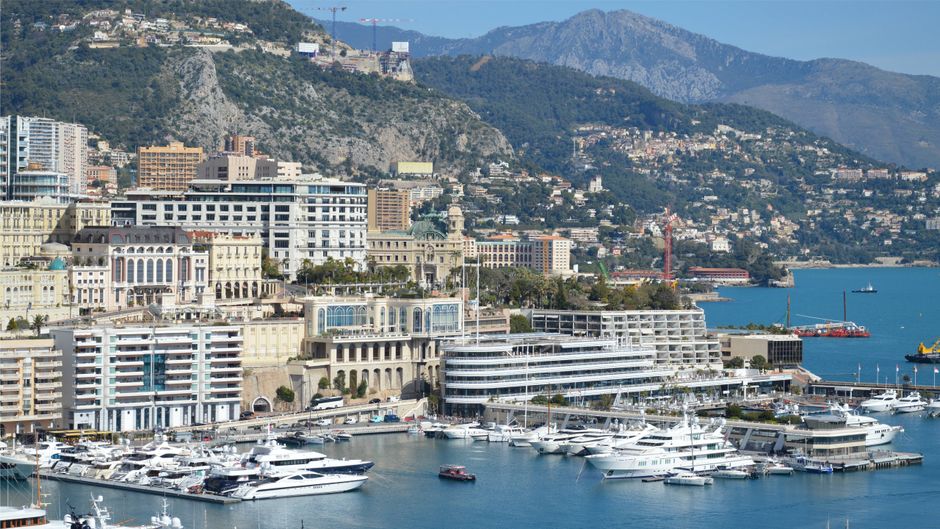
Misleading Harbour Comparison Photos Do Not Prove Rising Sea Levels Are a Hoax
The visual comparison of historical and contemporary photographs of harbour locations has become a popular, albeit fundamentally flawed, method for those seeking to debunk the scientific consensus on sea-level rise. These arguments typically present a pair of images, often decades apart, showcasing a familiar shoreline, a pier, or a particular building. The assertion is then made that the modern photograph depicts less water or a similar water level compared to the older one, leading to the conclusion that sea levels are not actually rising, and therefore, the entire phenomenon is a fabricated narrative. This line of reasoning, however, is demonstrably fallacious due to a confluence of factors, including selective image selection, photographic manipulation, environmental changes unrelated to sea-level rise, and a misunderstanding of the scale and complexity of global oceanic processes.
One of the most prevalent issues with these comparison photos is selective image bias. Individuals or groups promoting the sea-level rise hoax narrative will meticulously scour archives for images that appear to support their predetermined conclusion. This involves a deliberate exclusion of images that would contradict their claims. For instance, they might find a historical photo showing a very high tide or a storm surge event that artificially inflates the apparent water level at that specific moment. They will then contrast this with a modern photograph taken during a calm, low-tide period, creating a misleading visual disparity. Conversely, they might select historical photos taken during exceptionally low tide conditions and compare them to modern photos during higher tidal phases. The result is a carefully curated, albeit unscientific, juxtaposition designed to create a false impression. The scientific method, in contrast, relies on long-term, statistically significant data collected under consistent methodologies, not on cherry-picked visual anecdotes.
Beyond the selection of images, photographic inconsistencies and manipulation further undermine the validity of these comparisons. Different focal lengths, camera angles, and even the time of day can drastically alter the perceived water level in a photograph. A wide-angle lens used in a historical photo might distort perspective, making distant objects appear further away and water levels seem lower, while a telephoto lens in a modern photo can compress distance, making it appear as though the water is closer to the viewer. Furthermore, the advent of digital photography and editing software opens the door to intentional manipulation, even if subtle. Adjusting contrast, brightness, or even digitally adding or removing elements can create artificial differences. Without rigorous photographic analysis to account for these variables, and without knowing the exact conditions under which each photograph was taken (tide, weather, time of day, camera settings), any visual comparison is inherently unreliable.
Crucially, harbour environments are dynamic ecosystems subject to numerous influences unrelated to global sea-level rise. Coastal erosion, for example, can significantly alter the shoreline over time. Sediment deposition, natural or anthropogenic, can build up land, effectively reducing the perceived reach of the water without any change in the global sea level. Changes in local infrastructure, such as the construction or demolition of piers, seawalls, or jetties, can also dramatically alter the coastline visible in photographs. A new pier built further out, or the removal of an old one that extended into the water, would naturally change the visual relationship between the land and the sea. Similarly, changes in riverine sediment input can alter delta formations and coastline shapes. These are all localized processes that can create the illusion of receding water levels, but they do not negate the well-documented global phenomenon of rising oceans.
The argument also frequently suffers from a misunderstanding of the scale and measurement of sea-level rise. Global sea-level rise is a gradual, long-term process occurring over decades and centuries. While a few feet of rise might seem insignificant to a casual observer in a single photograph, it translates to significant inundation in low-lying coastal areas over time. Scientific measurements are taken using highly precise instruments like tide gauges and satellite altimetry, which provide continuous, accurate data across vast geographical areas. These instruments account for tidal cycles, atmospheric pressure, and other short-term fluctuations. Relying on static, two-dimensional images, often taken under uncontrolled conditions, to refute this complex, data-driven scientific understanding is akin to dismissing medical diagnoses based on a single selfie. The resolution of the visual evidence is simply insufficient to grapple with the scientific precision required.
Furthermore, the temporal scale of these photographic comparisons is often too short to capture meaningful trends. Decades, or even a century, can represent a blink of an eye in geological and climatic timescales. Natural climate variability can cause fluctuations in sea level over shorter periods. For instance, El Niño-Southern Oscillation (ENSO) cycles can influence regional sea levels, causing temporary increases or decreases. A comparison of photos taken during different phases of such cycles would not accurately reflect the long-term anthropogenic-driven sea-level rise. Scientific consensus on sea-level rise is built on data spanning many decades, even centuries, from numerous sources, revealing a consistent upward trend that cannot be explained by natural variability alone.
The geographical specificity of the photographs used in these hoaxes also presents a problem. Sea-level rise is a global phenomenon, but its local manifestations can vary due to factors like gravitational effects from ice sheets, ocean currents, and land subsidence or uplift. Coastal areas experiencing significant land subsidence, for example, will experience a greater relative sea-level rise than areas where the land is stable or rising. Conversely, some areas might see minimal relative sea-level rise due to geological uplift. Focusing on a single, potentially anomalous location, and extrapolating that observation to dismiss global trends, is a logical fallacy. Global averages, derived from numerous measuring stations worldwide, provide a more accurate picture of the overall phenomenon.
The argument also often ignores the physical evidence of sea-level rise, which extends far beyond mere visual comparisons. Coastal communities worldwide are already experiencing the impacts of rising seas, including increased coastal flooding during high tides and storm surges, saltwater intrusion into freshwater aquifers, and the erosion of beaches and coastal wetlands. Scientific bodies like the Intergovernmental Panel on Climate Change (IPCC) synthesize vast amounts of research, including physical evidence, historical data, and climate models, to provide comprehensive assessments of climate change, including sea-level rise. The conclusions of these bodies are not based on subjective visual interpretation but on rigorous scientific analysis and peer review.
Moreover, the intent behind promoting these misleading photos is often driven by an agenda rather than a genuine scientific inquiry. Disinformation campaigns often utilize visually appealing, albeit misleading, evidence to appeal to public skepticism and distrust of scientific institutions. These campaigns aim to create doubt and confusion, hindering efforts to address climate change. The ease with which such photos can be shared on social media platforms further amplifies their reach and impact, despite their lack of scientific validity. Critical thinking and a reliance on peer-reviewed scientific literature are essential to discerning factual information from manufactured doubt.
In conclusion, the visual arguments presented by comparing historical and contemporary harbour photos are fundamentally flawed and do not provide credible evidence to support the claim that rising sea levels are a hoax. These comparisons are undermined by selective image bias, photographic inconsistencies, environmental changes unrelated to sea-level rise, and a misunderstanding of the scale, measurement, and complexity of global oceanic processes. The scientific evidence for sea-level rise is robust, built upon decades of precise measurements, physical observations, and rigorous scientific analysis. Relying on anecdotal visual comparisons, taken out of context and often manipulated, to refute this evidence is scientifically unsound and serves to propagate misinformation.
