
China Manufacturing Us Trump Factory Workers Ai Videos Social Media
China Manufacturing, US Factory Workers, Trump, AI Videos, Social Media
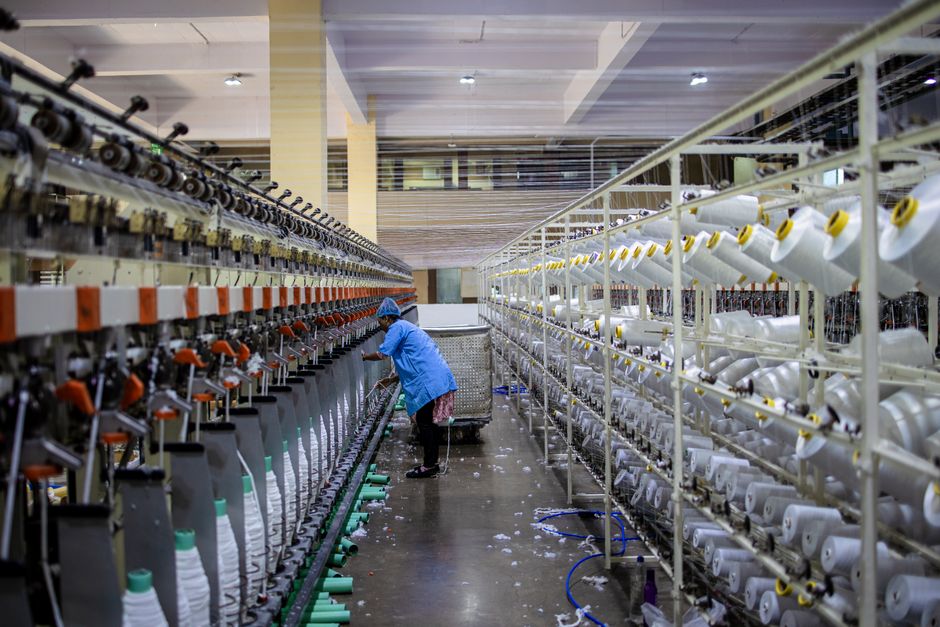
The intertwined narratives of China’s manufacturing dominance, the anxieties surrounding American factory worker livelihoods, the political rhetoric of figures like Donald Trump, and the emerging influence of AI-generated content on social media form a complex and dynamic socio-economic and political landscape. For decades, "Made in China" has been a ubiquitous label, signaling an era of globalized supply chains driven by cost efficiencies. This has undeniably contributed to lower consumer prices in the United States but has also fueled a persistent debate about job displacement and the hollowing out of American manufacturing sectors. The perception that American factory jobs have been exported to China, often amplified during political campaigns, has become a potent political rallying cry. This narrative, while containing kernels of truth, often oversimplifies the intricate factors at play, including technological advancements, automation, shifting consumer demands, and the inherent competitiveness of global markets.
Donald Trump’s political ascendant and presidency significantly leveraged this sentiment. His "America First" agenda prominently featured a promise to bring back manufacturing jobs to the United States, often directly criticizing existing trade agreements and accusing China of unfair trade practices, including currency manipulation and intellectual property theft. His administration implemented tariffs on goods imported from China, a move intended to level the playing field and incentivize domestic production. While these tariffs had some impact, their broader economic consequences were debated, with some economists arguing they increased costs for American consumers and businesses, while others contended they were a necessary tool to pressure China and protect nascent American industries. The political discourse surrounding these issues, heavily reliant on social media platforms, played a crucial role in shaping public opinion and mobilizing voter bases.
The advent of Artificial Intelligence (AI), particularly in the realm of video generation and manipulation, adds a new layer of complexity to this already intricate web. AI-powered tools can now create highly realistic, albeit fabricated, videos. This technology has the potential to be weaponized in the political and economic arenas, blurring the lines between authentic and synthetic content. Imagine AI-generated videos depicting a surge of new American factories opening, or conversely, fabricated footage of Chinese factories exploiting workers, all disseminated rapidly across social media. Such content, designed to evoke strong emotional responses, can bypass traditional media gatekeepers and directly influence public perception, policy debates, and even election outcomes. This raises serious concerns about the integrity of information and the potential for sophisticated disinformation campaigns.
The economic realities of manufacturing are evolving rapidly, irrespective of political rhetoric. Automation and robotics are increasingly prevalent in factories globally, including in China. This trend suggests that even if tariffs were to completely disappear, the nature of factory work itself is changing, requiring different skill sets and leading to a potential reduction in the number of human workers required for certain tasks. The argument that simply bringing manufacturing back to the US will automatically create the same types of jobs lost decades ago is, therefore, an oversimplification. The focus needs to shift towards investing in reskilling and upskilling the American workforce to adapt to these technological advancements and to cultivate industries where the US holds a comparative advantage, such as advanced manufacturing, biotechnology, and renewable energy.
Social media platforms, while offering unparalleled reach for disseminating information, also present fertile ground for the spread of misinformation and the amplification of partisan narratives. The algorithms that govern these platforms often prioritize engagement, meaning sensational or emotionally charged content, whether true or false, can gain significant traction. This can create echo chambers where pre-existing beliefs are reinforced, making it difficult for nuanced discussions about complex issues like trade, manufacturing, and the impact of AI to gain traction. Political actors and foreign entities can exploit these dynamics to sow discord, influence public opinion, and undermine democratic processes. The rapid proliferation of AI-generated videos, capable of creating highly convincing but false narratives, exacerbates these challenges exponentially.
The "China manufacturing" narrative often focuses on the perceived economic threat to American jobs. However, it’s crucial to acknowledge the mutual interdependence of these economies. China’s massive consumer market also provides significant opportunities for American companies. Furthermore, the global supply chain is incredibly intricate; many products assembled in the US still contain components manufactured in China, and vice-versa. A complete decoupling, while a potent political slogan, would have significant economic repercussions for both nations and the global economy. The challenge lies in finding a balance that promotes fair trade practices, protects domestic industries where feasible, and fosters innovation without resorting to protectionist measures that ultimately harm consumers and businesses.
The role of AI videos in shaping this discourse is a nascent but potent threat. Imagine a scenario where an AI-generated video falsely depicts widespread job losses in a specific American town directly attributed to Chinese imports, complete with staged scenes of hardship. Such content, if shared virally on platforms like TikTok, Facebook, or X (formerly Twitter), could incite anger and resentment, influencing voting patterns and demanding immediate, potentially ill-considered, policy responses. Conversely, AI could be used to create slick promotional videos showcasing a resurgence of American manufacturing that might not reflect the full economic reality, thus creating a misleading sense of progress. The ability to instantly generate and distribute convincing visual narratives means that the speed of information dissemination can outpace the ability to fact-check and verify, leading to rapid shifts in public perception.
The political rhetoric surrounding "bringing back manufacturing" often simplifies the multifaceted nature of economic globalization and technological change. While tariffs and trade renegotiations can play a role, they are not panaceas. A more effective long-term strategy for supporting American factory workers and revitalizing manufacturing involves investing in education and training programs that equip the workforce with the skills needed for the advanced manufacturing of the future. This includes fostering STEM education, promoting apprenticeships in high-tech fields, and supporting research and development in areas where the US can maintain a competitive edge. The narrative needs to evolve from a simplistic "us vs. them" dichotomy to one that embraces adaptation, innovation, and strategic investment.
The impact of social media algorithms on this debate cannot be overstated. They are designed to maximize user engagement, which often leads to the amplification of extreme viewpoints and the marginalization of moderate or nuanced perspectives. This creates a fertile ground for the spread of misinformation, including AI-generated content that can be tailored to exploit existing biases and fears. The constant stream of content, often emotionally charged and lacking in factual rigor, can lead to a simplified and often inaccurate understanding of complex economic and political issues. The ability of AI to generate persuasive visual narratives further weaponizes this environment, making it increasingly difficult for individuals to discern truth from fiction.
The future of manufacturing in the US will not be solely determined by trade policies or political promises but also by its ability to embrace technological change and adapt to global economic realities. The narrative needs to shift from a nostalgic longing for past manufacturing glory to a forward-looking vision that leverages innovation, invests in human capital, and fosters a competitive environment for advanced industries. The intersection of China manufacturing, US factory workers, political figures like Trump, the rise of AI videos, and the pervasive influence of social media creates a volatile information ecosystem. Navigating this landscape requires critical thinking, media literacy, and a commitment to evidence-based policymaking, rather than succumbing to the allure of easily digestible, yet potentially misleading, digital narratives. The challenge is to harness the potential of AI for positive economic development and to mitigate its capacity for manipulation, ensuring that the discourse surrounding manufacturing and global trade remains grounded in reality and focused on sustainable, long-term solutions.
