Global Hotspots of Mycorrhizal Fungal Biodiversity Face Critical Protection Gap as Researchers Map Underground Networks

A groundbreaking global study has revealed that 90 percent of the world’s most biodiverse hotspots for mycorrhizal fungi remain entirely unprotected, leaving the planet’s "circulatory system" vulnerable to industrial agriculture, deforestation, and climate change. The research, spearheaded by the Society for the Protection of Underground Networks (SPUN) and published in the journal Nature, marks a pivotal moment in soil science, providing the first high-resolution global maps of the fungal networks that sustain terrestrial life. By analyzing over 2.8 billion fungal sequences from 130 countries, scientists have identified critical zones of underground biodiversity that are essential for carbon sequestration and ecosystem resilience but are currently overlooked by international conservation frameworks.
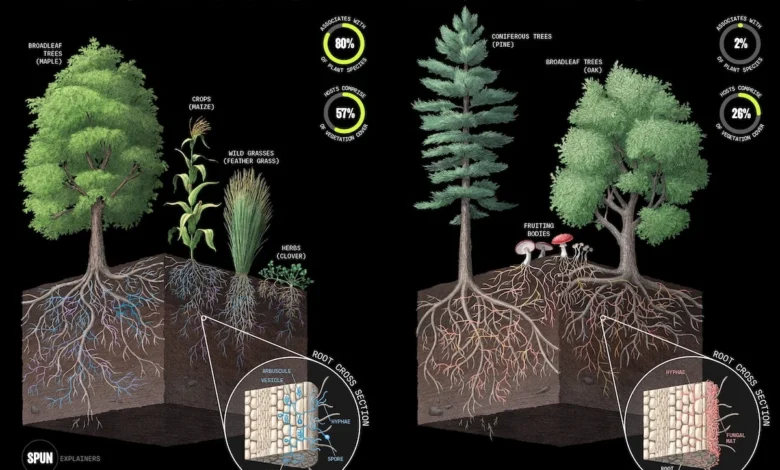
The findings underscore a phenomenon researchers call "fungus blindness," where conservation efforts focus almost exclusively on visible flora and fauna while ignoring the microscopic fungal webs that make such life possible. Mycorrhizal fungi form symbiotic relationships with the roots of nearly all land plants, facilitating the exchange of nutrients and drawing massive amounts of carbon from the atmosphere into the soil. The study warns that the continued neglect of these networks could undermine global climate targets, as these fungi are responsible for sequestering approximately 13 billion tons of carbon annually—equivalent to roughly one-third of the world’s annual fossil fuel emissions.
The Invisible Engineers of Global Ecosystems
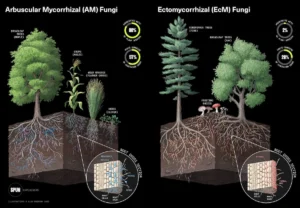
To understand the scale of the threat, it is necessary to recognize the dual nature of the fungi involved in the study: arbuscular mycorrhizal (AM) and ectomycorrhizal (EcM) fungi. AM fungi are ancient, having partnered with the first land plants over 450 million years ago, and are found in the majority of crop species and tropical forests. EcM fungi are typically associated with temperate and boreal forests. Together, these organisms act as "ecosystem engineers," building soil structure, cycling essential nutrients like phosphorus and nitrogen, and protecting plants against pathogens and drought.
Dr. Toby Kiers, Executive Director of SPUN and a professor at Vrije Universiteit Amsterdam, emphasized that the colonization of Earth by plants was only possible because of these fungal networks. Without them, forest regeneration slows to a crawl, and agricultural productivity collapses. The new mapping initiative reveals that the richest areas for these fungi—found in regions such as West Africa’s Guinean forests, the Cerrado savanna in Brazil, and the temperate rainforests of Tasmania—are often in areas facing intense land-use pressure.
Chronology of the Mapping Initiative
The quest to map the "world wide web" of the soil began in earnest in 2021, when SPUN launched its global mapping initiative. The goal was to move beyond localized soil samples to create a predictive model of underground biodiversity on a planetary scale.

- 2021: Launch of SPUN: The organization was founded with the mission to map the Earth’s fungal networks and advocate for their protection, bringing together a coalition of scientists, conservationists, and data experts.
- 2022–2023: Global Sampling and Sequencing: A network of "Underground Explorers" was dispatched to some of the most remote corners of the globe. These teams collected soil samples from diverse environments, including the high-altitude plateaus of Bhutan, the steppes of Mongolia, and the conflict-affected landscapes of Ukraine.
- 2024: Data Synthesis: Researchers integrated existing datasets with new samples, totaling over 2.8 billion DNA sequences. Using machine learning and geospatial modeling, they began to predict fungal richness and endemism in areas that had never been sampled.
- July 2025: Publication and Atlas Release: The study "Global hotspots of mycorrhizal fungal richness are poorly protected" was published in Nature, coinciding with the release of the SPUN Underground Atlas, an interactive tool for policymakers and conservationists.
Supporting Data and Methodology
The methodology behind the maps represents a significant leap in environmental data science. Traditionally, mapping soil life was hindered by the labor-intensive nature of DNA extraction and the lack of standardized global data. The SPUN team overcame this by using "global predictive modeling," which correlates known fungal samples with environmental variables like soil pH, temperature, precipitation, and vegetation cover.
The resulting dataset includes more than 40,000 specimens representing 95,000 distinct mycorrhizal fungal taxa. Despite this massive undertaking, the researchers note that only 0.001 percent of the Earth’s surface has been physically sampled, meaning the maps are living documents that will grow in accuracy as more data is ingested.
The most alarming statistic from the data is the protection gap. While international treaties like the Kunming-Montreal Global Biodiversity Framework aim to protect 30 percent of the planet’s land and sea by 2030, current protected area designations rarely account for soil health. The study found that only 9.5 percent of the predicted fungal hotspots currently fall within the boundaries of national parks or nature reserves.
Official Responses and Expert Analysis
The research has drawn support from a high-profile board of advisors, including Dr. Jane Goodall, who has long advocated for a holistic view of biodiversity. Dr. Michael Van Nuland, the lead author and data scientist at SPUN, stated that these maps are intended to guide the future of conservation by providing quantitative targets. "Food security, water cycles, and climate resilience all depend on safeguarding these underground ecosystems," Van Nuland remarked.
Dr. Merlin Sheldrake, a biologist and author of Entangled Life who serves as SPUN’s impact director, noted that the maps help alleviate the "darkness" surrounding underground life. He argued that for too long, soil has been treated as a "black box" or a passive substrate for plants, rather than a living, breathing network.
From a restoration perspective, Dr. Alex Wegmann of The Nature Conservancy pointed out that past reforestation efforts have often failed because they focused solely on planting trees without considering the fungal community required for those trees to survive. "These high-resolution maps provide quantitative targets for restoration managers to establish what diverse mycorrhizal communities could and should look like," Wegmann said.

Broader Implications for Climate Policy and Agriculture
The implications of this research extend far beyond biology and into the realms of global economics and climate policy. As nations look for ways to meet their "Net Zero" commitments, the role of soil as a carbon sink has become paramount. If 90 percent of fungal hotspots remain unprotected, the risk of "carbon leakage"—where carbon stored in the soil is released due to tilling, construction, or deforestation—is immense.
In the agricultural sector, the protection of arbuscular mycorrhizal fungi is a matter of food security. Industrial farming practices, particularly the heavy use of chemical fertilizers and fungicides, are known to degrade fungal networks. This creates a cycle of dependency where plants can no longer find nutrients naturally and become more susceptible to pests and drought. By identifying and protecting fungal corridors, researchers hope to encourage "regenerative" agricultural practices that work in harmony with the soil’s natural biology.
Furthermore, the study highlights the concept of "underground conservation corridors." Much like wildlife corridors allow animals to migrate between habitats, underground corridors would ensure that fungal networks remain connected, allowing for the migration of microbial life in response to shifting climate zones.
Future Outlook: The Race to Map the Remote
The work of SPUN is far from complete. The international network of 96 Underground Explorers from nearly 80 countries continues to sample remote regions. Current expeditions are focusing on the Amazon Basin, the Arctic tundra, and the vast grasslands of Central Asia. These regions are considered "frontier" ecosystems where the fungal diversity is expected to be high but the data remains sparse.
The ultimate goal, according to Jason Cremerius, SPUN’s chief strategy officer, is to ensure that underground biodiversity becomes as fundamental to environmental decision-making as satellite imagery of forests. By integrating soil data into global conservation planning, the scientific community hopes to flip the script on environmental protection—starting from the ground up.
As the climate crisis intensifies, the resilience of the planet may well depend on these hidden "circulatory systems." The SPUN maps provide the first clear vision of what is at stake, offering a roadmap for a new era of conservation that recognizes the vital importance of the world beneath our feet. Without urgent action to close the 90 percent protection gap, the very foundations of the Earth’s ecosystems remains at risk of unraveling.