The Methane Crisis: Understanding the Science, Sources, and Urgent Solutions for the World’s Second Most Potent Greenhouse Gas.

Methane, a colorless and odorless hydrocarbon, has emerged as one of the most significant challenges and opportunities in the global effort to mitigate the climate crisis. While carbon dioxide (CO2) remains the primary driver of long-term global warming, methane (CH4) is responsible for approximately one-third of the net warming the planet has experienced since the Industrial Revolution. As of 2023, atmospheric methane concentrations reached a record 1,934 parts per billion (ppb), a staggering 265 percent increase over pre-industrial levels. Because methane is over 80 times more potent than CO2 at trapping heat over a 20-year period, climate scientists and policy experts increasingly view the rapid reduction of methane emissions as the single most effective lever available to slow the rate of global warming in the near term.
The Chemical and Biological Profile of Methane
Methane is a simple molecule consisting of one carbon atom and four hydrogen atoms. In the Earth’s atmosphere, it functions as a powerful greenhouse gas by absorbing infrared radiation and re-emitting it toward the surface. Unlike carbon dioxide, which can persist in the atmosphere for centuries, methane has a relatively short atmospheric lifespan of approximately 12 years. This shorter duration creates a "front-loaded" warming effect. Over a 100-year horizon, methane is 28 times more powerful than CO2, but when measured over 20 years—the critical window for preventing climate tipping points—its potency jumps to 86 times that of carbon dioxide.

Methane is produced through two primary pathways: geological and biological. Geologically, it is formed over millions of years as heat and pressure act on organic matter deep underground, creating the fossilized deposits known as natural gas. Biologically, methane is a byproduct of methanogenesis—a form of anaerobic respiration conducted by microorganisms called archaea. These microbes thrive in oxygen-poor environments, such as the digestive tracts of ruminant animals (cows and sheep), waterlogged rice paddies, and the depths of landfills.
A Chronology of Methane Policy and Global Awareness
The trajectory of methane’s role in climate discourse has shifted from a secondary concern to a central policy pillar over the last two decades.
- 1750–1900: The Industrial Revolution triggers the first major spike in anthropogenic methane, driven by coal mining and expanded livestock agriculture.
- 1970s–1990s: Early climate models begin to distinguish the unique radiative forcing of non-CO2 gases.
- 2011–2018: The fracking boom in the United States leads to a surge in natural gas production, prompting concerns about "fugitive emissions" or leaks from aging infrastructure.
- 2021: At the COP26 summit in Glasgow, the United States and the European Union launch the Global Methane Pledge, an international commitment to reduce global methane emissions by at least 30 percent from 2020 levels by 2030.
- 2023–2024: Satellite technology, including the launch of MethaneSAT, begins providing real-time, high-resolution data on "super-emitters," revealing that actual emissions are significantly higher than previously reported by government inventories.
Measuring the Invisible: Top-Down vs. Bottom-Up
Accurately quantifying methane emissions has historically been difficult due to the gas’s invisible nature. Scientists currently utilize two primary methodologies: bottom-up and top-down.

Bottom-up measurements involve calculating emissions based on localized data, such as counting the number of cattle in a region or measuring the leak rate of a specific valve at a gas plant. However, this method often fails to account for "super-emitting" events—unforeseen leaks or equipment failures that contribute a disproportionate amount of gas. A study of U.S. oil and gas operations found that direct measurements were 60 percent higher than the Environmental Protection Agency’s (EPA) inventory estimates, largely because the EPA’s bottom-up models missed these irregular, massive leaks.
Top-down measurements utilize airplanes, high-altitude sensors, and satellites to monitor the atmosphere. Modern satellite imaging has revolutionized the field, identifying "methane bombs"—massive leaks from fossil fuel infrastructure. In 2022, researchers identified over 1,000 super-emitter events. One incident in Turkmenistan released methane at a rate of 427 metric tons per hour, an amount equivalent to the hourly emissions of the entire nation of France.
Primary Sources of Anthropogenic Methane
Human activities are responsible for approximately 60 percent of global methane emissions. These are primarily concentrated in three sectors:

Agriculture (40% of human-caused emissions)
Livestock production is the largest single source of human-driven methane. Ruminant animals like cattle and goats produce methane through enteric fermentation. As global demand for meat and dairy rises, these emissions are projected to increase by 6 million metric tons annually by 2030. Additionally, rice cultivation contributes roughly 8 percent of human-caused emissions, as flooded paddies provide the perfect anaerobic environment for methane-producing archaea.
Fossil Fuels (35% of human-caused emissions)
The oil, gas, and coal industries are major emitters. Methane is frequently vented or flared during oil extraction, and it leaks from millions of miles of pipelines and processing facilities. Coal mining is also a significant contributor; as coal seams are unearthed, "coalbed methane" escapes into the atmosphere. Notably, abandoned oil wells and retired coal mines continue to leak methane for decades if they are not properly sealed.
Waste Management (20% of human-caused emissions)
Landfills are concentrated hubs of organic decay. As food waste and paper decompose in oxygen-deprived environments, they release significant volumes of methane. Global solid waste production is expected to increase by 73 percent by 2050, making waste management a critical frontier for methane reduction.

The Positive Feedback Loop and Natural Sources
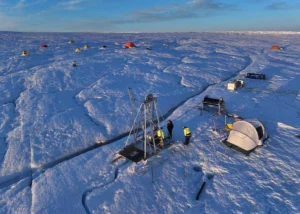
Natural sources, primarily wetlands, account for the remaining 40 percent of methane emissions. However, the line between "natural" and "human-caused" is blurring due to climate feedback loops. As the planet warms, tropical wetlands are expanding due to increased rainfall, and Arctic permafrost is thawing.
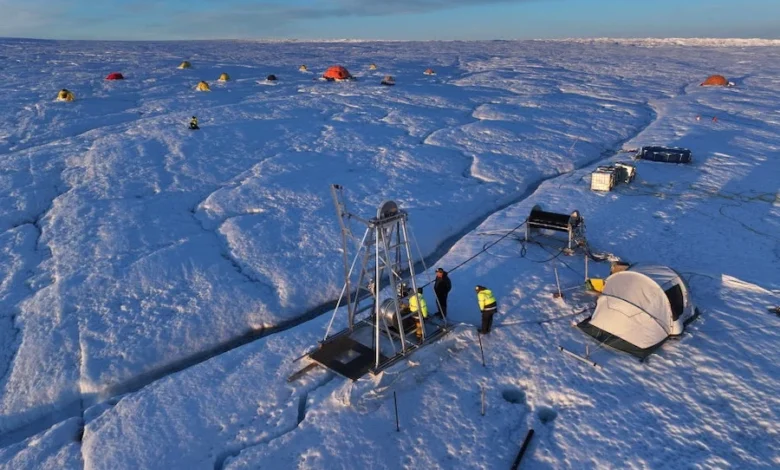
The permafrost contains twice as much carbon as is currently in the atmosphere. As it melts, ancient organic matter decomposes, releasing both CO2 and methane. This creates a "positive feedback loop" where warming causes more methane release, which in turn causes more warming. Similarly, wildfires—which are increasing in frequency and intensity—release substantial methane. California’s 2020 wildfire season alone contributed nearly 14 percent of the state’s total annual methane emissions.
Debunking the "Bridge Fuel" Myth
For years, natural gas (which is primarily methane) was marketed as a "bridge fuel" because it emits about half as much CO2 as coal when burned for electricity. However, recent data suggests this advantage is often negated by leaks. If just 0.2 percent of methane leaks during the extraction and transport of liquefied natural gas (LNG), its climate impact becomes comparable to coal. Some studies now indicate that when the 20-year warming potential is considered, LNG may be 33 percent more damaging to the climate than coal. This has led to intense criticism of planned LNG export terminal expansions in the U.S. and Australia.

Public Health and Economic Implications
Reducing methane is not only a climate imperative but a public health necessity. Methane is a key precursor to ground-level ozone (smog), which causes respiratory illnesses and heart disease. Experts estimate that methane-generated ozone is responsible for 500,000 premature deaths annually worldwide. Furthermore, ozone reduces crop yields; every million tons of methane reduced could prevent the loss of 145,000 metric tons of essential crops like wheat and soy.
Pathways to Mitigation
The International Energy Agency (IEA) asserts that the oil and gas sector could reduce its methane emissions by 70 percent using existing technology, with 40 percent of those reductions coming at no net cost because the captured gas can be sold.
In agriculture, solutions include seaweed-based feed supplements for cattle, which can reduce enteric methane by up to 82 percent. For rice, "alternate wetting and drying" techniques can cut emissions by 45 percent by oxygenating the soil periodically. In the waste sector, diverting organic matter from landfills to composting facilities or using anaerobic digesters to capture biogas offers a circular economy solution.

Emerging "direct removal" technologies are also being explored. This includes geoengineering methods like releasing iron salts into the atmosphere to accelerate methane breakdown, or leveraging nature-based solutions like forest conservation, as certain tree barks have been found to host methane-consuming bacteria.
Analysis of Global Progress
While 159 nations have signed the Global Methane Pledge, implementation remains the primary hurdle. Total methane emissions reached record highs in 2023, signaling a gap between political rhetoric and industrial action. However, new regulations—such as the U.S. Methane Emissions Reduction Program and the EU’s first-ever methane import standards—are beginning to put a price on methane waste.
The urgency cannot be overstated. If the world is to limit global warming to 1.5 degrees Celsius, methane emissions must be slashed by 34 percent by 2030. Because of its short lifespan and high potency, methane is the "emergency brake" of climate change. Applying that brake now offers the most immediate hope for stabilizing the global climate for future generations.