Decoding Supplement Safety Understanding FDA Registration GMP Standards and Third Party Testing in the Growing Wellness Market


The dietary supplement industry has experienced an unprecedented surge over the last decade, transitioning from a niche health-store category into a central pillar of the global wellness economy. As consumers increasingly seek proactive ways to manage stress, enhance cognitive function, and bolster their immune systems, products like functional mushroom coffee and adaptogenic blends have moved into the mainstream. However, this rapid expansion has created a complex landscape of marketing claims that can be difficult for the average consumer to navigate. Terms such as FDA-registered, GMP-certified, and third-party tested are frequently used to signal quality, yet they represent distinct regulatory and voluntary standards that are often misunderstood. To make informed choices, it is essential to look beyond the branding and understand the rigorous frameworks that govern how these products are manufactured, tested, and marketed.
The regulatory environment for dietary supplements in the United States is defined largely by the Dietary Supplement Health and Education Act of 1994 (DSHEA). Under this federal law, the Food and Drug Administration (FDA) does not have the authority to approve dietary supplements for safety or effectiveness before they are marketed. Instead, the responsibility falls on the manufacturers to ensure their products are safe and that their claims are substantiated by adequate evidence. This "post-market" regulatory structure makes transparency and voluntary adherence to high manufacturing standards the primary benchmarks for consumer safety.
The Distinction Between FDA Registration and FDA Approval
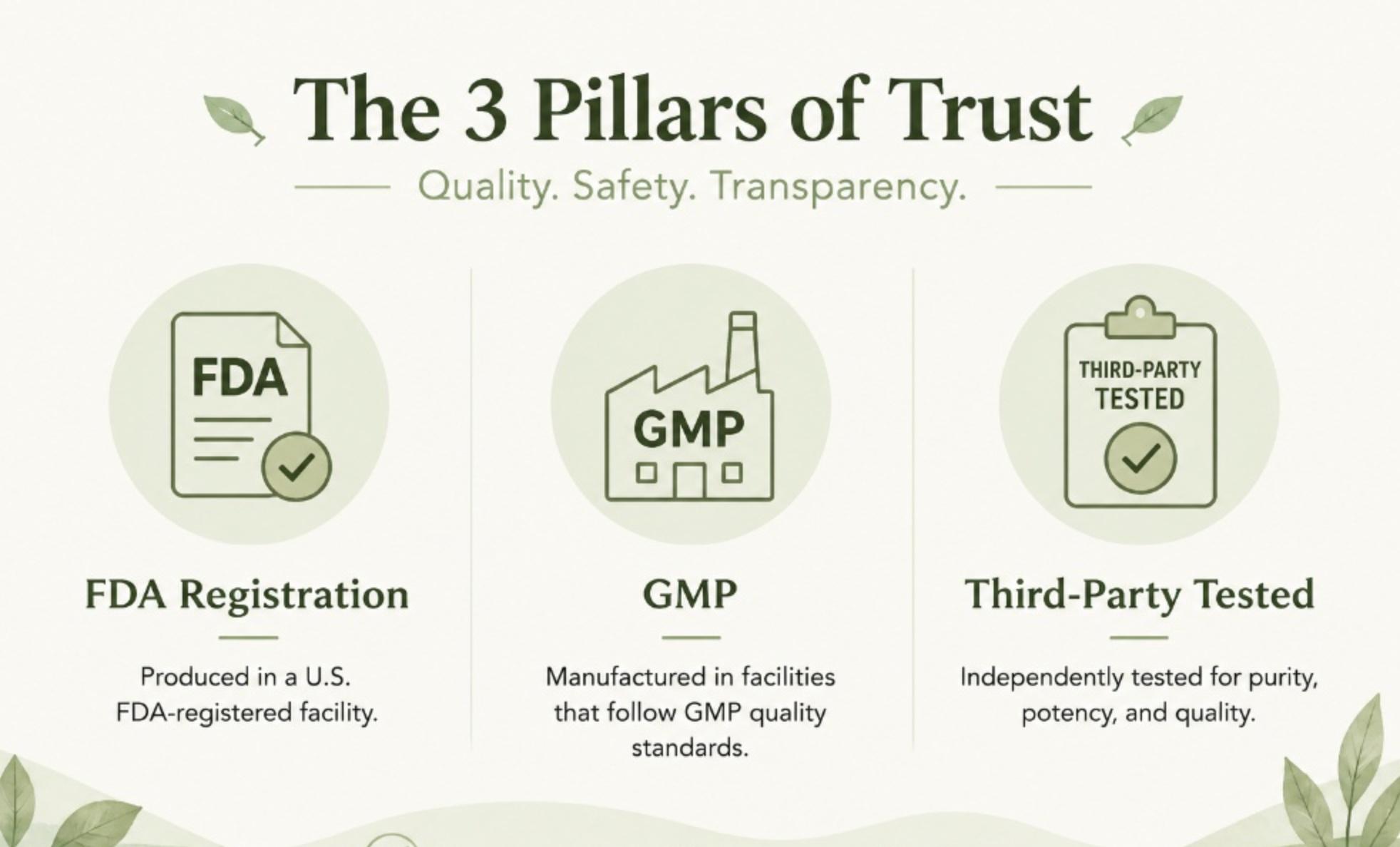
One of the most common misconceptions in the wellness industry is the belief that a product labeled as "FDA-registered" has been vetted or approved by the federal government for its health benefits. In reality, FDA registration is a mandatory requirement for any facility that manufactures, processes, packs, or holds food and supplements for consumption in the United States. This registration is part of the Public Health Security and Bioterrorism Preparedness and Response Act of 2002, which allows the FDA to track the location and source of food products in the event of a public health emergency.
When a brand like Nature Echo states that its mushroom coffee is produced in an FDA-registered facility, it is confirming that the manufacturing site is known to the agency and is subject to inspection. It does not, however, imply that the FDA has tested the specific formulation of the coffee or verified the health claims made on the packaging. For consumers, the value of FDA registration lies in the accountability of the supply chain; it ensures that the product is not being manufactured in an "underground" or untraceable environment.

Good Manufacturing Practices: The Blueprint for Consistency
While registration identifies where a product is made, Good Manufacturing Practices (GMP) dictate how it is made. GMP standards are a set of requirements enforced by the FDA (specifically under 21 CFR Part 111 for dietary supplements) to ensure that products are consistently produced and controlled according to quality standards. Adherence to GMP is designed to minimize the risks involved in any pharmaceutical or supplement production that cannot be eliminated through testing the final product.
The main risks addressed by GMP include the accidental contamination of products, incorrect labels on containers, and insufficient or excessive levels of active ingredients. A GMP-certified facility must implement stringent protocols regarding personnel hygiene, equipment maintenance, raw material sourcing, and detailed record-keeping. For a consumer, a product manufactured under GMP standards offers a higher degree of assurance that what is listed on the label is actually what is inside the package, and that the product was created in a clean, controlled environment.
The Role of Independent Third-Party Testing
Because the supplement industry is largely self-regulated, third-party testing has emerged as a vital tool for establishing consumer trust. This process involves sending samples of a product to an independent, accredited laboratory that has no financial stake in the brand. These laboratories test for a variety of factors, including the presence of heavy metals (such as lead, mercury, and arsenic), microbial contaminants (like E. coli, salmonella, and mold), and the potency of the active ingredients.
Third-party testing serves as a final check on the manufacturing process. Even in a GMP-compliant facility, raw materials can occasionally be compromised at the source. For instance, mushrooms are bioaccumulators, meaning they can absorb minerals and heavy metals from the soil in which they grow. Independent testing ensures that these natural ingredients meet safety thresholds before they reach the consumer. Brands that prioritize transparency often make these test results available through a Certificate of Analysis (COA), which provides a batch-specific breakdown of the laboratory findings.
Case Study: Nature Echo Mushroom Coffee and Ingredient Transparency
As the market for functional beverages grows, products like Nature Echo Mushroom Coffee serve as an example of how brands are attempting to meet these heightened consumer expectations for transparency. This specific blend features a combination of 11 different mushroom species, including popular varieties such as Lion’s Mane, Reishi, and Cordyceps, alongside 300 mg of ashwagandha and FOS prebiotic fiber.

In the context of the "Three Pillars of Quality"—FDA registration, GMP standards, and third-party testing—Nature Echo provides a template for the type of disclosure consumers should look for. The formula offers a total mushroom blend of 2,000 mg per 6g serving. While many brands use "proprietary blends" to hide the exact dosages of their ingredients, the disclosure of the total mushroom content and the specific dosage of ashwagandha allows consumers to compare the product against clinical research. For example, 300 mg of ashwagandha is a commonly studied dosage in clinical trials focused on stress reduction and cortisol management.
Furthermore, at a price point of approximately $0.67 per cup, the product highlights a shift in the industry toward making high-standard wellness products more accessible. Historically, heavily tested and certified supplements carried a significant premium, but as the supply chain for functional ingredients like mushrooms matures, economies of scale are beginning to benefit the end-user.
Decoding the Label: What Consumers Should Look For
Navigating the supplement aisle requires a critical eye. Beyond the three main quality indicators, experts suggest several other steps for verifying the integrity of a wellness product:
- The Certificate of Analysis (COA): Consumers should not hesitate to ask a company for a COA. A reputable brand will have these documents ready and should be able to match the COA to the batch number printed on the product’s packaging.
- Avoidance of "Label Dressing": This refers to the practice of including a very small, ineffective amount of a popular ingredient just so it can be featured on the marketing materials. Checking the total milligrams of active blends, as seen in the 2,000 mg mushroom count of the Nature Echo formula, helps determine if the product contains enough of the functional ingredient to be meaningful.
- Source of Ingredients: Knowing where ingredients are sourced is increasingly important. For mushrooms, this often involves understanding if the product is made from the "fruiting body" (the actual mushroom) or the "mycelium" (the root system grown on grain). Transparency regarding the parts of the plant or fungi used is a sign of a high-quality brand.
- Standardized Extracts: For botanicals like ashwagandha, look for mentions of standardized extracts. This ensures that the active compounds (such as withanolides in ashwagandha) are present in consistent levels across every batch.
The Economic and Cultural Shift Toward Functional Wellness
The rise of mushroom coffee and similar supplements reflects a broader cultural shift in how people view their daily rituals. The traditional morning coffee, while a staple of global culture, is being re-evaluated by consumers who are wary of the "caffeine crash" and jitteriness associated with high-stimulant intake. By blending coffee with functional fungi and adaptogens, manufacturers aim to provide a more balanced energy profile.
The economic implications are significant. The global functional mushroom market was valued at over $25 billion in 2022 and is projected to grow at a compound annual growth rate (CAGR) of over 10% through 2030. This growth is driving innovation in extraction techniques and cultivation, but it also increases the risk of low-quality "copycat" products entering the market. This makes the adherence to GMP and third-party testing more than just a marketing advantage—it is a necessary safeguard for the industry’s long-term viability.
Impact and Future Outlook
As the wellness industry continues to evolve, the pressure for "radical transparency" is likely to increase. Regulatory bodies may eventually move toward stricter pre-market requirements, but until then, the burden of verification remains a collaborative effort between brands and consumers. Brands that invest in FDA-registered facilities and rigorous independent testing are not just protecting their customers; they are setting a standard that may eventually become the baseline for the entire industry.
The integration of health-focused ingredients into daily habits—like replacing or enhancing a morning cup of coffee with a mushroom blend—represents a move toward holistic health management. However, as the industry matures, the "magic" of these ingredients must be backed by the "math" of manufacturing standards. By understanding the nuances of FDA registration, GMP, and third-party testing, consumers can confidently navigate the wellness boom, ensuring that their daily choices contribute to their long-term health and well-being.
Ultimately, the goal of these quality standards is to provide peace of mind. When a consumer chooses a product like Nature Echo, they are looking for more than just a beverage; they are looking for a commitment to quality that justifies the integration of the product into their daily lives. In an era where wellness is a top priority, the clarity provided by these regulatory and quality benchmarks is the most valuable ingredient of all.