Deepest Animal Colony Ever Discovered: Chinese Submersible Unveils Vibrant Ecosystem Six Miles Beneath the Ocean Surface

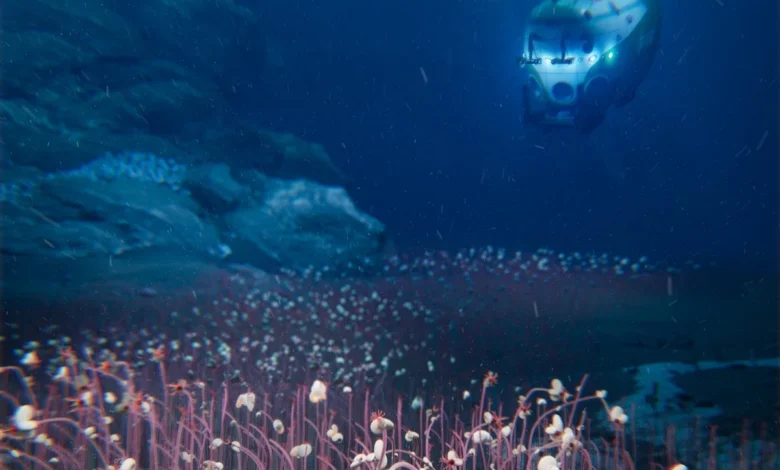
In a discovery that fundamentally alters the scientific understanding of life’s resilience, researchers operating the Chinese manned submersible Fendouzhe have identified the deepest and most extensive animal communities ever recorded. Located nearly six miles (approximately 9.5 kilometers) below the ocean surface within the Mariana Trench and other hadal zones, these thriving colonies of mollusks, worms, and various invertebrates challenge long-held assumptions that the deepest reaches of the ocean are "biological deserts." The findings, published in the prestigious journal Nature, suggest that the extreme pressures and perpetual darkness of the hadal zone—the deepest region of the ocean—host vibrant "oases" of life sustained by chemical energy rather than sunlight.
The expedition, led by the Institute of Deep-sea Science and Engineering (IDSSE) under the Chinese Academy of Sciences (CAS), utilized the advanced Fendouzhe (meaning "Striver") submersible to conduct a series of 23 dives into the Mariana Trench throughout 2024. During these descents, scientists observed thousands of organisms, including siboglinid polychaetes (tubeworms) and various bivalve species, flourishing in an environment where the pressure is over 1,000 times greater than at sea level. This discovery represents a landmark achievement in marine biology, providing the first comprehensive documentation of large-scale, chemosynthesis-based communities at such extreme depths.
The Science of Hadal Chemosynthesis
The most striking aspect of the discovery is the mechanism by which these deep-sea communities survive. In the upper layers of the ocean, the food web is driven by photosynthesis, where plants and phytoplankton convert sunlight into energy. However, sunlight cannot penetrate beyond the first 1,000 meters of the ocean. In the "hadal zone"—defined as depths between 6,000 and 11,000 meters—life was previously thought to rely almost exclusively on "marine snow," the slow descent of organic detritus from the surface.
The new study reveals that these deep-sea colonies are sustained by chemosynthesis. This process involves microbes that convert chemicals such as methane and hydrogen sulfide into organic matter. According to the research team, these chemicals are transported along geological faults that traverse deep sediment layers in the trenches. Methane is produced microbially from organic matter deposited in the trench over millennia, as confirmed by isotopic analysis of the surrounding fluids.
Lead author Xiatong Peng noted that the discovery of these "chemical-eating" organisms suggests that such communities might be more widespread than previously anticipated. The geological similarities between the Mariana Trench and other deep-sea trenches, such as the Kuril-Kamchatka and the western Aleutian Trench, imply that the Earth’s deepest valleys may be interconnected by a network of chemosynthetic life.
A Detailed Look at the Deep-Sea Inhabitants
The visual data captured by the Fendouzhe recorded a diverse array of life forms that have adapted to the crushing pressures of the abyss. Among the most prominent residents were fields of tubeworms, some growing up to a foot in length, clustered around "snow-like" microbial mats. These mats serve as the foundation of the ecosystem, providing the primary energy source for the larger animals.
Beyond the tubeworms, the researchers observed:
- Bivalvia and Polychaeta: Thousands of clams and mollusks were found in dense mounds, spanning a distance of over 1,500 miles across the trench floor.
- Mobile Invertebrates: The submersible’s cameras filmed free-floating marine worms, spiky crustaceans, and sea cucumbers navigating the sediment.
- Sessile Life: Sea lilies (crinoids), which are related to starfish but resemble flowers, were seen anchored to the seafloor, filtering nutrients from the water.
Mengran Du, a marine geochemist with the IDSSE and co-author of the study, described the site as a "vibrant oasis." Unlike the isolated pockets of life found in shallower hydrothermal vents, these communities appear to be part of an extensive, integrated ecosystem that thrives in what was once considered a "hostile" wasteland.
Chronology of Trench Exploration
The discovery marks a significant milestone in the history of deep-ocean exploration, which has traditionally been limited by the extreme technological challenges of reaching the seafloor.
- 1960: The bathyscaphe Trieste made the first manned descent to the bottom of the Mariana Trench (Challenger Deep). Explorers Jacques Piccard and Don Walsh spent only 20 minutes on the bottom and reported seeing very little life, describing the environment as desolate.
- 2012: Filmmaker James Cameron conducted a solo dive in the Deepsea Challenger. He famously described the seafloor as a "lunar-like" and "alien" landscape, noting a distinct lack of large organisms.
- 2020–2024: The Chinese submersible Fendouzhe began a series of systematic dives. In 2020, it set a national record by reaching 10,909 meters. The 2024 expeditions focused specifically on biological and chemical mapping, leading to the current discovery.
The shift from seeing the trench as a "desert" to a "thriving oasis" is largely attributed to the increased duration and frequency of the Fendouzhe missions. By spending more time on the seafloor and covering greater distances, researchers were able to locate the specific fault lines and chemical seeps where life clusters.

Implications for Global Carbon Cycling
The findings published in Nature have significant implications for how scientists model the Earth’s carbon cycle. Deep-sea trenches act as natural carbon sinks, where organic matter from the upper ocean eventually settles. The study indicates that the microbial production of methane at these depths is more active than previously thought.
By consuming this methane, the chemosynthetic animal communities play a crucial role in processing carbon that would otherwise remain sequestered in the sediment or potentially escape into the water column. This discovery forces a re-evaluation of the "hadal carbon pump," suggesting that biological activity in the deepest parts of the ocean is a dynamic component of the global climate system.
The Deep-Sea Mining Controversy
The revelation of such high biodiversity at these depths arrives at a time of intense international debate regarding deep-sea mining. Several nations and private corporations are currently seeking to mine the ocean floor for polymetallic nodules—rocks rich in cobalt, nickel, and manganese essential for green energy technologies like electric vehicle batteries.
However, marine biologists and environmental organizations have warned that mining operations could have catastrophic effects on fragile ecosystems. The International Seabed Authority (ISA), a UN-affiliated body, is currently in the process of drafting regulations for deep-sea mining. Critics argue that we cannot safely mine an environment that we are only just beginning to understand.
The discovery of the Mariana Trench colonies provides fresh ammunition for those advocating for a moratorium on deep-sea mining. If vibrant ecosystems exist at the greatest depths of the ocean, the sediment plumes and habitat destruction caused by mining could lead to the extinction of species before they are even fully documented by science.
Expert Reactions and Future Research
The scientific community has reacted to the findings with a mixture of awe and caution. "Diving in the submersible was an extraordinary experience—like traveling through time," said Mengran Du. "Each descent transported me to a new deep-sea realm, as if unveiling a hidden world."
External experts have noted that the presence of such complex life forms at 9.5 kilometers suggests that the biological limits of life are much broader than once assumed. This has further implications for astrobiology, as scientists look toward the icy moons of Jupiter (Europa) and Saturn (Enceladus), which are believed to have deep oceans beneath their surfaces. If life can thrive in the high-pressure, chemical-rich trenches of Earth, the probability of finding similar life forms in extraterrestrial oceans increases.
The IDSSE team plans to continue its exploration of the western Pacific trenches, with a focus on mapping the connectivity between different hadal communities. Future missions will likely involve the use of autonomous underwater vehicles (AUVs) to complement manned dives, allowing for a more continuous monitoring of these "oases."
Conclusion: A New Frontier in Biology
The discovery of the deepest animal colony on Earth serves as a powerful reminder of how much of our planet remains unexplored. The Mariana Trench, once viewed as a cold, dark, and empty void, is now revealed to be a complex biological frontier. As the Fendouzhe continues its work, the data it collects will be vital not only for marine biology but for understanding the fundamental processes that sustain life in extreme environments.
The study "Flourishing chemosynthetic life at the greatest depths of hadal trenches" stands as a testament to human ingenuity and the persistent drive to explore the unknown. As the world weighs the economic benefits of deep-sea resources against the preservation of unique ecosystems, the thousands of worms and mollusks living six miles down have become central figures in the global conversation about the future of our oceans.