Beyond the Bleachers: How Harvard Researchers are Mapping the Power of Sports Fandom to Heal the American Social Fabric

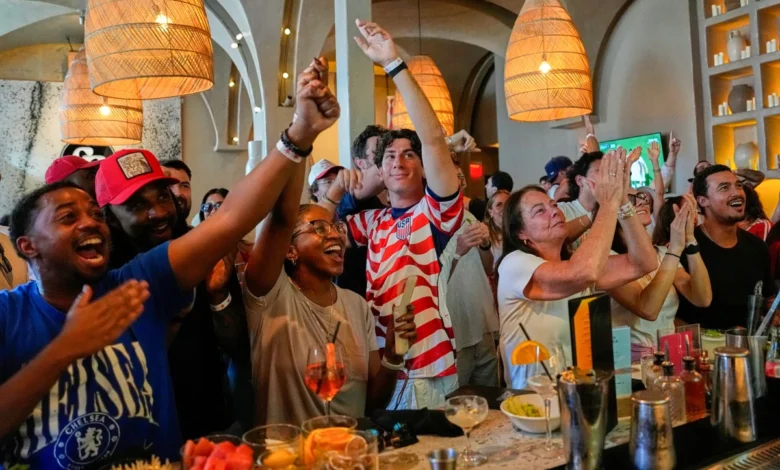
The American social fabric is currently defined by a paradox of hyper-connectivity and profound isolation. While digital platforms allow for instantaneous communication, traditional institutions that once bound diverse groups together—civic clubs, religious organizations, and local political chapters—have seen a steady, decades-long decline. This erosion has left a vacuum filled by stark partisan divides and a growing epidemic of loneliness. At the Harvard Kennedy School (HKS), a new research initiative is proposing an unconventional remedy for this fragmentation: the powerful, often undervalued phenomenon of sports fandom.
Led by Todd Rogers, the Weatherhead Professor of Public Policy, and doctoral student Audrey Feldman, the Fandom and Social Connection Initiative is exploring whether rooting for a team can serve as a vital form of "social infrastructure." Their proposition suggests that the shared rituals, identities, and emotional investments of sports fans offer a unique mechanism for bridging political, racial, and economic divides that other modern institutions fail to cross.
The Academic Gap and the Birth of an Initiative
Despite the ubiquity of sports in global culture, Rogers and Feldman discovered a significant lack of rigorous scholarly attention paid to the social impacts of fandom. In a comprehensive review of top social science journals, the researchers found that only approximately one in every 800 articles addressed sports. This "scholarly blind spot" exists despite the fact that nearly 75% of Americans follow a professional sports team, with a majority identifying their fandom as a core component of their personal identity.
The initiative was born from a realization that sports provide a "green field" for social intervention. Feldman, an economics graduate from Notre Dame who joined HKS to study behavioral science, found common ground with Rogers, a devoted Philadelphia Eagles fan, while discussing international development and social cohesion. They realized that the same behavioral tools used to increase access to social programs or promote learning in refugee populations could be applied to understand the "glue" that keeps sports fans connected.
Supported by a grant from FOX Sports, the project aims to move beyond the business of sports to analyze fandom as a "social fact." The researchers are currently seeking partnerships with professional leagues to test interventions that could turn passive spectators into active community members.
A Chronology of Declining Connection
To understand the potential impact of sports fandom, one must look at the timeline of American social decay. In the late 20th century, sociologists like Robert Putnam famously documented the decline of "social capital" in his work Bowling Alone. Putnam noted that while more people were bowling, fewer were joining leagues. This trend has accelerated in the 21st century.
By 2023, the U.S. Surgeon General issued an advisory declaring a "loneliness epidemic," noting that social isolation is as detrimental to health as smoking 15 cigarettes a day. Simultaneously, political polarization has reached historic highs. Data from the Fandom and Social Connection Initiative highlights this: in the current U.S. Congress, 19 out of 50 state delegations consist entirely of one political party, illustrating a geographic and social sorting that leaves little room for cross-partisan interaction.
Against this backdrop, sports fandom has remained remarkably resilient. While church attendance and political membership have fluctuated or fallen, the "ritual allegiance" of sports has persisted. This led Rogers and Feldman to investigate whether the sports stadium is one of the last remaining "third places"—social environments separate from the two usual social environments of home and the workplace—where diverse groups still mingle.
Data: Sports as a De-polarizing Agent
The initiative’s preliminary findings suggest that sports fandom possesses a unique "de-polarizing" effect. In a study currently under peer review, Rogers and Feldman applied game theory to measure how shared fandom influences interpersonal trust and generosity.
Participants in a computer-based survey were presented with "counter-partisans"—individuals who held diametrically opposed views on sensitive political and cultural issues. When asked to award a financial "bonus" to one of these individuals, participants were significantly more likely to choose the counter-partisan if they learned that the person rooted for the same sports team.
The data showed that shared fandom was more influential in driving this "bonus" allocation than shared race, ethnicity, education level, or home region. Only shared religion came close to matching the influence of shared sports allegiance. This suggests that the "active and elective" nature of fandom—the choice to identify with a team and participate in its rituals—creates a bond that can override deep-seated ideological animosities.
Furthermore, the researchers analyzed the political makeup of NFL fanbases. They found that even the most "partisan" fanbases are far more diverse than the general political landscape of their regions. For example, the Tennessee Titans, identified as having the most Republican-leaning fanbase, still maintain a ratio of roughly two Republicans for every one Democrat. Conversely, the Los Angeles Chargers, the most Democrat-leaning fanbase, show a similar inverse ratio. In both cases, the "stadium experience" necessitates interaction between individuals who likely disagree on almost everything else.
The Biological and Psychological Synchronization
The power of fandom is not merely anecdotal or social; it appears to be biological. Rogers points to psychological research, including work by Daniel Wann of Murray State University, which suggests that shared fandom functions like a "shared photo album." When two strangers realize they follow the same team, they immediately share a history of triumphs and heartbreaks.
Recent psycho-physiological studies have even indicated that spectators’ heart rates and brain activity (EEGs) begin to synchronize during the pivotal moments of a game. This "synchronization of hearts" creates a sense of collective effervescence—a term coined by sociologist Émile Durkheim to describe the perceived energy and harmony felt by participants in a shared ritual.
In an interview, Rogers noted that this synchronization is what makes sports a "safe" social solvent. Unlike politics, which is often viewed as a zero-sum conflict with real-world stakes, sports provide a high-emotion, low-stakes environment. This allows for what Feldman calls "mutual respect" even among rivals. In a survey of English Premier League fans, the researchers found that supporters of rival teams like Manchester United and Liverpool would rather socialize with each other than with someone who does not watch soccer at all. The shared "language" of the sport is more important than the specific team one supports.
Overcoming the Stigma of the "Homo Erectus" Fan
One of the primary hurdles for the initiative is the negative perception of sports fans among non-fans and the academic community. In one survey conducted by the project, non-fans were asked to place passionate sports fans on the "ascent of man" scale—the famous illustration of human evolution. Most non-fans placed sports fans near Homo erectus, suggesting a perception of fans as less evolved or intellectually inferior.
Rogers argues that this stigma is dangerous because it leads policymakers to overlook a potent tool for community building. "It’s social infrastructure in a world where there are few—if any—institutions left that are this wide, and deep, and diverse," Rogers stated. By viewing fandom as a primitive or purely commercial activity, society misses the opportunity to leverage it for public health and civic stability.
Real-World Interventions and Future Outlook
The Fandom and Social Connection Initiative is not content with theoretical observations. This summer, the team is partnering with the Worcester Red Sox (the AAA affiliate of the Boston Red Sox) to conduct field experiments. The goal is to test "nudges" that encourage spectators to interact with their neighbors in the bleachers, turning a solitary viewing experience into a social one.
The researchers have already begun public outreach, including a 2023 op-ed in TIME magazine that framed NFL fandom as a "universally accessible medicine" for loneliness. They argue that for individuals feeling isolated, "adopting" a team provides an instant community and a recurring schedule of social opportunities.
As the first wave of formal findings is set for publication in the coming months, the implications for public policy are significant. If sports can indeed reduce polarization and increase social connection, city planners might rethink the design of stadiums to prioritize social interaction, and community organizations might use sports-centered events as a gateway to broader civic engagement.
The work of Rogers and Feldman suggests that the "luckless" fan rooting for a perennial loser like the Cleveland Browns is not acting irrationally. Instead, they are participating in a vital social ritual that maintains their connection to their family, their neighbors, and their city. In an era of profound division, the "synchronization of hearts" found in the bleachers may be one of the most effective tools for mending the American social fabric.