A Rare 1942 Kalamazoo Pony Cruiser Mobile Emergency Room Unit Emerges as a Historical Time Capsule for Restoration

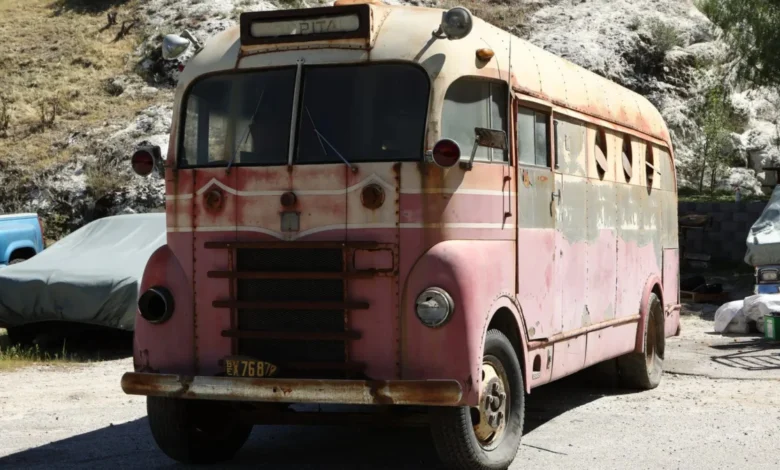
The American transportation landscape of the early 1940s was defined by rapid evolution and an intense, government-mandated focus on national security. As the United States transitioned from a peacetime economy to the "Arsenal of Democracy" following the December 1941 attack on Pearl Harbor, the mobilization effort extended far beyond the production of tanks and aircraft. Every corner of the industrial sector, including specialized automotive coachbuilders, was tasked with supporting the Office of Civilian Defense (OCD). Among the most curious and historically significant artifacts from this era is the 1942 Kalamazoo Pony Cruiser, a compact, versatile bus currently listed on the auction platform Bring a Trailer, which stands as a poignant reminder of America’s domestic emergency preparedness during the Second World War.
The Origins of the Pony Cruiser and Kalamazoo Coaches
Kalamazoo Coaches, a Michigan-based firm, carved out a niche in the commercial vehicle market by producing the Pony Cruiser, a compact bus designed to fill the void between large interstate coaches and municipal transit vehicles. Between the early 1940s and the 1950s, the company produced approximately 625 units of this chassis-based bus. These vehicles were favored for their maneuverability and reliability, often being constructed on robust Ford commercial chassis.
The company itself underwent significant structural changes over the decades, eventually evolving into the Unifab Corporation in the 1950s. Today, Unifab continues to operate out of Portage, Michigan, maintaining a legacy that spans over eight decades. However, the unit currently under auction represents a specialized diversion from the standard passenger-carrying configuration: it is one of only three known "Mobile Emergency Room Units" commissioned by the federal government.
A Chronology of a Wartime Asset
The deployment of these vehicles was inextricably linked to the geopolitical instability of the early 1940s. The timeline of this specific unit offers a window into the evolution of American emergency response:
- 1942: The vehicle is manufactured by Kalamazoo Coaches and outfitted as a Mobile Emergency Room Unit for the U.S. Office of Civilian Defense. Its primary mandate is to provide field-level surgical and triage support in the event of domestic air raids or industrial catastrophes.
- 1945–1946: Following the cessation of hostilities, the federal government divests itself of wartime assets. The vehicle is sold into the private sector.
- 1946–1951: The vehicle is acquired by the Snyder Ambulance Company. It serves an active role in civilian medical transport and emergency operations during the post-war boom.
- 1951–Present: The bus is retired from active service. It is relegated to long-term storage, effectively becoming a time capsule. During this period, it remains largely untouched, preserving medical supplies, including plasma cans, gauze, and pharmaceutical bottles, which remain inside to this day.
Technical Specifications and Engineering
The Pony Cruiser was designed for utility rather than luxury. It is powered by a 239 cubic-inch flathead V8 engine, a powerplant synonymous with mid-century Ford durability. This engine is mated to a three-speed manual transmission, a configuration that provided sufficient torque for a vehicle tasked with carrying medical equipment and staff.
The bus features a 18-inch steel wheel assembly and a period-accurate exterior design, including iconic porthole-style windows and rear barn doors that allowed for the efficient loading and unloading of stretchers. While the odometer displays approximately 19,000 miles, experts note that in vehicles of this age, such figures are often unreliable due to mechanical wear and potential gauge replacement. The top speed is estimated to be approximately 100 mph, though, in practice, the heavy medical outfitting would have necessitated a much more conservative operating speed.
The interior is perhaps the most compelling aspect of the vehicle. It functions as a self-contained medical station, featuring cabinets, a 120-volt electrical outlet, and patient tables upholstered in durable brown vinyl. The inclusion of four original rolling gurneys provides a visceral connection to the medical triage procedures of the mid-20th century.
Historical Significance and Preservation
The preservation of this vehicle presents a unique challenge and opportunity for automotive historians. Because the bus lacks a traditional serial number—a common occurrence in specialized, low-production military-contract vehicles of the era—it is being sold with a bill of sale rather than a standard title. This administrative hurdle is a small price for the acquisition of a genuine piece of American history.
The "patina" of the vehicle, characterized by its faded red-and-white livery and visible lettering reading "Snyder Ambulance Service Hospital," is considered an asset by preservationists. Unlike a full restoration, which might strip away the character of the vehicle, there is an argument for "sympathetic conservation"—stabilizing the structure and mechanical systems while leaving the aesthetic evidence of its service life intact.
Broader Implications for Automotive History
The story of the Pony Cruiser is part of a larger, often overlooked narrative: the decline of non-Detroit automotive manufacturing in the United States. While the Big Three—Ford, General Motors, and Chrysler—dominated the public consciousness, smaller coachbuilders like Kalamazoo Coaches were essential to the functionality of American infrastructure. As these regional manufacturers disappeared or were absorbed into larger conglomerates, the unique design language they employed—characterized by utilitarian efficiency and regional ingenuity—began to vanish from the American highway.
The auction of this vehicle serves as a focal point for discussions regarding the responsibility of private collectors in preserving industrial artifacts. When an object ceases to be a functional tool—in this case, an ambulance—and becomes a historical document, the burden of ownership shifts. The buyer of this bus is not merely acquiring a vintage chassis; they are assuming the role of a curator for a specific moment in American history when the threat of conflict necessitated a level of preparedness that fundamentally altered the nation’s medical and automotive infrastructure.
The Challenges of Restoration
For potential bidders, the reality of the restoration process is stark. The vehicle requires extensive mechanical inspection, particularly the flathead V8, which has likely sat dormant for over seven decades. The structural integrity of the coachwork, given the tendency of steel frames from the 1940s to succumb to oxidation, will require a thorough assessment.
However, the primary value of the Pony Cruiser lies in its completeness. The presence of period-accurate medical supplies, the original cabinetry, and the historical documentation associated with the Snyder Ambulance Company provides a blueprint for a high-fidelity restoration.
Conclusion
As the 1942 Kalamazoo Pony Cruiser moves toward the close of its auction, its future remains uncertain. Whether it is destined for a private collection, a museum, or a comprehensive restoration project, its value remains constant as an emblem of a defining era in American history. It stands as a testament to the versatility of the American industrial machine and the dedication of the civil servants who, in the shadow of war, ensured that if the worst were to happen, the equipment to save lives would be ready to roll. The bus is more than just a relic of the 1940s; it is a rolling archive, waiting for the next chapter of its journey to begin.