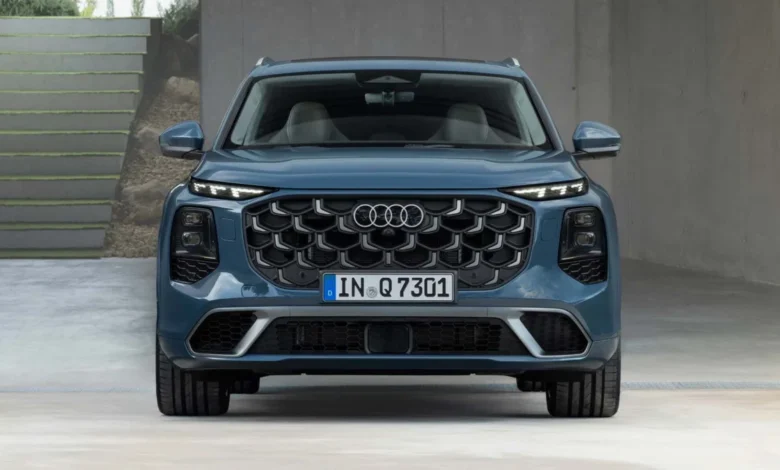
Audi has officially unveiled the 2027 Q7, marking a comprehensive overhaul for its flagship mid-size luxury SUV. This latest iteration introduces a bold new design language, substantial enhancements to its powertrain lineup, and a suite of cutting-edge technological integrations designed to maintain its competitive edge in a crowded marketplace. As the vehicle prepares to arrive in United States showrooms during the fourth quarter of this year, the German automaker has confirmed a price increase across the range, reflecting the extensive mechanical and aesthetic improvements bestowed upon the model.
The base 2027 Audi Q7 will carry a starting manufacturer’s suggested retail price (MSRP) of $70,900. This represents a $3,300 increase over the outgoing 2026 model, which was priced at $67,600. For enthusiasts seeking the pinnacle of Audi’s SUV performance, the high-performance SQ7 has also seen a price adjustment; it will now start at $98,700, an increase of $4,900 over its predecessor. These price adjustments position the Q7 as a premium offering that prioritizes high-displacement performance and standard three-row utility, distinguishing it from several key rivals in the German luxury segment.
Evolution of the Powertrain: More Power, Better Efficiency
The most significant mechanical change for the 2027 model year lies beneath the hood. Audi has retired the previous entry-level configurations in favor of a more robust standard powertrain. The 2027 Q7 now comes standard with a twin-turbocharged 2.9-liter V6 engine. This sophisticated powerplant delivers a commanding 429 horsepower and 442 pound-feet of torque.
The impact of this engine update is immediately visible in the vehicle’s performance metrics. Audi reports that the 2027 Q7 can accelerate from zero to 60 miles per hour in just 4.8 seconds. This is a remarkable 0.7-second improvement over the previous model, a leap that effectively moves the Q7 into a higher tier of athletic performance. By standardizing this high-output V6, Audi is signaling a shift away from four-cylinder base models in its mid-size luxury tier, focusing instead on providing the effortless acceleration expected by premium buyers.
For those demanding supercar-adjacent performance in a family-sized package, the 2027 SQ7 remains the crown jewel of the lineup. It continues to utilize Audi’s celebrated twin-turbocharged 4.0-liter V8 engine, which has been refined to produce 591 horsepower and 590 lb-ft of torque. This powerhouse allows the SQ7 to sprint to 60 mph in a blistering 3.7 seconds—an improvement of 0.3 seconds over the 2026 version. This level of performance places the SQ7 in direct competition with dedicated performance SUVs, offering a blend of utility and raw speed that few competitors can match.
Design and Aesthetic Overhaul
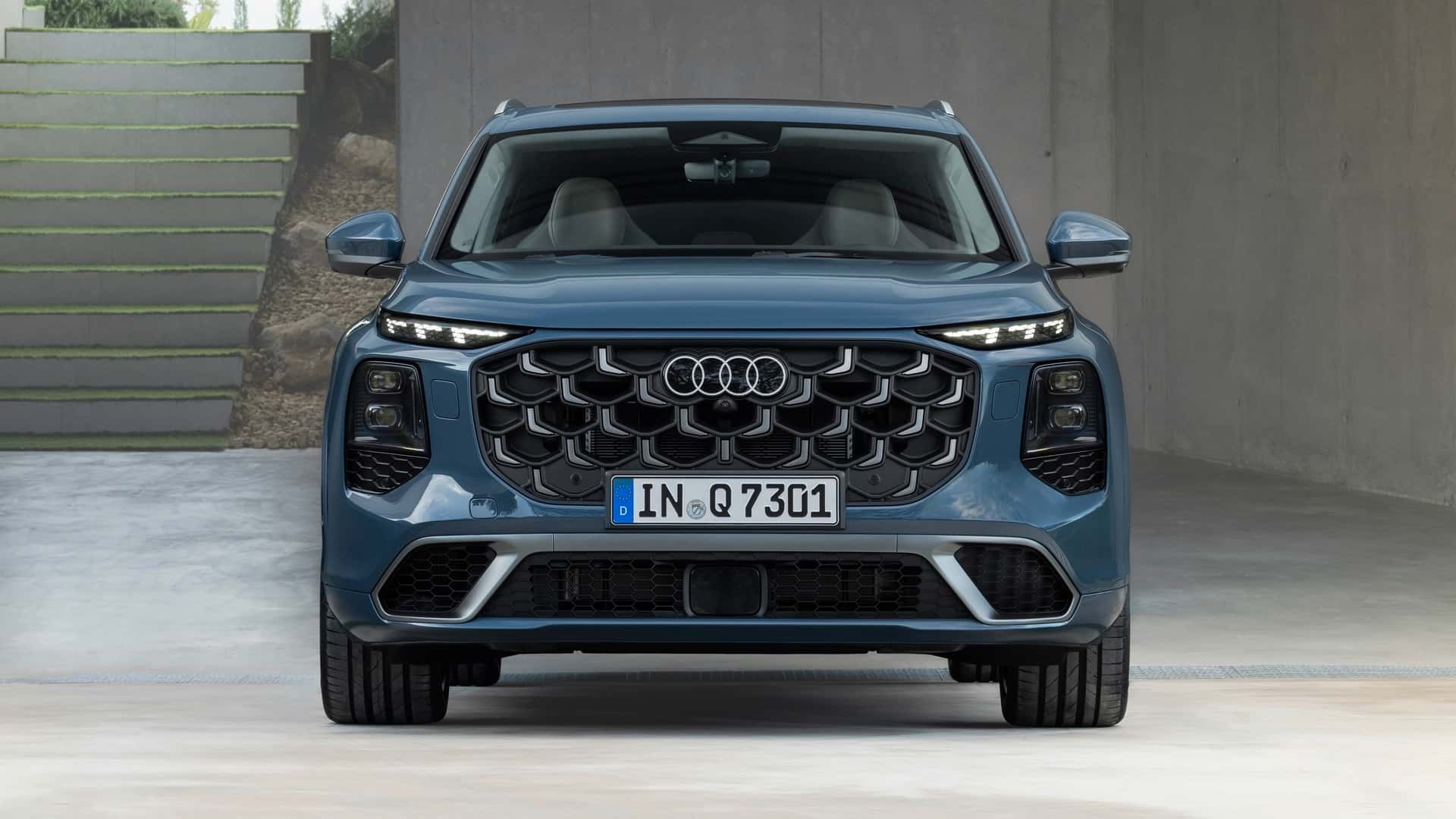
Beyond the mechanical updates, the 2027 Q7 features a major styling refresh that aligns it with Audi’s modern design philosophy. The exterior is characterized by a revised "Singleframe" grille, which now features a more prominent octagonal design and unique inlays that vary depending on the trim level. The front fascia has been sculpted to appear wider and more aggressive, bolstered by larger air intakes that serve both aesthetic and cooling purposes.
One of the hallmarks of the 2027 update is the introduction of advanced lighting technology. The Q7 now offers HD Matrix LED headlights with Audi’s latest laser light technology. These units are not only more powerful but also highly customizable, allowing drivers to choose between four different digital light signatures via the infotainment system. At the rear, the SUV features digitalized OLED taillights for the first time, which include a proximity indication feature that illuminates the lights if another vehicle approaches within 6.6 feet of a stationary Q7.
Interior Sophistication and the Digital Stage
The cabin of the 2027 Q7 has undergone a digital transformation, centered around what Audi calls the "Digital Stage." This layout features the Audi Virtual Cockpit as standard, complemented by a dual-screen MMI touch response system. For the 2027 model year, Audi has updated the infotainment software to allow for the seamless integration of third-party applications. Passengers can now access popular services such as Spotify, Amazon Music, and YouTube directly through the vehicle’s interface without needing a smartphone connection.
Material quality has also been elevated. Audi has introduced new decorative inlays, including natural elm wood and matte carbon twill, alongside an expanded palette of leather upholstery options. Despite the technological focus, the Q7 remains one of the most practical vehicles in its class. Unlike many of its primary competitors, the Q7 continues to offer three rows of seating as standard equipment. This configuration provides a distinct advantage for families who require the flexibility of seven seats without having to step up to a full-size luxury SUV.
Competitive Landscape: Audi vs. BMW vs. Mercedes-Benz
The 2027 Audi Q7 enters a market where competition is fiercer than ever. Its primary rivals, the BMW X5 and the Mercedes-Benz GLE, have also seen recent updates, creating a complex choice for consumers.
The 2027 BMW X5 starts at $69,800, making it $1,100 more affordable than the base Q7. The X5 40i is equipped with a 3.0-liter turbocharged straight-six engine producing 394 horsepower. While the BMW is slightly cheaper and offers legendary handling dynamics, it comes standard with only two rows of seats; adding a third row to the X5 requires an additional expenditure, which narrows the price gap with the Audi.
Mercedes-Benz, meanwhile, has taken a different approach with the 2027 GLE. While pricing for the 2027 model is still being finalized, the 2026 GLE 350 starts at $62,250. This significantly lower entry price is achieved by using a 255-horsepower 2.0-liter four-cylinder engine. However, when compared on a more equal footing, the 375-horsepower GLE 450 (featuring a 3.0-liter inline-six) carries a price tag of $72,250—making it $1,350 more expensive than the more powerful Audi Q7.
| Model | Starting Price (MSRP) | Base Horsepower | Standard Seating |
|---|---|---|---|
| 2027 Audi Q7 | $70,900 | 429 hp | 3 Rows |
| 2027 BMW X5 | $69,800 | 394 hp | 2 Rows |
| 2027 Mercedes-Benz GLE | $62,250 (Est.) | 255 hp | 2 Rows |
This data suggests that while the Audi Q7 has a higher entry price than the Mercedes, it offers a superior value proposition for buyers seeking performance and seating capacity. The Q7’s 429-hp output dwarfs the base Mercedes and outpaces the base BMW, effectively positioning it as the performance leader among standard entry-level German mid-size SUVs.
Market Analysis and Strategic Implications
The decision to increase the price of the Q7 while simultaneously boosting its performance specs reflects a broader trend in the luxury automotive sector. As manufacturers transition toward electrification, the remaining internal combustion engine (ICE) models are being pushed further upmarket. By offering more power and more standard features, Audi is attempting to capture the "last-of-the-breed" ICE buyers who are willing to pay a premium for high-displacement, high-output engineering before the brand moves toward a fully electric lineup in the coming decade.
The 2027 Q7 also serves as a critical bridge for Audi. As the brand rolls out its e-tron electric vehicles, the Q7 remains a high-volume profit driver that funds future research and development. The inclusion of three-row seating as a standard feature is a calculated move to dominate the suburban family market, where the BMW X5 and Mercedes GLE are often viewed as slightly too small or less versatile in their base configurations.
Timeline and Availability
The 2027 Audi Q7 and SQ7 are scheduled to begin arriving at United States dealerships in the fourth quarter of 2024. Production is expected to remain centered at the Volkswagen Group’s Bratislava plant in Slovakia, where the Q7 is built alongside other MLB Evo platform vehicles like the Porsche Cayenne and Volkswagen Touareg.
Industry analysts suggest that the fourth-quarter launch is strategically timed to capture year-end luxury sales, which traditionally see a spike as consumers look to take advantage of holiday promotions and tax incentives for business-use vehicles. With its new styling, significantly improved acceleration, and updated technology suite, the 2027 Q7 is poised to be a strong performer for Audi as it navigates a shifting automotive landscape.
In conclusion, the 2027 Audi Q7 represents more than just a simple facelift. It is a fundamental realignment of the model’s value proposition. By moving to a 429-horsepower standard and enhancing the SQ7 to near-supercar levels, Audi has ensured that its mid-size SUV remains a formidable contender against its perennial rivals from Munich and Stuttgart. For the luxury consumer, the choice now hinges on whether the Q7’s blend of standard power and three-row utility justifies the $3,300 premium over its predecessor. Based on initial specifications, Audi has made a compelling case that it does.