California Senate Bill 1392: Understanding the New Smog Exemption Landscape for Classic Car Enthusiasts

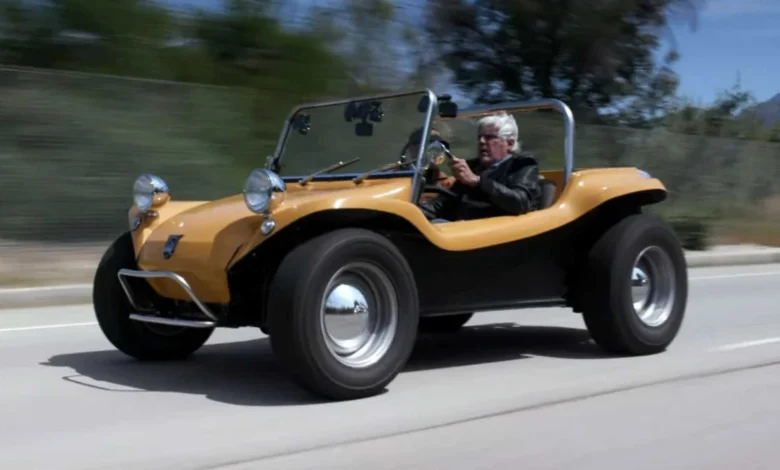
California, a state often criticized by automotive enthusiasts for its stringent environmental regulations, maintains one of the most robust and diverse collector-car communities in the United States. While the state’s commitment to air quality through the California Air Resources Board (CARB) has historically placed a heavy burden on vehicle owners, a legislative shift is currently underway. Governor Gavin Newsom has officially signed Senate Bill 1392—widely known as "Leno’s Law"—into existence. Named after legendary television host and automotive collector Jay Leno, the legislation introduces a modified framework for smog-check exemptions, aiming to balance the state’s environmental goals with the preservation of automotive heritage.
The Legislative Framework of SB 1392
The core of Senate Bill 1392 revolves around a shift in the eligibility criteria for smog-check exemptions. Currently, California requires most gasoline-powered vehicles produced in 1976 or later to pass a biennial smog inspection to maintain registration. Under the new statute, this rolling exemption will undergo a systematic expansion.
Starting in January 2028, the exemption threshold will shift to include pre-1981 model-year vehicles. This does not represent a blanket exemption for all vehicles of that vintage; rather, it introduces specific qualifying conditions. To benefit from the new rule, a vehicle must meet one of two criteria: it must be registered officially as a collector car, or it must be driven fewer than 1,000 miles per year. Following the 2028 implementation, the exemption will advance by one model year annually through 2033, at which point any vehicle produced prior to 1986 will be eligible for the exemption, provided it meets the aforementioned usage or registration requirements.
Contextualizing the Change: The Evolution of Smog Law
To understand the significance of this legislation, one must look at the timeline of California’s emissions oversight. The state began implementing smog checks in 1984, originally targeting vehicles from 1966 and newer. Over the decades, the "rolling" exemption, which allowed older vehicles to eventually age out of the testing requirement, was frozen at the 1976 model year in 2005. For nearly two decades, the automotive community lobbied for this date to be moved forward to acknowledge the technological advancements in emissions control systems that appeared in the early 1980s.
The introduction of Senate Bill 1392 serves as the first major legislative thaw of this frozen date. By codifying a gradual, year-over-year progression, the bill avoids the sudden environmental impact that a blanket exemption for all pre-1990 vehicles might have caused, while simultaneously providing a predictable timeline for collectors and restoration shops.
The Role of Advocacy and Legislative Support
The passage of the bill was far from a solitary effort. It required years of collaboration between the Specialty Equipment Market Association (SEMA), state legislators, and prominent figures in the car community. Senators Dave Cortese and Shannon Grove were instrumental in navigating the bill through the legislative process, balancing the demands of environmental protection agencies with the concerns of the automotive industry.
SEMA CEO Mike Spagnola lauded the development, framing it as a victory for the "automotive ecosystem." In his official statement, Spagnola noted that the bill demonstrates the state’s ability to protect air quality while acknowledging the cultural value of classic vehicles. The emphasis on "shared automotive heritage" highlights the argument often used by supporters: that classic cars represent a negligible fraction of total vehicle miles traveled in California and contribute minimally to overall smog levels compared to modern, high-volume traffic.
Analyzing the Limitations and Real-World Impact
While the automotive community has celebrated the passage of the bill, industry analysts suggest that a degree of caution is necessary. The law is not a universal solution for all vintage vehicle owners. The requirement that a car must be either a "collector car" or driven under 1,000 miles annually creates a barrier for the "daily driver" classic enthusiast.
For an individual who uses a 1982 sedan as their primary mode of transportation, the costs and maintenance requirements associated with the smog check remain unchanged. Furthermore, the definition of a "collector car" involves specific registration categories that may require additional fees or proof of non-daily use, which can deter the average owner of an aging vehicle.
From a data-driven perspective, the impact of SB 1392 on total air quality is expected to be statistically insignificant. Studies regarding vehicle emissions consistently show that the vast majority of air pollution in urban environments is generated by heavy-duty trucks and high-mileage modern vehicles. By exempting a small subset of low-mileage, well-maintained classics, the state is effectively lowering the administrative burden on hobbyists without compromising its broader environmental mandates.
The Broader Implications for California’s Automotive Culture
The passage of Leno’s Law sends a signal that the California legislature is willing to engage with the enthusiast community. For years, the fear among collectors was that the state would eventually mandate the retrofitting of modern emissions equipment onto classic cars—a move that would have been financially ruinous for many and technically impossible for some. By establishing a clear, albeit limited, path for exemptions, the government has provided a measure of long-term stability for collectors.
However, the bill also serves as a benchmark for future advocacy. The fact that the exemption only moves forward to 1986 by 2033 suggests that the legislature is hesitant to create an "open-ended" rolling exemption. This implies that future legislative cycles will likely see further debates on whether to continue the advancement of the date or to lock it at 1986 permanently.
Future Considerations for Enthusiasts
For the average enthusiast, the next few years will involve monitoring the implementation of these registration requirements. The California Department of Motor Vehicles (DMV) will be tasked with creating the administrative infrastructure to track the 1,000-mile limit for those seeking the exemption. This could involve odometer verification protocols or specialized documentation that must be filed annually.
As the industry looks toward the 2028 start date, restoration shops and hobbyists are already beginning to assess which vehicles will fall under the purview of the new law. For those who have been holding onto vehicles from the late 70s and early 80s—a period often overlooked by traditional collectors—this provides an incentive to preserve these models, as they will soon enjoy the same regulatory status as the highly coveted 1960s muscle cars.
Conclusion
Senate Bill 1392 is a milestone, but it is not the end of the road. It represents a pragmatic compromise in a state known for its uncompromising stance on environmental policy. By creating a bridge between the historical 1976 cutoff and the 1986 target, the bill provides a lifeline to a specific segment of the collector community. While it falls short of a comprehensive, unrestricted rolling exemption, it sets a vital precedent: that the preservation of automotive history is a goal that can coexist with the rigorous environmental standards of the 21st century. As the 2028 start date approaches, the eyes of the automotive world will be on California to see how this transition is managed, and whether it will serve as a blueprint for other states facing similar challenges in balancing environmental regulation with the preservation of cultural heritage.