American Diabetes Association Faces Renewed Scrutiny as Editors Allege ‘Premeditated Ambush’ and Censorship Amid Escalating Controversy


The American Diabetes Association (ADA) is once again embroiled in controversy following new allegations that deepen a rift between the organization’s leadership and its scientific community. Deputy editors of Diabetes Care, a prominent ADA journal, have publicly accused the association of refusing to publish an editorial and seven accompanying opinion articles. These articles, now posted on a preprint server, detail new allegations, including claims that ADA leadership orchestrated a "premeditated ambush" against scientists who distributed critical material at its annual meeting in New Orleans last month. This development signals a significant escalation in a dispute that has already led to high-profile resignations and a public apology from the ADA’s CEO.
The Genesis of the Dispute: The New Orleans Incident
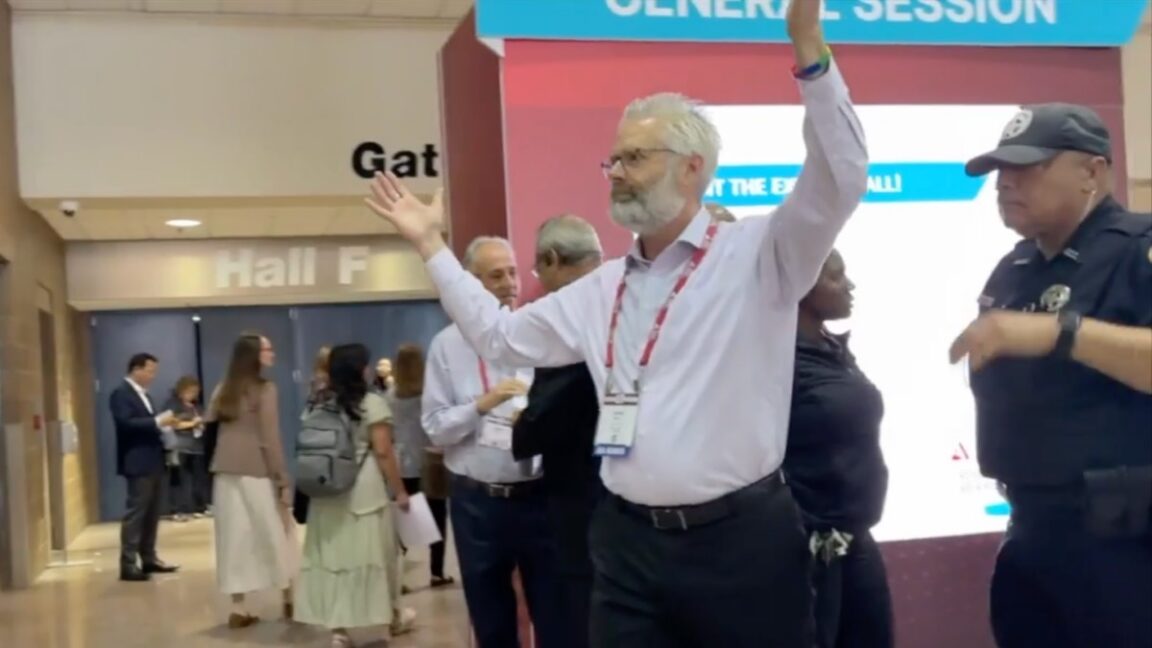
The controversy initially erupted on June 5, 2026, during the ADA’s annual meeting in New Orleans. Five highly respected scientists were forcibly removed from the conference for distributing reprints of an editorial, titled "Misguided Brushes of a Pen Continue to Dismantle," which had been published in Diabetes Care in April. The editorial sharply criticized the Trump administration’s perceived "ongoing attacks on scientific research," a stance that many in the scientific community felt jeopardized public health initiatives and research funding.
Among those ejected were Dr. Steven Kahn, a professor of medicine at the University of Washington and editor-in-chief of Diabetes Care, along with former ADA President Dr. Desmond Schatz of the University of Florida, Dr. Aaron Kelly of the University of Minnesota, Dr. Justin Ryder of Northwestern University, and Dr. Irl Hirsch, also from the University of Washington. Dr. Maureen Gannon of Vanderbilt University Medical Center was also removed. The scientists were distributing the editorial outside the conference’s opening speech, which was to be delivered by Jay Bhattacharya, head of the National Institutes of Health (NIH) under the Trump administration, who later canceled, with senior NIH official Rick Woychik stepping in.
Eyewitness accounts reported that police officers escorted the scientists out of the venue within minutes, confiscating their conference badges and threatening arrest should they attempt to return. Louisiana State Police later confirmed to media outlets that their intervention was at the explicit request of the ADA. The association subsequently barred the five individuals from attending the remainder of the conference. This heavy-handed response immediately sparked widespread outrage across the scientific and medical communities.
Initial ADA Justifications and Mounting Backlash
In the immediate aftermath, the ADA offered shifting justifications for its actions. Initially, a media team informed MedPage Today that the scientists had violated the conference’s code of conduct by distributing unauthorized materials. Subsequently, in an email to its members, the association reiterated that the removal was due to a lack of prior approval for material distribution, explicitly stating it was "not because of the viewpoints expressed."
The situation further complicated when the ADA issued a statement on Sunday, citing its status as a 501(c)(3) nonprofit organization. It claimed that federal regulations required "maintaining a strictly nonpartisan environment at all organizational events and functions." However, this justification quickly drew scrutiny, as Internal Revenue Service (IRS) guidelines for 501(c)(3) organizations primarily prohibit direct intervention in political campaigns and do not restrict individual leaders or members from expressing political views in a personal capacity or advocating on public policy issues pertinent to their mission. Many argued that scientific integrity and research funding, particularly concerning a chronic disease like diabetes, fall squarely within the ADA’s advocacy purview.
The backlash was swift and severe. Social media platforms like Twitter/X and BlueSky buzzed with condemnation, significantly boosting page views for the April editorial. Several high-profile ADA leaders resigned in protest, and a scathing letter, signed by more than 40 ADA officials, lambasted the decision as "outrageous" and the justifications as "unpersuasive" and "fatuous nonsense." This letter demanded "an immediate and unconditional public apology" and an independent review of the incident. An online petition titled "Shame on You," addressed to the ADA, garnered over 7,500 signatures, underscoring the depth of collective anger and disappointment.
ADA’s Apology and Unfulfilled Promises
Amidst the escalating criticism and negative media coverage, ADA CEO Charles Henderson posted a video statement several days later, offering an apology for the organization’s decision. Henderson acknowledged that "What transpired is not reflective of who I am, the values I hold, or the way I was raised." He pledged to "work hard to bring our community back together" and committed to commissioning a "thorough independent review of the events that occurred as well as the policies, procedures, and decision-making process that guided our actions." This apology was widely seen as a necessary, albeit delayed, step towards reconciliation.
However, according to the newly released preprint articles, the promised reconciliation and independent review have yet to materialize in a meaningful way. The "New Orleans Five" claim that a month after Henderson’s apology, there has been no direct meeting with ADA leadership, no official apology beyond the video statement, and no exoneration of the scientists. Crucially, they report a complete absence of corrective actions, no resignations of involved ADA staff, and no identification of the individual(s) responsible for the decision to forcibly remove them. This alleged inaction has fueled further distrust and prompted the deputy editors to take the extraordinary step of publishing the articles independently.
The Deepening Rift: New Allegations and Unheard Voices
The decision by Diabetes Care deputy editors Elizabeth Selvin and Cheryl A.M. Anderson to post an editorial and seven accompanying opinion pieces on a preprint server, Zenodo, marks a critical juncture in the ongoing saga. They assert that the ADA explicitly refused to publish these articles, which they provided to leadership in advance with an invitation for a simultaneous response.
"The ADA’s response was to refuse to publish these articles," Selvin and Anderson wrote in their preprint. "We are speaking out because it is unusual and unacceptable for a medical society to work at cross purposes with its members and its editors. The ADA has already tried to restrict editorial freedom once before related to our raising awareness of what is happening in Washington, DC, and, in particular, with the dismantling of the National Institutes of Health… A wrong occurred in New Orleans that the ADA has not addressed. There remain open questions surrounding the events of June 5th. It is because we wish to heal and come together following this difficult situation that we believe it is important that these articles be read and these voices heard."
These new articles unveil several "troubling new details" that suggest a deeper, more systemic issue within the ADA’s governance and its relationship with its scientific members.
A History of Tension: The 2025 Session
The roots of the current conflict, according to deputy editors Selvin and Anderson, extend back to a 90-minute session they organized in 2025 titled "How Do We Fix a Broken Health Care System?" Among the panelists was Washington state congresswoman Kim Schrier, a pediatrician living with Type 1 diabetes. Months prior to the session, ADA leadership reportedly objected to its "unbalanced" nature, requesting the inclusion of "a congressperson from across the aisle" and other speakers offering "opposing views." When this proved impractical, the ADA approved the original session but, notably, did not advertise it.
Selvin and Anderson insist the session was non-partisan, highlighting that Congresswoman Schrier’s comments focused on congressional testimonies, her personal experiences with Type 1 diabetes, her bipartisan efforts to reduce drug costs, and her work with the Congressional Diabetes Caucus. Her warnings about the potential harm of NIH funding cuts to diabetes research, they argue, were a matter of scientific advocacy, not partisan politics. In the wake of the June 5th ousters, ADA leadership further escalated tensions by canceling the scheduled annual in-person meetings with the Diabetes Care editorial board and associate editors – the sole annual opportunity for face-to-face interaction for the full editorial team.
Paradoxically, Selvin and Anderson note, the ADA has since engaged a public relations crisis firm and begun emailing advocacy messages opposing federal policies and taking strong stances on proposed changes harmful to diabetes patients and research. "These are the very things we have been writing about in the journal. The irony is not lost on us," they commented.
Resignations and Disputed Communications
The new articles also shed light on the resignation of Mark Atkinson, chair of the Scientific Sessions Meeting Planning Committee, in the wake of the June 5th events. (The ADA president-elect also resigned, though her reasons remain undisclosed.) Atkinson was listed as a signatory on the ADA’s initial June 6th letter responding to the controversy, but he now states he never agreed to the final text. He claims to have participated in discussions where he advocated for an apology rather than merely a defense of the ADA’s actions.
Atkinson had to leave the meeting early, assuming he would review any final version before its release. Instead, "a substantially different letter was released, bearing my name and that of the ADA’s chief executive officer," he wrote. "Had I been given the opportunity, I would not have agreed to have my name associated with it. I realized that remaining as chair… would imply confidence in a process that I no longer had confidence in." He described his resignation as "among the most difficult professional decisions I have ever made," adding, "I do not regret resigning. I regret the circumstances that made my resignation necessary."
The Allegation of a "Premeditated Ambush"
Perhaps the most damning allegation in the preprint comes from Dr. John Buse of the University of North Carolina School of Medicine, who took Dr. Kahn’s place chairing a symposium following the ouster. Buse now believes that "the ADA actions were a premeditated attack on Steven Kahn and other attendees" and that these actions represent "an existential threat to the ADA."

The "New Orleans Five" corroborate this, stating that ADA leadership was aware that the editorial would be distributed at the conference. Dr. Desmond Schatz reportedly texted Chief Scientific and Medical Officer Rita Kalyani before the meeting, advising her to contact Dr. Kahn to clarify where materials could be handed out, emphasizing that the activity "should not in any way be disruptive." Kalyani responded that she was on a plane and would seek details upon landing, but she never followed up.
Consequently, the five scientists proceeded with their original plan to distribute copies to attendees entering the keynote hall. During their removal, a critical exchange reportedly occurred. A police officer asked the head of conference security if "that was sufficient." The security officer then stated he needed "one more badge" and directed them to remove Dr. Gannon, who had been part of a group distributing flyers (which had already been confiscated). When Gannon asked to speak to ADA leadership to clarify any misunderstanding, the head of security explicitly stated that this was what "the client" (i.e., the ADA) had instructed them to do.
"It was an ambush," Buse concluded in his article. "ADA leadership knew exactly what was going to happen and when. They could have contacted Steven and tried to come to some accommodation. Instead they set in place armed law enforcement officers to disrupt the activity, apparently with a quota for the number of people to be hustled out of the meeting. The ADA actions are not dissimilar in nature to the efforts of our federal government to quell protests – force against people exercising constitutional rights as an act of both retribution and a display of power. We are lucky this event did not have even greater consequences."
Broader Implications for Scientific Freedom and Non-Profit Governance
This unfolding controversy carries significant implications for the American Diabetes Association and, more broadly, for scientific societies and their role in advocating for science and public health. The core tension lies between the perceived need for a non-profit organization to maintain political neutrality, especially given 501(c)(3) regulations, and the imperative for scientists and medical professionals to speak out on policy issues that directly impact research, patient care, and scientific integrity.
The alleged censorship of Diabetes Care editors raises serious questions about editorial independence within ADA-affiliated publications. Academic journals are traditionally seen as bastions of free discourse, where scientific findings and expert opinions, even if critical of prevailing policies, are encouraged for the advancement of knowledge and public good. Interfering with the publication process directly challenges this fundamental principle.
Furthermore, the accusation of a "premeditated ambush" damages the ADA’s credibility and its relationship with its members. If true, such actions suggest a severe breakdown in communication and trust, potentially alienating a significant portion of its scientific and medical community. This could lead to a decline in membership, participation in conferences, and overall support, ultimately undermining the ADA’s mission to combat diabetes. The incident also sets a troubling precedent for how scientific societies manage dissent or politically charged discussions at their events, potentially chilling open discourse at future conferences.
Calls for Accountability and a Path Forward
The "New Orleans Five" are not merely seeking an apology; they are demanding concrete actions. They call for the promised thorough investigation to be initiated, the establishment of a formal process to address professional membership concerns, and greater transparency and visibility in the ADA’s patient advocacy and advocacy for research funding. Crucially, they demand that the ADA stand behind its journal editors and their publication decisions, insisting that "Any disclaimers need to be removed from the published editorials."
Despite his clear indignation, Dr. Buse ends his editorial with a note of hope for the ADA’s future. He expresses optimism that leadership will apologize for their actions and that "people will be held to account." He envisions a restoration of members’ rights and a renewed commitment from the ADA to "stand up for science." Buse believes that an "awakening of the spirit of the science and medicine community who founded this organization 85 years ago" could emerge from this struggle, leading to a stronger ADA through a "reworking of governance and engagement to align strategy with mission."
The revelations published on Zenodo underscore that the initial apology from CEO Charles Henderson, while welcomed, was merely a first step in a much longer and more complex process of rebuilding trust and addressing fundamental issues within the American Diabetes Association. The scientific community awaits the promised independent review and decisive action to demonstrate that the organization is committed to its stated mission and the principles of scientific freedom and open discourse.
(Zenodo, 2026. DOI: 10.5281/zenodo.21300053)