Navigating the New Frontier of Federal Oversight: Higher Education Grapples with Unprecedented Civil Rights Enforcement and Funding Volatility

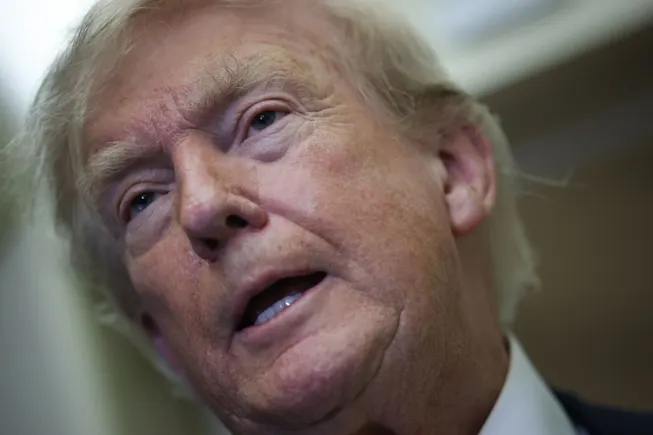
Since President Donald Trump took office last year, his second administration has significantly expanded the scope and intensity of civil rights investigations into higher education institutions, pushing the traditional boundaries of federal oversight. Federal agencies have not only opened a wave of investigations into colleges regarding pro-Palestinian encampments, diversity, equity, and inclusion (DEI) initiatives, and policies concerning transgender students, but they have also pioneered the use of immediate financial penalties as a primary tool of enforcement. A year and a half into this administration, the higher education sector remains in a state of profound uncertainty, searching for a viable blueprint to protect free speech and maintain inclusive environments without becoming the next target of federal litigation or funding freezes.
Legal experts and campus administrators describe the current landscape as a radical departure from historical norms. Peter Lake, a law professor at Stetson University and a noted expert on higher education law, characterizes the current environment as "dizzying" for university leadership. According to Lake, many campuses are attempting to navigate a "razor’s edge" where the distinction between permissible academic policy and mandatory federal compliance is increasingly blurred. This ambiguity has created a climate of "anticipatory obedience," where institutions may proactively dismantle programs or restrict speech to avoid the devastating financial consequences of a federal probe.
A Departure from Precedent: The Mechanics of Funding Termination
Historically, the Department of Education’s Office for Civil Rights (OCR) utilized a deliberate, multi-step process for addressing Title VI violations—which prohibit discrimination based on race, color, or national origin in programs receiving federal assistance. Under previous administrations, the goal was typically voluntary compliance achieved through negotiation. A 2019 Congressional Research Service analysis noted that the Education Department had not moved to terminate federal funding for a Title VI violation in over 25 years.
However, the current administration has shifted toward a more aggressive posture. Brigid Harrington, a senior attorney at Hunton Andrews Kurth, notes that the administration has, in several high-profile instances, moved to freeze or pull federal funding before investigations were completed or the legally required administrative processes were followed. Under federal law, the government is generally required to conduct a full investigation, issue formal findings of noncompliance, attempt to secure voluntary compliance, provide notice to Congress, and offer the institution a hearing before terminating funds.
Legal scholars, including Cornell University professor and former American Association of University Professors (AAUP) general counsel Risa Lieberwitz, argue that the administration has bypassed these safeguards. "They cannot cut funds without going through multiple steps, and they didn’t do that," Lieberwitz stated, referring to several recent actions. This aggressive strategy has forced many universities into a defensive posture, choosing between costly, protracted legal battles or "ransom" settlements to restore their financial stability.
The High Cost of Compliance: Settlements and Financial Tolls
The financial ramifications for institutions caught in the administration’s crosshairs have been staggering. Several major universities have opted to settle civil rights probes by paying significant sums and agreeing to policy changes that critics argue infringe upon institutional autonomy.
In July 2025, Columbia University agreed to pay $221 million to settle a series of civil rights investigations. The university defended the settlement as a necessary measure to protect billions of dollars in federal research grants, maintain its accreditation, and prevent the potential revocation of student visas for its international population. Similarly, in November, Northwestern University reached a $75 million settlement over three years. As part of the agreement, Northwestern also committed to barring transgender women from women’s sports and shared facilities, a move that highlighted the administration’s focus on gender identity policies.
The University of Virginia (UVA) took a different approach, reaching a deal in October to pause five ongoing civil rights investigations. In exchange, UVA agreed to adopt federal anti-DEI guidance and provide quarterly updates to the Department of Justice regarding its compliance. These agreements often include terms that extend far beyond the original scope of the investigation, such as mandates to reduce dependence on international enrollment or specific curriculum adjustments.
Legal Pushback and Judicial Interventions
While some institutions have settled, others have sought relief through the federal court system. The University of California (UC) system and Harvard University have both successfully obtained court orders to temporarily block the administration from freezing their federal funding. In September, U.S. District Judge Allison Burroughs issued a significant ruling blocking the freeze of more than $2 billion in research grants to Harvard, citing the government’s failure to follow the established legal process for fund termination.
The administration has responded to these judicial setbacks by pivoting its strategy. Rather than immediate freezes, the Department of Justice (DOJ) has begun filing lawsuits against these same institutions—including Harvard and the UC system—to recoup past grants and seek the legal authority to cut off future access to federal funds. This shift suggests that while the administration may be forced to respect procedural timelines, its ultimate objective of utilizing financial leverage remains unchanged.
In another notable instance of pushback, the University of Pennsylvania (Penn) challenged a subpoena from the U.S. Equal Employment Opportunity Commission (EEOC) demanding sensitive records regarding Jewish staff and faculty. While the demand was part of a probe into a "hostile work environment," the university and many of its faculty argued the request was an overreach. In April, a federal judge paused the order to comply, allowing Penn to appeal the decision.
The Policy Pivot: DEI, Title IX, and Transgender Rights
A central pillar of the administration’s higher education strategy has been the systematic targeting of Diversity, Equity, and Inclusion (DEI) initiatives. Much of this stems from an early-term executive order directing the Education Secretary to inventory Title VI complaints, specifically focusing on claims of antisemitism and race-based preferences.
The administration also formed the Task Force to Combat Anti-Semitism, a multi-agency body including the departments of Education, Justice, and Health and Human Services. While ostensibly focused on student safety, the task force has been used to investigate campus protests and encampments related to the conflict in Gaza. Critics argue that these investigations are being used to chill pro-Palestinian speech, while the administration maintains they are necessary to "root out" harassment.
Furthermore, the administration has fundamentally reinterpreted Title IX—the law prohibiting sex-based discrimination in education—to exclude protections for gender identity and to actively prohibit policies that allow transgender students to use facilities or join sports teams corresponding with their gender identity. The Stanford University investigation opened in April, which probes whether a teacher certification program discriminates based on race, further underscores the administration’s focus on dismantling what it terms "discriminatory" equity programs.
Institutional Autonomy and the "Compact for Higher Education"
In an attempt to codify its policy priorities, the administration last October invited nine prominent universities to sign a "Compact for Higher Education." The proposal promised expedited access to federal funding in exchange for the adoption of specific federal policy priorities, including the elimination of DEI programs and strict adherence to the administration’s interpretations of Title IX.
The response from the academic community was overwhelmingly negative. None of the invited colleges signed the compact, and seven rejected it outright, viewing it as a coercive attempt to trade institutional autonomy for financial security. In April 2025, more than 250 college and university leaders signed a joint letter through the American Association of Colleges and Universities (AAC&U) and the American Academy of Arts and Sciences. The letter condemned the administration’s efforts to "coerce" institutions and warned of the dangers such intrusion poses to academic freedom. The number of signatories has since grown to over 660.
"We are open to constructive reform and do not oppose legitimate government oversight," the statement read. "However, we must oppose undue government intrusion in the lives of those who learn, live, and work on our campuses."
Broader Implications for the Future of American Academia
The long-term consequences of this aggressive federal oversight remain to be seen, but the immediate impact is a marked shift toward centralized management of higher education. Peter Lake observes that the "rule of law has shifted" to recognize the immense leverage the federal government holds over universities. As institutions become more cautious, the very nature of the American university—as a site of robust, often uncomfortable debate—is under threat.
Legal experts suggest that for universities to survive this era without compromising their core missions, they must balance cooperation with principled resistance. While institutions are encouraged to cooperate with legitimate discrimination probes, Risa Lieberwitz emphasizes the need for "collective action" to uphold academic freedom.
The administration, through Education Department spokesperson Amelia Joy, maintains that its actions are rooted in the principle of accountability. "The Trump Administration has been consistent in its efforts to hold colleges and universities that receive federal funds accountable for following federal law," Joy said. "We will continue to ensure campuses across the country prioritize merit and safety over discrimination and harassment."
As the second half of the administration’s term begins, the "chilling effect" on campuses is palpable. Whether through "ransom" payments, protracted lawsuits, or the quiet dismantling of controversial programs, the relationship between the federal government and higher education has been fundamentally transformed, leaving the future of institutional autonomy in a precarious state.