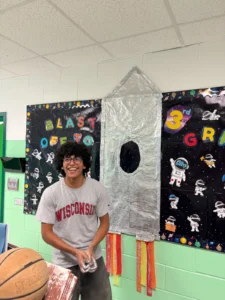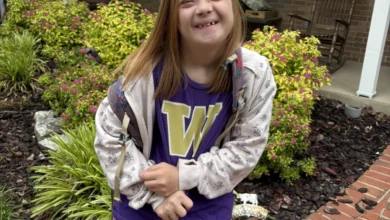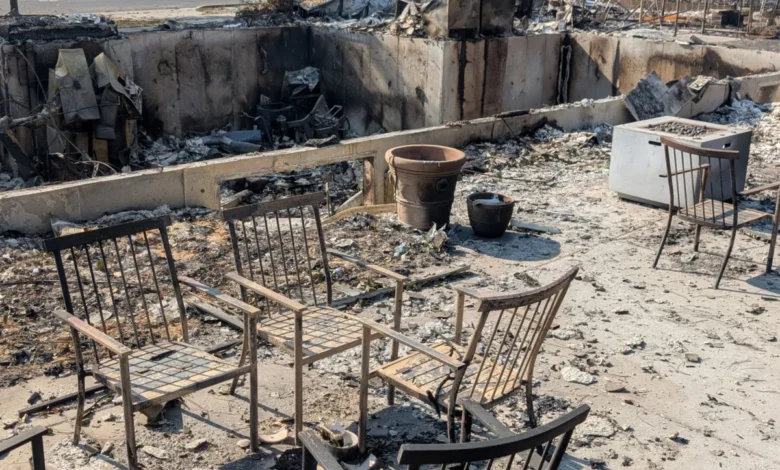
One week after the inferno that decimated swathes of eastern Washington, Mareesha Backman stood in the intake area of a temporary day camp in Spokane, her exhaustion palpable. She had spent the previous seven days navigating the chaos of displacement, sleeping in a cramped travel trailer on a remote Christmas tree farm, and managing the needs of five sons, including seven-year-old Bennett, who requires specialized care for a feeding tube. As she handed her youngest over to a stranger—a volunteer with a warm smile—Backman finally allowed herself a moment of stillness. In that quiet, air-conditioned space, she felt the first genuine relief since the fires bore down on her home from three directions.
For families like the Backmans, the emergence of emergency child-care networks has become a vital lifeline in an era defined by climate volatility. As wildfires, floods, and hurricanes grow in both frequency and intensity, school districts and nonprofits are increasingly pivoting to a model of "education in emergencies," prioritizing the psychological and logistical needs of children to ensure that communities can begin the arduous process of recovery.

The Anatomy of the Spokane Crisis
The wildfire that swept through Spokane in early August was a catastrophe of significant proportions. Driven by hot, arid conditions, the flames forced at least 60,000 residents to evacuate their homes. The statistical impact on the local educational infrastructure was severe: Spokane Public Schools reported that 169 students and 38 staff members lost their homes, while the smaller, semi-rural Nine Mile Falls School District recorded another 20 displaced students.
The chronology of the disaster response was rapid. By Monday morning, just 48 hours after the evacuation orders were issued, Spokane Public Schools transformed a local high school into a centralized resource hub. While parents navigated the complexities of filing insurance claims and securing basic necessities like food and hygiene products, school staff transitioned from summer administrative duties to frontline emergency care, setting up supervised zones in gymnasiums and auditoriums to keep students safe and engaged.
The Rise of Emergency Education
The model utilized in Spokane is increasingly recognized as a global best practice. Sarah Dryden-Peterson, a researcher at the Harvard Graduate School of Education who specializes in refugee and emergency education, notes that these camps provide more than mere supervision. "Creating predictable routines and structures is essential," she explained. By offering a stable, day-to-day framework, these camps help children process the traumatic unpredictability of disasters, effectively serving as the foundation for a community’s long-term stabilization.

The initiative in Spokane saw demand balloon almost immediately. While officials initially anticipated a modest turnout, 120 children arrived on the first day, with that number swelling to 300 by midweek. Laurie Morrison, the district’s chief academic officer, emphasized that the decision to repurpose school resources was not debated. "As an educator, I feel it’s our moral imperative," Morrison stated. "When our students and their families are facing unimaginable devastation, we stand in the gap."
The Role of Rapid-Response Nonprofits
To manage the overwhelming influx of children, the district partnered with Project:Camp, a specialized nonprofit that operates as a "rapid response" service for disaster-stricken areas. Founded with the mission to provide free, pop-up day camps in the wake of emergencies, the organization has deployed 33 camps across 10 states since 2021. From the recovery efforts following Hurricane Ian in Florida to the wildfire aftermaths in Maui and Los Angeles, the group maintains a roster of experienced camp directors ready to mobilize at a moment’s notice.
Mikey Latner, a co-founder of Project:Camp, underscores that while children benefit from high-profile activities—such as visits from performers like Leslie Carrara-Rudolph of Sesame Street—the true efficacy of the program lies in its structural simplicity. By utilizing basic supplies and collaborating with local institutions like churches, the YMCA, and the Red Cross, the organization creates a sense of familiarity and safety. For rural communities like Nine Mile Falls, where skepticism of outsiders can be high, the integration of local figures—such as youth pastor Joel Heiser—proved essential in fostering the trust necessary to support displaced families.

The Science of Trauma and Resilience
The camps are not overtly clinical, yet they are deeply informed by the science of "adverse childhood experiences" (ACEs). The objective is to restore a sense of agency and safety. Each day begins with a "ME check," where children use hand signals to indicate their current emotional and mental energy levels. This allows staff to identify those who may need a quiet space or individual attention.
The practice of "gratitude circles" has become a poignant ritual at these sites. In a recent session, children were encouraged to express what they were thankful for—often citing their families, the firefighters who saved their neighborhoods, or simply the fact that they were safe. For parents like Mareesha Backman, these moments were revelatory. Her son Bennett’s admission that he was "glad he didn’t die in the fire" provided a necessary, albeit difficult, entry point for conversations about trauma. "Going to camp meant they were surrounded by adults who love kids and understand trauma-informed practice," she noted.
Broader Implications and Data
The necessity for these services is underscored by mounting data on the impact of extreme weather. According to the RAPID Survey Project at the Stanford Center on Early Childhood, approximately two out of three parents in the United States have dealt with an extreme weather event in the past two years that negatively affected their children’s mental health or daily routines.

Research from Brown University’s SustainableED center highlights that during the 2024-25 school year alone, climate-related disasters disrupted the education of at least 9 million public school students. A 2024 study of 38,000 teenagers found that exposure to federally declared disaster areas correlates with a 20 percent higher incidence of long-term mental distress. These figures suggest that emergency child care is not merely a temporary convenience but a critical component of public health and educational stability.
Moving Toward Long-Term Recovery
As Project:Camp concluded its three-week tenure in Spokane, the focus shifted toward sustainable long-term support. The school district is now working with educational leaders from other disaster-prone regions, such as those affected by the 2025 Palisades fires in Southern California, to develop permanent emergency preparedness plans.
The challenges ahead are significant. Enrollment at Indian Trail Elementary, a school particularly hard-hit by the Spokane fires, is expected to decline as families remain displaced or relocate entirely. District leaders are now tasked with the delicate balance of maintaining viability for current students while preparing for the eventual return of families who intend to rebuild.

For Superintendent Jeff Baerwald of Nine Mile Falls, the recovery process is viewed through the lens of the landscape itself. "I’m driving past this burn scar right now. I see it multiple times a day," he observed. "We will start seeing new growth come back, but that will take time." That process of regeneration—both environmental and social—is now the primary objective for the Spokane community.
The Spokane experience demonstrates that when schools, nonprofits, and local faith-based organizations align their efforts, they can create a formidable safety net. By treating the needs of children as a core element of disaster response rather than an afterthought, communities can better navigate the psychological and social costs of an increasingly volatile climate. As Latner points out, the logistical benefit to the broader emergency response is clear: when first responders, nurses, and recovery workers are assured that their children are in a safe, structured environment, they are far more capable of performing their essential duties.
The legacy of the 2025 Spokane fires will likely be measured not just in the structures rebuilt, but in the resilience fostered among the youngest survivors. Through the integration of trauma-informed care and community-driven support, these schools have established a blueprint for how to hold space for the next generation in the face of an uncertain, warming future.