NASA Prepares for SpaceX Crew-13 Mission with Upcoming News Conferences Featuring Mission Leadership and Astronauts

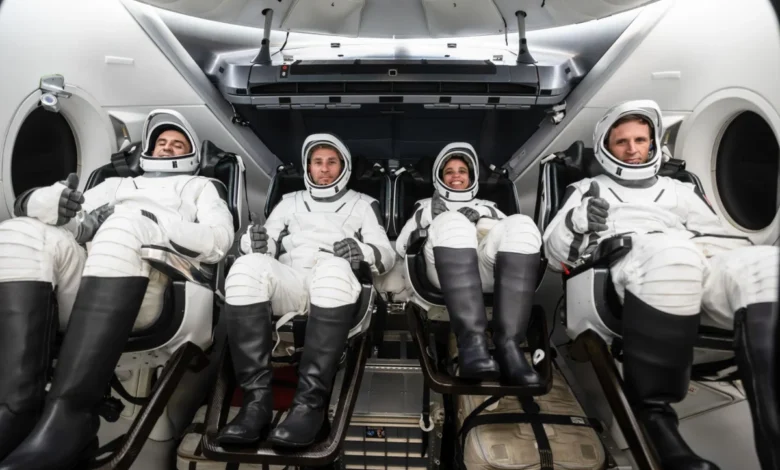
NASA, in close collaboration with its international partners, is gearing up for the highly anticipated SpaceX Crew-13 mission to the International Space Station (ISS). As a pivotal step in the pre-launch sequence, the agency has scheduled a pair of comprehensive news conferences for Monday, August 3, originating from NASA’s Johnson Space Center in Houston. These briefings will offer a crucial window into the mission’s objectives, the rigorous preparations undertaken by the four-person crew, and the technical readiness of the SpaceX Dragon spacecraft and Falcon 9 rocket. The events serve as the crew’s final media availability before they journey to the Kennedy Space Center in Florida, the launch site for their mid-September liftoff, marking a significant milestone in the ongoing human exploration of low-Earth orbit.
Setting the Stage: The International Space Station and Global Collaboration
The International Space Station stands as an unparalleled achievement in human engineering and international cooperation. Orbiting approximately 400 kilometers (250 miles) above Earth, it has continuously hosted human presence since November 2000, serving as a unique microgravity laboratory for scientific research that benefits life on Earth and prepares for future deep-space exploration. A collaborative project involving five space agencies – NASA (United States), Roscosmos (Russia), JAXA (Japan), ESA (Europe), and CSA (Canada) – the ISS embodies a commitment to peaceful exploration and scientific advancement across geopolitical divides. Each crew rotation mission, like the upcoming Crew-13, reinforces this intricate partnership, bringing together astronauts and cosmonauts from diverse backgrounds to live and work together for extended periods, typically six months. The station’s scientific endeavors encompass a vast array of disciplines, from human physiology and space medicine, investigating the effects of long-duration spaceflight on the human body, to materials science, Earth observation, and fundamental physics. Experiments conducted aboard the ISS have led to breakthroughs in areas such as drug delivery systems, advanced materials, and sustainable agricultural practices, underscoring its invaluable contribution to global scientific knowledge. The continuous resupply and crew rotation missions are vital for maintaining the station’s operational status, ensuring the flow of new scientific payloads, fresh supplies, and the rotation of highly trained personnel critical for its complex operations and maintenance.
The Commercial Crew Program and SpaceX’s Pioneering Role
The genesis of NASA’s Commercial Crew Program (CCP) lies in the post-Space Shuttle era, following the retirement of the iconic fleet in 2011. Recognizing the imperative to restore domestic human spaceflight launch capability and reduce reliance on Russian Soyuz spacecraft for transporting astronauts to the ISS, NASA initiated the CCP to foster private sector innovation in space transportation. The program aimed to develop safe, reliable, and cost-effective commercial systems for carrying astronauts to and from low-Earth orbit. SpaceX, founded by Elon Musk, emerged as a key partner alongside Boeing, successfully developing its Crew Dragon spacecraft and Falcon 9 rocket as part of this initiative. Following a series of rigorous uncrewed and crewed test flights, notably the Demo-2 mission in May 2020 which marked the return of human spaceflight launches from American soil after nearly a decade, SpaceX began operational crew rotation missions to the ISS. These missions, designated Crew-1 through Crew-12, have consistently demonstrated the reliability and safety of the Dragon capsule and Falcon 9 launch vehicle. The Falcon 9, known for its reusability, significantly lowers launch costs and increases launch cadence, revolutionizing access to space. The Crew Dragon, a fully autonomous spacecraft, can carry up to seven passengers but is typically configured for four astronauts on ISS missions, equipped with advanced life support systems, emergency abort capabilities, and a sophisticated docking system for connection to the ISS. The success of the CCP has not only revitalized the American space industry but has also set a precedent for future public-private partnerships in space exploration, paving the way for commercial ventures in low-Earth orbit and beyond.
A Glimpse into Crew-13: The Upcoming Briefings
The upcoming news conferences on Monday, August 3, are meticulously planned events designed to inform the public and media about the Crew-13 mission. The first briefing, scheduled for 12 p.m. EDT, will feature mission leadership, including key representatives from NASA and SpaceX. This session will provide a comprehensive overview of the Crew-13 mission’s objectives, detailing the scientific research agenda, the operational timeline, and any specific maintenance tasks or upgrades planned for the ISS during the crew’s tenure. Discussions are expected to cover the readiness of the Dragon spacecraft and Falcon 9 rocket, the intricate launch and docking procedures, and the overall mission architecture. Following this, at 2 p.m. EDT, the four members of the Crew-13 expedition – NASA astronauts Jessica Watkins and Luke Delaney, CSA astronaut Joshua Kutryk, and Roscosmos cosmonaut Sergey Teteryatnikov – will engage with the media. This highly anticipated session will offer insights into their extensive training regimen, personal reflections on their preparations, and their expectations for living and working aboard the orbiting laboratory. For first-time flyers, this represents a culmination of years of intense training and a lifelong dream realized. For Watkins, on her second flight, it’s an opportunity to share her unique perspective and experiences. This media availability is particularly significant as it marks the final opportunity for journalists to interact with the crew before they travel to NASA’s Kennedy Space Center in Florida to enter pre-launch quarantine and finalize their preparations for launch. Both events will be streamed live on NASA Television and the agency’s website, ensuring global access to these crucial updates. International media planning to attend in person were required to email the NASA Johnson newsroom by 5 p.m., Tuesday, July 21, while United States-based media had until 5 p.m., Thursday, July 30, to respond. Virtual attendees were asked to respond by 10 a.m. on the day of the event, adhering to NASA’s standard media accreditation policies.
Meet the Crew of Expedition 69/70
The Crew-13 mission will transport a diverse and highly experienced quartet of spacefarers to the International Space Station, representing a testament to international collaboration in human spaceflight. This crew will become part of Expedition 69/70, contributing to the ongoing scientific and operational endeavors aboard the orbiting laboratory.
Astronaut Jessica Watkins: A Return to Orbit
Jessica Watkins, a distinguished NASA astronaut selected in 2017, is set to make her second journey to space, a notable achievement as she will be the first NASA astronaut to launch aboard a SpaceX Dragon spacecraft twice. Born in Gaithersburg, Maryland, and raised in Lafayette, Colorado, Watkins brings a profound scientific background to her missions. She earned an undergraduate degree in geological and environmental sciences from Stanford University and subsequently a doctorate in geology from the University of California, Los Angeles. Her pre-astronaut career was marked by significant contributions to planetary science; as a geologist, she specialized in the study of the Martian surface and was a pivotal member of the Curiosity rover science team at NASA’s Jet Propulsion Laboratory in Southern California. Her expertise in planetary geology adds an invaluable dimension to space exploration, bridging Earth-bound scientific inquiry with orbital missions. Watkins first launched to the space station as a crew member aboard NASA’s SpaceX Crew-4 mission in 2022, spending a total of 170 days in space as part of Expeditions 67/68. During her previous mission, she participated in numerous scientific experiments, performed station maintenance, and contributed to public outreach efforts, inspiring a new generation of scientists and engineers. Her return to the ISS underscores her exceptional skills and adaptability, promising further contributions to microgravity research and the operational success of the station.
Astronaut Luke Delaney: Embarking on a First Flight
For Florida native Luke Delaney, selected as a NASA astronaut in 2021, the Crew-13 mission marks his inaugural spaceflight. Delaney’s career path is characterized by a strong foundation in mechanical and aerospace engineering, combined with extensive military and test pilot experience. He earned a bachelor’s degree in mechanical engineering from the University of North Florida and a master’s degree in aerospace engineering from the Naval Postgraduate School. A distinguished naval aviator, Delaney participated in critical exercises throughout the Asia Pacific region and conducted missions in support of Operation Enduring Freedom, demonstrating exceptional leadership and operational prowess in challenging environments. His transition to a test pilot role saw him evaluating developmental aircraft systems and serving as a test pilot instructor, where he honed his understanding of complex aerospace systems and flight dynamics. Prior to his astronaut selection, Delaney also contributed to NASA’s scientific endeavors as a research pilot at NASA’s Langley Research Center in Hampton, Virginia, supporting airborne science missions that investigated Earth’s atmosphere and climate. His diverse background, encompassing operational military flying, advanced engineering, and NASA research, provides a robust skill set for the demands of spaceflight, from piloting the Dragon spacecraft to conducting intricate scientific experiments aboard the ISS.
CSA Astronaut Joshua Kutryk: Canada’s Contribution
Joshua Kutryk, representing the Canadian Space Agency (CSA), is also embarking on his first spaceflight with Crew-13. Selected as a CSA astronaut in 2017, Kutryk brings an impressive military and aerospace engineering background to the mission. Prior to his selection, he distinguished himself as a CF-18 fighter pilot, flying missions in support of Canada’s NATO, U.N., and North American Aerospace Defense Command (NORAD) commitments, showcasing his proficiency in high-stakes operational environments. A native of Fort Saskatchewan, Alberta, Kutryk further specialized as an experimental and operational test pilot at the Aerospace Engineering Test Establishment in Cold Lake, Alberta, where he was involved in the testing and evaluation of advanced aircraft systems. Academically, Kutryk is highly accomplished, having received a bachelor’s degree in mechanical engineering from the Royal Military College of Canada in Kingston, Ontario, and earning the distinction of being a graduate of the United States Air Force Test Pilot School in Edwards, California. His intellectual pursuits also extend to multiple master’s degrees in space studies, flight test engineering, and defense studies, reflecting a deep theoretical and practical understanding of aerospace and defense. His inclusion in Crew-13 highlights Canada’s enduring commitment to the International Space Station program and its contributions to global space exploration, following a rich tradition of Canadian astronauts.
Roscosmos Cosmonaut Sergey Teteryatnikov: A New Russian Face in Space
Sergey Teteryatnikov, a cosmonaut from the Russian space agency Roscosmos, will also undertake his first journey to the orbiting laboratory as part of the Crew-13 mission. His participation underscores the continued international collaboration aboard the ISS, even amidst complex geopolitical landscapes. Teteryatnikov graduated from the Naval Academy in St. Petersburg, Russia, in 2011, specializing as an engineer in ship power plant operations. His early career saw him serving in various naval engineering roles, including critical positions on undersea vessels and in specialized engine room operations, where precision, technical expertise, and calm under pressure were paramount. These experiences provided him with a strong foundation in complex systems management and problem-solving. He was selected for the Gagarin Research and Test Cosmonaut Training Center Cosmonaut Corps in 2021 and has been serving as a test cosmonaut since 2023, undergoing the rigorous training required for space missions. His inclusion in Crew-13 symbolizes the resilience of the space partnership between the United States and Russia, a collaboration that has been fundamental to the success and continuous operation of the International Space Station since its inception. His expertise will be vital for the maintenance and operation of the Russian segment of the ISS, further strengthening the station’s capabilities.
The Journey Ahead: Launch Preparations and Mission Objectives
The Crew-13 mission is slated for launch aboard a SpaceX Dragon spacecraft atop a Falcon 9 rocket from Space Launch Complex 40 (SLC-40) at Cape Canaveral Space Force Station in Florida. The launch window is currently targeted for no earlier than mid-September. This precise timing is subject to a confluence of factors, including optimal orbital mechanics for rendezvous and docking with the ISS, favorable weather conditions at the launch site and along the flight path, and the readiness of both the spacecraft and ground systems. SLC-40 has a storied history, having supported numerous critical missions for NASA and the U.S. Air Force, and now serves as a primary launch pad for SpaceX’s Falcon 9 missions.
The pre-flight training for astronauts and cosmonauts is an intensive, multi-year process that prepares them for every conceivable scenario in space. This includes extensive simulations of launch, docking, undocking, and re-entry procedures, as well as emergency protocols such as fire, depressurization, and toxic spills. Crew members undergo specialized training for extravehicular activities (EVAs), or spacewalks, in NASA’s Neutral Buoyancy Laboratory, simulating microgravity conditions. They are also meticulously trained on the various scientific payloads they will operate, becoming proficient in conducting experiments across diverse fields. Prior to launch, the crew enters a strict quarantine period to minimize the risk of illness being carried to the confined environment of the ISS, ensuring the health and safety of both the incoming and incumbent crews.
Once aboard the ISS, the Crew-13 members will become integral to Expedition 69/70. Their mission objectives will encompass a wide range of activities, including conducting hundreds of scientific experiments, performing routine maintenance on the station’s complex systems, and potentially undertaking spacewalks for external repairs or upgrades. The scientific agenda typically includes research into human health in microgravity, advanced materials development, plant growth in space, and Earth observation. For instance, studies on bone density loss, muscle atrophy, and cardiovascular changes are crucial for understanding and mitigating risks for future long-duration missions to the Moon and Mars. The crew will also be responsible for operating robotic arms, managing cargo transfers from resupply vehicles, and participating in public outreach and educational activities. The typical duration for these rotational missions is approximately six months, after which the crew will return to Earth aboard their Dragon spacecraft, splashing down off the coast of Florida, where they will undergo post-flight medical examinations and begin readaptation to gravity.
The Broader Implications: Advancing Human Exploration and Science
The ongoing success of missions like Crew-13 is fundamental to the broader strategy of human space exploration. The International Space Station serves as a critical testbed for technologies and operational procedures necessary for NASA’s Artemis program, which aims to return humans to the Moon and establish a sustained lunar presence, ultimately paving the way for missions to Mars. The experience gained in long-duration spaceflight, understanding human adaptation to microgravity, and developing advanced life support systems on the ISS directly informs the design and execution of these future deep-space endeavors. Moreover, the ISS plays a vital role in preparing for the eventual transition to commercial space stations in low-Earth orbit, ensuring a continuous human presence in space for research, tourism, and industrial activities as the ISS nears its operational retirement. The enduring international partnerships, exemplified by the diverse Crew-13, also carry significant diplomatic weight, fostering cooperation and mutual understanding among nations through shared scientific and exploratory goals. This collaboration demonstrates that despite Earth-bound challenges, humanity can unite for common objectives beyond our planet. The continuous stream of scientific data and technological advancements from the ISS continues to benefit humanity on Earth, driving innovation, inspiring future generations, and expanding our understanding of the universe and our place within it.
Media Engagement and Further Information
For media interested in the Crew-13 mission, the news conferences on August 3 provide a prime opportunity for engagement. Following the 2 p.m. EDT crew news conference, the astronauts and cosmonaut will be available for limited individual media interviews. All requests for these interviews were required to be submitted by 5 p.m. on July 30, to the NASA Johnson newsroom via email at [email protected]. These opportunities are invaluable for journalists seeking to delve deeper into the personal stories and professional insights of the crew members. Comprehensive information about the mission, including detailed crew biographies, mission objectives, and ongoing updates, is available on NASA’s official mission page at https://www.nasa.gov/mission/nasas-spacex-crew-13. Further details on the live stream and other NASA events can be found at https://www.nasa.gov/live. These resources ensure that the public and media remain well-informed about the progress of this important human spaceflight mission.
The upcoming news conferences represent a key moment in the countdown to the Crew-13 mission, underscoring the collaborative spirit and scientific ambition driving human spaceflight. As the crew prepares to embark on their journey to the International Space Station, the world watches, eager for the next chapter in space exploration and discovery.
Related posts: