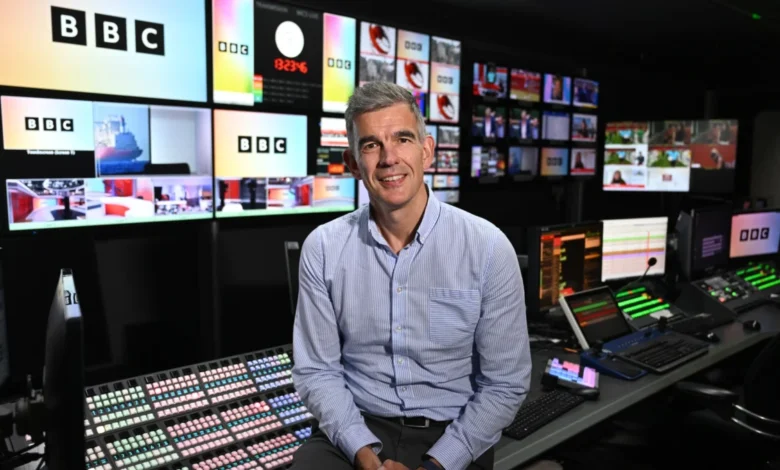
The honeymoon period for BBC Director General Matt Brittin appears to be abruptly curtailed, as a recent internal town hall meeting revealed deep-seated discontent among staff. Employees voiced significant concerns regarding a proposed 1% pay rise, the specter of 2,000 job losses, and a pervasive low morale, signaling a challenging start for the former Google executive at the helm of the UK’s national broadcaster. The meeting, intended to foster open dialogue, instead became a forum for palpable frustration, highlighting a widening gap between the corporation’s leadership and its workforce.
H2: A Confluence of Discontent: Pay, Layoffs, and Morale
The core of the employee dissatisfaction, as articulated during the town hall, coalesces around several critical issues. The offer of a mere 1% pay increase, significantly below the prevailing inflation rate, was met with widespread derision and disbelief. In a written question that encapsulated the prevailing sentiment, one employee described the proposal as an "insult" and stated that staff were being treated as "second-rate citizens." This sentiment was echoed by another insider who characterized the pay offer and impending job cuts as "unfair and demoralizing." The stark reality of the financial squeeze was underscored by a pointed question from a third employee: "A 1% pay rise will eat into my family’s finances so severely, I will have to cut back on something. What do you suggest I cut back on?"
The use of dark humor, a common coping mechanism in times of uncertainty, was evident when an employee quipped, "Great news that we’ve managed to pinch The 1% Club from ITV… Oh sorry, that’s just the pay proposal." This sarcastic jab at the popular quiz show served to amplify the perceived inadequacy of the offered remuneration.
H3: Financial Realities and Strategic Imperatives
Responding to the barrage of criticism, Chief Financial Officer Béatrice Michel acknowledged the limitations, stating, "We know that 1% is not much. We wanted to do more, but we can’t afford it." She explained that the 1% minimum was implemented to protect lower-paid staff and that the executive team would forgo a pay increase this year. This measure, while intended to demonstrate fiscal responsibility at the top, did little to appease the broader workforce.
The backdrop to these austerity measures is a significant cost-cutting drive by the BBC. The corporation is planning to slash costs by £500 million ($670 million) over the next three years, building upon an existing target of £1.5 billion. This aggressive cost-reduction strategy stems from a growing disparity between the BBC’s reach and its funding model. Despite 94% of the UK population engaging with the BBC monthly, fewer than 80% contribute the £180 annual license fee. This funding gap, coupled with the inability to draw further from cash reserves, necessitates these difficult financial decisions.
Brittin attempted to contextualize these pressures, drawing parallels with the financial challenges faced by government departments, private sector companies, and charities. "We’re all having to be prudent, and that doesn’t make it easier for people, but we are all in a similar boat here," he remarked. However, this analogy failed to fully resonate with employees grappling with the immediate impact of these decisions on their livelihoods.
H2: The Shadow of Industrial Action and Salary Disparities
The proposed 1% pay rise is currently under negotiation with trade unions, and speculation is mounting that it could escalate into industrial action. This possibility is further fueled by a perceived disconnect between the meager offer to the majority of staff and the substantial earnings of some on-air talent. In the BBC’s last financial year, presenter earnings reportedly increased by nearly £3 million, reaching a six-year high of £143 million.
A significant point of contention was the salary of former radio presenter Scott Mills, who was reportedly earning around £750,000. An insider questioned the justification for such an "enormous salary," suggesting that it could have been redirected to retain staff or mitigate the impact of layoffs. A journalist proposed a more radical solution: a 10% salary cut for staff earning over £100,000 to "avoid the current below-inflation 1% pay offer (in effect a pay cut) for the majority."
Brittin defended the BBC’s need to offer competitive remuneration to attract talent, stating that it was "right" to do so. However, he indicated a willingness to scrutinize the number of senior management roles across the corporation. "We’ve said we’re definitely going to be looking at at least 10% savings on senior management roles," he explained. He acknowledged concerns about potential hierarchical bloat, noting, "What I hear from some people, and I haven’t got deep enough yet, is that sometimes it feels like there are very many layers of oversight and not enough empowerment… that’s part of what we need to look at." This suggests a potential restructuring aimed at streamlining management and empowering frontline staff.
H3: Scrutiny of the "What Has the BBC Ever Done For Me?" Campaign
Beyond the immediate financial concerns, the BBC’s high-profile advertising campaign, featuring comedian Romesh Ranganathan, also came under fire. The campaign, a modern reimagining of a 1980s promotional video, aims to showcase the value the BBC provides to the nation. However, employees questioned the substantial expenditure on this campaign at a time of significant financial constraints and impending job losses.
"How much did the new ‘What has the BBC ever done for me’ campaign cost? Totally excessive!" remarked one insider. Another employee directly linked the campaign’s cost to the staff’s financial predicament: "How much did the Romesh advert cost the BBC at a time we’re being told to both accept a 1% pay rise and be on constant alert that our job might be closed in the coming months?" Further criticism was leveled at the campaign’s content, with concerns raised about its perceived failure to adequately highlight local services, the World Service, and the BBC’s online offerings.
Kerris Bright, the BBC’s Chief Customer Officer, defended the marketing investment, stating, "It’s a really fair challenge, and we’re all facing those challenges. Marketing is facing the same challenges. We’re all having to look deeply at where we invest the resources that we do have and where we think we’ll get the best return for them." She emphasized the importance of communicating the BBC’s value to audiences and asserted that the campaign, despite its cost, was a necessary and "smart" investment to demonstrate this value.
H2: Broader Implications and Future Outlook
The town hall meeting at the BBC has exposed significant fault lines within the organization. The disparity between the leadership’s austerity narrative and the everyday financial realities of many employees is stark. The proposed 1% pay rise, in the context of rising living costs and substantial presenter salaries, has fostered a sense of injustice and resentment.
The threat of industrial action looms, a testament to the depth of employee frustration. The BBC’s financial sustainability is undeniably a critical issue, requiring difficult choices. However, the manner in which these choices are communicated and implemented, particularly concerning staff remuneration and job security, will significantly impact employee morale and the corporation’s ability to retain its talented workforce.
The scrutiny of the advertising campaign also points to a broader debate about resource allocation and public perception. While marketing is essential for demonstrating the BBC’s value, the timing and scale of such campaigns, especially when juxtaposed with austerity measures affecting the workforce, can create a perception of misplaced priorities.
Director General Matt Brittin faces the immediate challenge of navigating this discontent and rebuilding trust. His commitment to examining senior management roles and seeking efficiency savings is a step in the right direction. However, sustained efforts will be required to address the core issues of pay, job security, and the overall employee experience to ensure the BBC can continue to fulfill its public service remit effectively. The coming months will be crucial in determining whether the corporation can weather this storm of internal dissent and emerge with a more cohesive and motivated workforce. The past few months have been a period of significant upheaval for the BBC, marked by strategic reviews and a need for financial recalibration. This latest episode at the town hall meeting serves as a potent indicator of the internal pressures that will shape the broadcaster’s future trajectory under Brittin’s leadership.