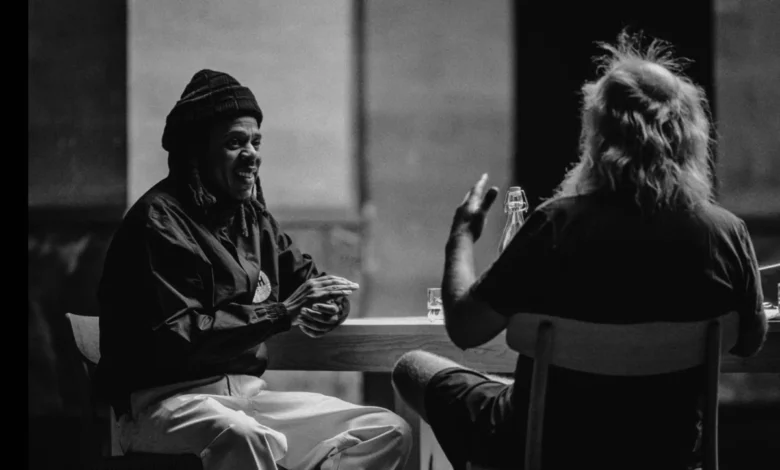
The release of JAY-Z IN 8, a sprawling eight-part documentary series, marks a significant juncture in the study of modern popular music. By pairing Shawn "JAY-Z" Carter with legendary producer Rick Rubin, the project strips away the traditional artifice of celebrity biography, opting instead for a granular, song-by-song forensic analysis of one of the most prolific catalogs in hip-hop history. Filmed over two intimate days in Paris, the series serves as a meditative retrospective, anchored not by dates or record sales, but by the raw material of creation itself.
The series is produced by Tetragrammaton and HBO Documentary Films, with an executive production team that includes Carter, Rubin, and Academy Award-winning actor Daniel Kaluuya. For Rubin, the project represents a rare departure from his usual role as a musical collaborator, marking his directorial debut in the documentary space. The structural conceit of the series is deceptively simple: Rubin selects specific tracks from the JAY-Z discography, using them as catalysts for wide-ranging conversations regarding Carter’s upbringing in the Marcy Projects, his lyrical philosophy, and the evolving complexities of his creative process.
A Chronology of Artistic Milestones
The arrival of JAY-Z IN 8 coincides with a monumental anniversary year for the rapper. 2024 marks three decades since the 1996 release of Reasonable Doubt, an album widely regarded as a cornerstone of East Coast hip-hop, and the 25th anniversary of his 2001 magnum opus, The Blueprint. These milestones have prompted a broader cultural reassessment of Carter’s influence on the music industry.
Earlier this summer, the significance of the Reasonable Doubt era was underscored by a high-profile commemorative concert at Yankee Stadium. The event was not merely a performance but a cultural touchstone, featuring appearances by industry icons including Beyoncé, Blue Ivy, Alicia Keys, and Nas. The concert served as a public affirmation of the album’s enduring legacy, bridging the gap between the mid-90s underground scene and the global superstardom Carter would eventually achieve.
The release schedule for JAY-Z IN 8 is designed to sustain engagement throughout the autumn. The first two chapters debuted on MUBI in the UK, with a rollout strategy that sees two new episodes released weekly. This staggered approach allows for a deeper digestion of the content, as viewers are invited to revisit the specific tracks discussed in each episode before the next installment arrives, culminating in the series finale on October 9.
The Analytical Framework: Music as Biography
Rather than adhering to the linear constraints of a traditional biopic, JAY-Z IN 8 treats the discography as a fragmented, non-linear map of the artist’s psyche. By focusing on specific compositions, the series provides a rare look at the interplay between lived experience and the transformation of those experiences into art.
In the opening chapters, the dialogue centers on the foundational building blocks of Carter’s career. Episode one, titled Chapter One, focuses on tracks such as "Intro," "Meet The Parents," "Can’t Knock The Hustle" featuring Mary J. Blige, and "What More Can I Say." These songs represent different facets of the rapper’s identity—from the aspirational hustle of his early days to the self-assured, introspective commentary that characterized his mid-career work.
Episode two, Chapter Two, shifts focus toward his collaborative history and the competitive nature of the New York hip-hop scene. It features tracks like "Brooklyn’s Finest," which showcases the chemistry between JAY-Z and The Notorious B.I.G., as well as the collaborative effort "I Love The Dough." The inclusion of these tracks provides a window into the camaraderie and artistic rivalry that defined the 1990s New York rap scene, offering insights into how these relationships informed the development of Carter’s unique flow and lyrical dexterity.
Industry Implications and Critical Reception
The partnership between JAY-Z and Rick Rubin is significant for the broader music industry. Rubin, known for his "less is more" approach to production and his ability to coax profound vulnerability from his subjects, is an ideal foil for an artist who has historically maintained a highly curated public image. The documentary suggests a shift toward transparency, where the "why" behind a song is granted as much importance as the "how."
From an analytical standpoint, JAY-Z IN 8 contributes to a growing body of work that treats hip-hop as a serious academic and historical discipline. By documenting the creative process in such granular detail, the series preserves the oral history of hip-hop’s golden era for future generations of musicologists and fans. It challenges the notion that rap music is purely ephemeral, instead highlighting the intentionality and craftsmanship involved in the genre’s most influential works.
The involvement of Daniel Kaluuya as an executive producer also signals a bridge between music and cinematic storytelling. Kaluuya’s presence in the project reflects a trend of high-profile actors taking an active interest in the preservation and contextualization of music history. The collaboration between these diverse creative forces—a legendary producer, a global rap icon, and a critically acclaimed actor—elevates the documentary from a standard promotional piece to a substantive piece of cultural documentation.
Contextualizing the Legacy
To understand the weight of the tracks discussed in the series, one must look at the climate of the 1990s. When Reasonable Doubt was released, the landscape of rap was shifting. The album was a departure from the more cartoonish elements of the time, opting for a gritty, noir-inspired aesthetic that resonated deeply with urban audiences. As the years progressed, Carter’s ability to pivot—from the street-level narratives of his debut to the soul-sampling, anthemic production of The Blueprint—demonstrated a level of creative longevity that few in the genre have matched.
The inclusion of "What More Can I Say," a track from The Black Album, in the early episodes is particularly telling. The song acts as a self-aware manifesto, with Carter addressing his position in the rap hierarchy and his own artistic limitations. By choosing such self-reflective material, the documentary series actively avoids the trap of hagiography, instead opting to interrogate the rapper’s own doubts, fears, and internal conflicts.
Future Projections and Ongoing Documentation
As the series progresses toward its October 9 conclusion, audiences can expect a deeper dive into the later stages of Carter’s career, including his experiments with genre-blending and his eventual transition into a broader cultural and entrepreneurial force. The list of tracks featured in the series will continue to expand, providing a comprehensive, albeit curated, overview of the evolution of his sound.
For the music industry, the success of JAY-Z IN 8 may set a precedent for how legacy artists document their own histories. In an era where digital streaming allows for the instantaneous consumption of massive catalogs, the need for context and curation has never been greater. Projects like this provide that necessary framework, ensuring that the stories behind the songs are not lost to time.
Ultimately, the documentary is a testament to the idea that the greatest stories in music are those that reveal the human element behind the icons. By stripping away the stadium lights and the corporate branding, JAY-Z IN 8 presents a version of Shawn Carter that is grounded in the craft of songwriting. Whether discussing the rhythm of a punchline or the atmosphere of a studio session in the late 90s, the series succeeds in humanizing a figure who has, for three decades, stood at the absolute pinnacle of global popular culture. The ongoing release schedule promises to provide further clarity on how a young man from Brooklyn transformed the soundscape of a nation, one verse at a time.