Counting the Dead in a Warming World: How Scientists Calculate the Human Toll of Europe’s Record-Breaking 2026 Heatwaves


Recent weeks have seen a flurry of reports from public health authorities and climate scientists attempting to quantify the lethal impact of Europe’s record-breaking summer heatwaves. As global temperatures continue to rise in response to human-caused carbon emissions, the task of tallying heat-related mortality has become both a scientific necessity and a political flashpoint. From the Atlantic coast of France to the urban centers of Germany and the United Kingdom, the data paints a grim picture of a continent struggling to adapt to a rapidly changing climate. In late June 2026 alone, the EuroMoMo mortality monitoring system estimated more than 10,500 excess deaths across 27 countries, highlighting the acute vulnerability of aging populations to extreme thermal stress.
The complexity of these calculations arises from the fact that heat is rarely listed as the primary cause of death on official certificates. Instead, extreme temperatures act as a "threat multiplier," exacerbating underlying conditions such as cardiovascular disease, respiratory failure, and renal distress. To bridge this gap, researchers employ a variety of methodologies, ranging from simple "excess death" tallies to sophisticated statistical models that attempt to isolate the specific fingerprint of climate change. Understanding these methods is crucial for interpreting the disparate figures currently being released by national health agencies and academic institutions.

Chronology of the 2026 Heat Crisis
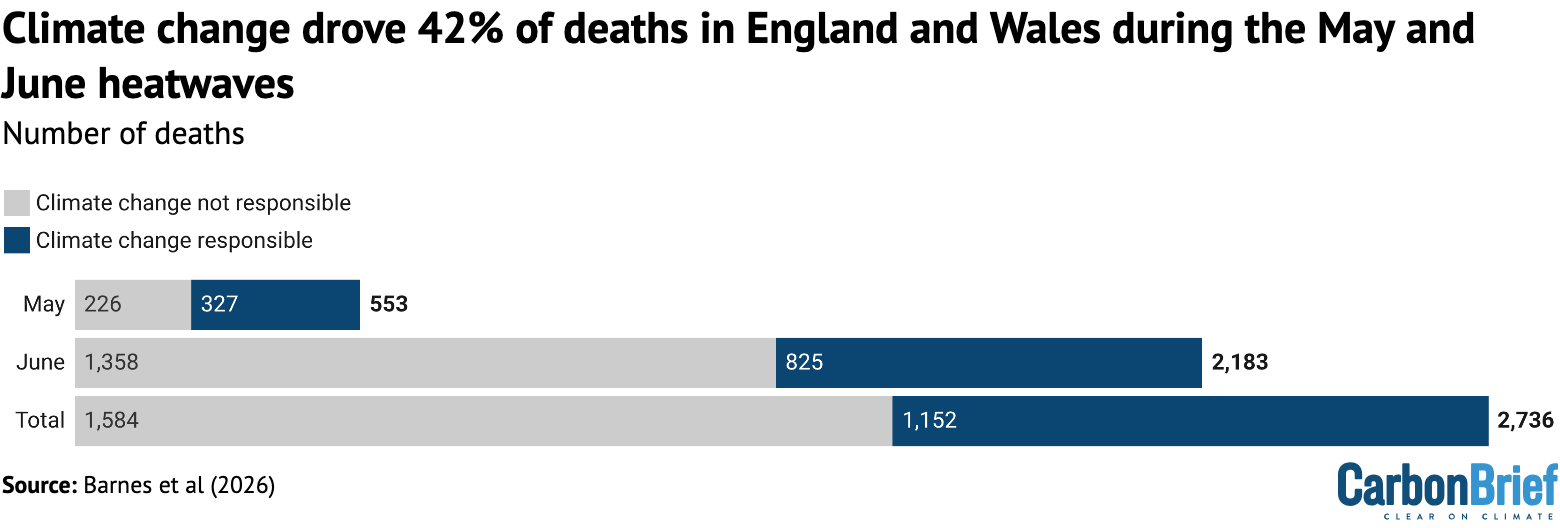
The 2026 heat crisis unfolded in two distinct waves, beginning with an unseasonably warm May and culminating in a historic, record-shattering peak in late June. In the United Kingdom, the first signs of trouble appeared in mid-May, when temperatures surged well above seasonal norms. Analysis from Imperial College London and the Met Office suggests that this early-season spike was responsible for approximately 553 heat-related deaths in England and Wales between May 24 and May 26.
However, the true severity of the season became apparent in late June. Between June 22 and June 28, a "heat dome" settled over Western and Central Europe, trapping hot air and driving temperatures to unprecedented levels. In France, the national public health agency, Santé Publique France, reported 2,025 excess deaths during this seven-day peak. Simultaneously, authorities in Germany and the Netherlands recorded excess death tolls of 5,753 and 577, respectively. The sheer speed and scale of the mortality spike caught many public health systems off guard, despite early warning systems and "heat-health" action plans developed in the wake of previous disasters, such as the 2003 European heatwave.
Supporting Data: Regional Mortality Breakdowns
The data released by various national agencies provides a granular look at how the heat affected different populations. Germany’s federal statistics agency, Destatis, published figures on July 14 showing that the country saw 32% more deaths than the average during the week of June 22-28. Specifically, 23,932 deaths were recorded that week, compared to a four-year average of 18,179 for the same calendar period. This indicates nearly 6,000 deaths above the baseline in just seven days.
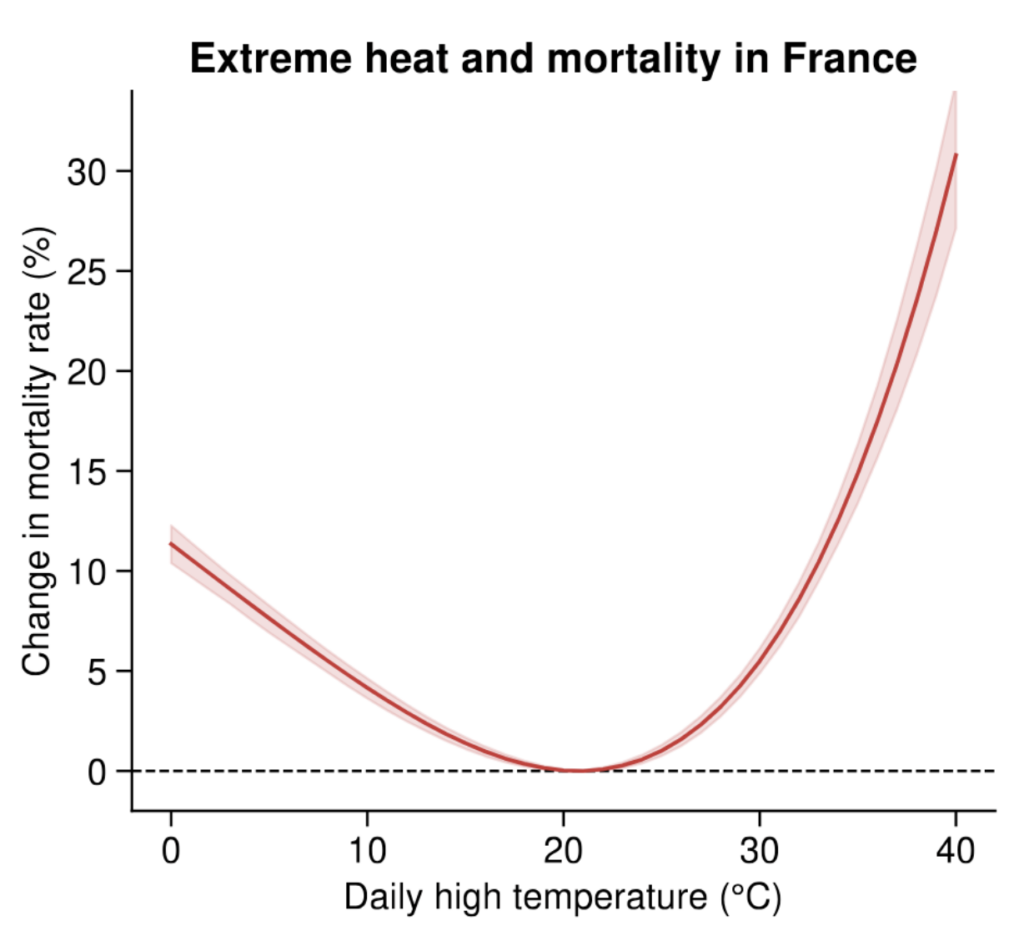
In France, the analysis was even more extensive. While Santé Publique France focused on the peak week, separate research by Dr. Christopher Callahan of Indiana University and Professor Andrew Dessler of Texas A&M University found that France saw more than 2,700 heat-related deaths over a broader 17-day period in June. This discrepancy highlights how the choice of timeframe can significantly alter the reported death toll.
The United Kingdom also faced a significant burden. A collaborative study involving the London School of Hygiene and Tropical Medicine (LSHTM) estimated 2,183 deaths in England and Wales during the June peak. Perhaps most strikingly, the study concluded that 42% of the total heat-related deaths in May and June were directly attributable to human-caused climate change. This "attribution science" represents a major leap forward in how researchers link global atmospheric trends to local health outcomes.
The Evolution of Heat-Mortality Science
The science of calculating heat deaths is not a new field, but it has evolved dramatically over the last century. Early pioneers like geographer Ellsworth Huntington and economist Margaret Justin began studying the relationship between temperature and mortality in New York City as early as the 1880s. Their 1923 study was among the first to observe that deaths increased rapidly once temperatures surpassed a certain threshold—in their case, 17°C.
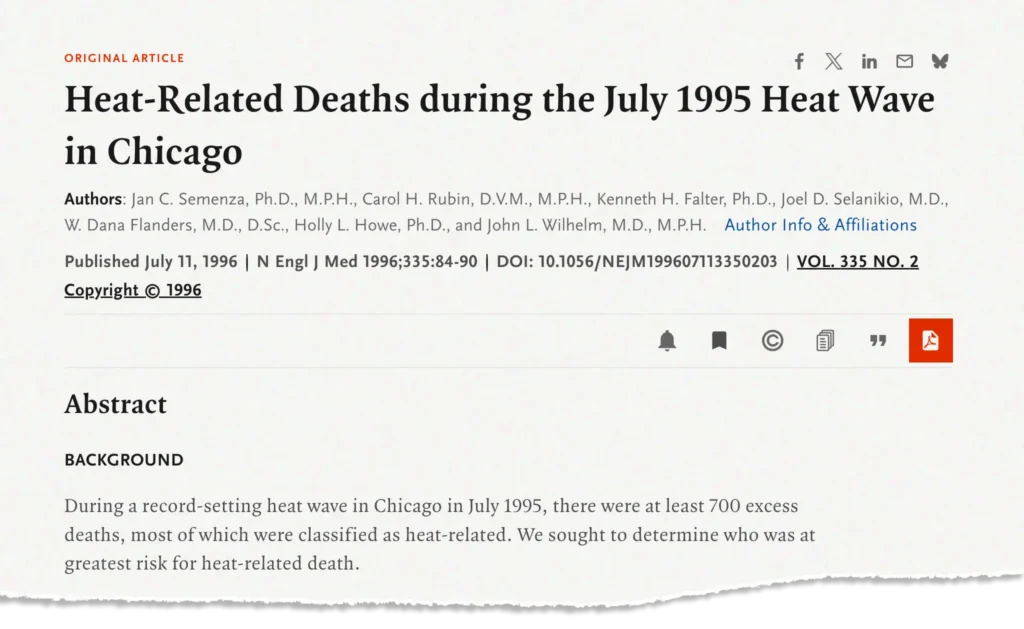
The modern era of heatwave analysis was catalyzed by the 1995 Chicago heatwave, which prompted researchers to look more closely at the social and environmental factors that contribute to urban heat mortality. However, the most significant turning point was the 2003 European heatwave, which claimed an estimated 70,000 lives across the continent. That event spurred the development of "two-step" attribution studies, which first estimate the total number of deaths from an event and then use climate models to determine what percentage of those deaths would not have occurred in a world without human-induced warming.
Dr. Christopher Callahan notes that this field has "exploded" in the last five to ten years. "It requires interdisciplinary expertise," Callahan explained. "You need people who know how to run the epidemiological models, and you need a climate analysis of the counterfactual world without climate change."
Methodological Approaches: Excess Deaths vs. Statistical Modelling
There are currently three primary ways that authorities and scientists tally heat deaths, each with its own set of advantages and drawbacks.
1. The Excess Deaths Approach
This is the most common method used by public health agencies like those in Germany and the Netherlands. It involves comparing the total number of deaths during a heatwave to a "baseline" average from previous years.
- Pros: It is rapid and relies on "ground truth" data from death registries. It provides a quick snapshot for policymakers during an ongoing crisis.
- Cons: It is an "all-cause" metric, meaning it cannot distinguish between a death caused by heat and a death caused by a different factor that happened to occur at the same time. Furthermore, picking the "baseline" is difficult—using years with high COVID-19 mortality, for instance, can skew the results.
2. Statistical Modelling
This method uses long-term data to establish a mathematical relationship (often a U-shaped curve) between temperature and mortality for a specific location.
- Pros: It allows scientists to control for seasonality, long-term trends, and even air pollution. It is highly localized and can be used to estimate deaths even when official registries are slow to update.
- Cons: It relies on more assumptions than the excess deaths approach and can be criticized by skeptics as being "theoretical" rather than "observed."
3. Death Certificate Coding
This involves counting only those deaths where a physician explicitly lists "heatstroke" or "hyperthermia" as the cause.

- Pros: It is highly specific and medically verified.
- Cons: It is widely considered a massive undercount. Because heat typically kills by stressing the heart or kidneys, a death certificate might list "cardiac arrest" even if extreme heat was the environmental trigger.
Official Responses and Political Implications
The release of these figures has prompted a range of reactions from governments and the scientific community. The World Health Organization (WHO) has used the data to call for more aggressive climate adaptation measures, such as "cool roofs," increased urban greening, and better early-warning systems for vulnerable populations.
However, the data has also been met with skepticism in some quarters. In the UK, some commentators have pointed to provisional data from the Office for National Statistics (ONS) to argue that the modelled estimates of 2,700 deaths are an exaggeration. Dr. Garyfallos Konstantinoudis of the Grantham Institute at Imperial College London has defended the models, noting that they have consistently aligned with official UK Health and Security Agency (UKHSA) reports in the past. "Models explore possibilities, but they are grounded in decades of observed data," he said.
The debate highlights a growing tension between "surveillance" data (what is recorded immediately) and "scientific estimation" (what is calculated after careful analysis). For public health officials, the goal is to use both to build a holistic view of the threat.

Broader Impact: The Future of European Public Health
The 2026 heatwaves serve as a stark reminder that heat is the "silent killer" of the climate crisis. Unlike floods or wildfires, heatwaves do not leave behind visible wreckage, but their human toll is often much higher. The fact that nearly 6,000 people died in Germany in a single week suggests that even wealthy, well-organized states are not fully prepared for the "new normal" of the European summer.
The implications for public health are profound. There is an urgent need to rethink urban design to mitigate the "urban heat island" effect, where concrete and asphalt trap heat, making cities several degrees warmer than surrounding rural areas. Additionally, the data shows a clear need for targeted interventions for the elderly and those with pre-existing conditions, who make up the vast majority of heat-related fatalities.
As the scientific community refines its ability to attribute these deaths to climate change, the legal and political pressure on governments to reduce emissions is likely to increase. If 42% of heat deaths in the UK can be linked to human activity, the argument for climate action shifts from an environmental concern to a fundamental matter of public health and human rights. The record-breaking summer of 2026 may be remembered not just for its heat, but as the moment when the true cost of a warming world became impossible to ignore.