Naked Mole-Rat Queens Maintain Colony Order and Suppress Reproduction Through a Single Chemical Pheromone


A groundbreaking study by scientists at the Max Delbrück Center for Molecular Medicine in Berlin has revealed that the complex social hierarchy and reproductive suppression within naked mole-rat colonies are orchestrated by a single chemical compound secreted by the queen. This discovery fundamentally reshapes previous hypotheses regarding the enforcement of social order in these unique eusocial mammals, shifting the understanding from physical dominance and bullying to a sophisticated olfactory signaling program. The identified compound, isopropyl myristate, acts as a potent "royal scent" that chemically sterilizes subordinate females, preventing them from breeding and ensuring the queen’s unchallenged reproductive monopoly.
The Enigmatic World of Naked Mole-Rats: A Biological Anomaly
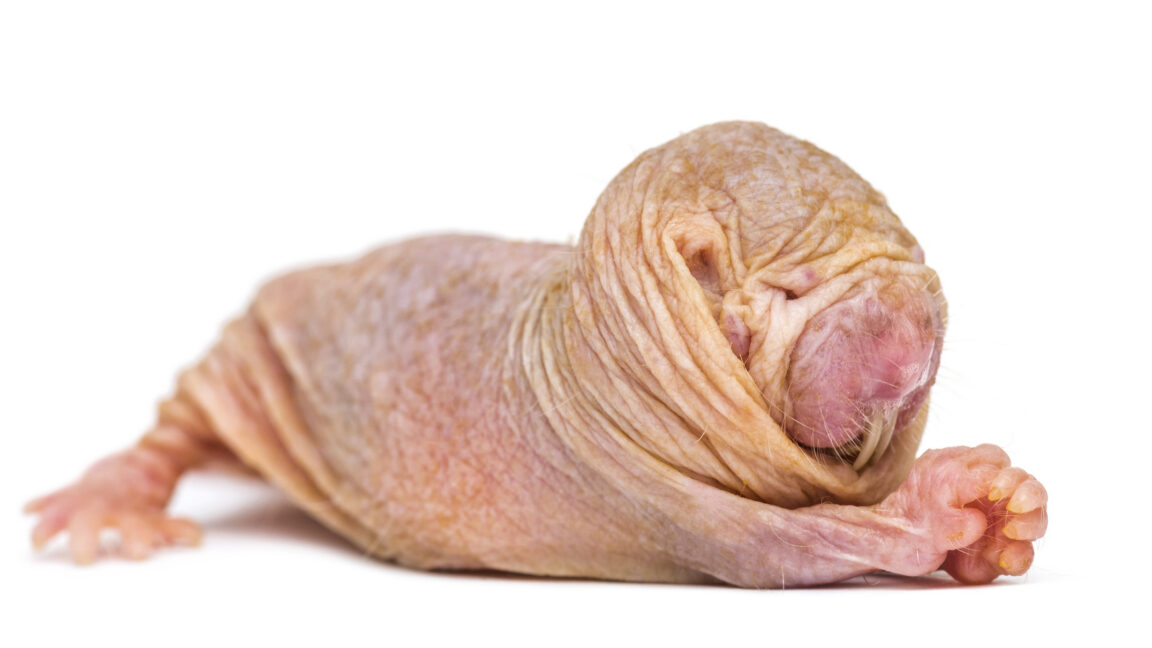
Naked mole-rats (Heterocephalus glaber) are creatures of extraordinary biological intrigue, defying conventional mammalian norms in numerous ways. Spending virtually their entire lives in intricate subterranean tunnel systems across the arid regions of East Africa, these rodents exhibit a suite of adaptations that have captivated scientists for decades. They are remarkably long-lived, often exceeding 30 years, a lifespan far surpassing that of similarly sized rodents, which typically live only a few years. This exceptional longevity is accompanied by a striking resistance to cancer, a phenomenon actively researched for its implications in human medicine.
Beyond their unusual lifespan and cancer immunity, naked mole-rats possess an remarkable insensitivity to certain types of pain, including acid and capsaicin, the active compound in chili peppers. They can also endure prolonged periods of hypoxia (low oxygen) or even anoxia (no oxygen), a trait linked to their ability to metabolize fructose in the absence of oxygen, an adaptation more commonly seen in plants. These physiological peculiarities alone make them a species of immense scientific interest, but it is their social structure that truly sets them apart within the mammalian kingdom.
Naked mole-rats are one of only two known eusocial mammals (the other being the Damaraland mole-rat), a social organization characterized by cooperative care of young, overlapping generations within a colony, and a reproductive division of labor where only a single queen and typically one to three breeding males (pashas) reproduce. A colony can house over a hundred individuals, with the vast majority serving as non-breeding workers, foragers, or soldiers, dedicating their lives to maintaining the subterranean kingdom. For a long time, the precise mechanisms by which a queen maintained this strict reproductive control remained a subject of intense debate and speculation.
Shifting Paradigms: From Bullying to Biomolecular Command
Historically, the prevailing hypothesis for reproductive suppression in naked mole-rat colonies centered on physical aggression and dominance. It was widely believed that the queen would physically harass and bully other females, preventing them from reaching reproductive maturity or ovulating. While instances of aggression from the queen have been observed, the practicality of a single queen physically dominating over a hundred individuals across a vast network of tunnels, potentially stretching up to three kilometers, always presented a logical challenge to this hypothesis. Such a system would be energy-intensive and potentially inefficient for maintaining widespread control.
The research conducted by the Lewin Lab at the Max Delbrück Center for Molecular Medicine in Berlin, led by neurobiologist Gary Lewin, sought to explore an alternative mechanism: chemical communication. Given that naked mole-rats are functionally blind, relying heavily on their other senses for navigation and social interaction, olfaction emerged as a prime candidate for mediating colony dynamics. This species boasts an impressive olfactory system, possessing approximately 1,200 olfactory receptor genes, significantly more than mice (around 1,000) and vastly outnumbering the few hundred found in humans. This enhanced olfactory capacity strongly suggested that smell played a critical role in their complex social lives.
Unraveling the Olfactory Code: Methodology and Discovery
To investigate the role of smell, the research team embarked on a meticulous process of collecting and analyzing the "odor bouquets" emanating from individual mole-rats. This involved placing an absorbent plastic tube near an animal for about 30 minutes to capture volatile molecules released from its body. These collected scents were then analyzed using a mass spectrometer, a sophisticated instrument that separates chemical compounds based on their mass-to-charge ratio, allowing researchers to identify and quantify the distinct chemical components. This analysis revealed a complex array of approximately 100 different chemical compounds in each animal’s scent profile.
The initial findings confirmed the profound importance of olfaction in mole-rat social recognition. By analyzing samples from hundreds of individuals across different colonies, the team discovered that each colony possessed a unique and distinguishable chemical signature. When mole-rats from different colonies were introduced, they engaged in prolonged sniffing for up to 40 seconds before determining if the other was a nestmate or a stranger. Encounters with strangers frequently escalated into aggressive, often lethal, attacks, leading Lewin to liken their behavior to human xenophobia.
Further experiments unequivocally demonstrated the link between olfaction and this xenophobic aggression. When scientists temporarily disabled the olfactory sensory neurons of mole-rats using chemical agents, the aggression towards strangers vanished. "They basically were cool with each other, and there was no fighting," Lewin noted, underscoring the critical role of smell in mediating social recognition and hostility.
Crucially, the detailed analysis of these odor bouquets yielded a more profound discovery. The researchers identified a specific compound, an ester named isopropyl myristate, that was consistently present in samples collected from breeding queens but entirely absent in non-breeding animals. This finding was a pivotal moment, suggesting a direct chemical link to the queen’s reproductive status. "Breeding females had this particular molecule that non-breeding animals did not have," Lewin confirmed.
The Royal Scent: Isopropyl Myristate and Reproductive Control
The identification of isopropyl myristate as the queen’s unique chemical marker opened new avenues of investigation into its function. The team tracked the secretion of this compound, finding that queens released isopropyl myristate from their genitals as they moved through their vast tunnel systems, effectively smearing their royal scent throughout the colony. Monitoring the queen’s output of the compound over her reproductive cycle revealed a direct correlation with her fertility: levels peaked when she was in heat or pregnant and decreased otherwise. This made isopropyl myristate an excellent indicator of the queen’s reproductive capability.
The chemical properties of isopropyl myristate also proved to be highly advantageous for maintaining colony-wide control. While volatile enough to be dispersed, it also exhibited remarkable stability once deposited on a surface. Researchers could still detect it in mole-rat cages up to 24 hours after application. This stability is crucial for a queen whose burrow system can extend for several kilometers, enabling her scent to persist and cover a significant area, reducing the effort required to spread her influence across the entire underground network.
Experimental Validation: Proving Chemical Command
Pinpointing the queen’s signature molecule was one challenge; demonstrating its functional role in reproductive suppression was another. The researchers designed a series of elegant experiments to test the effects of isopropyl myristate on subordinate females.
Naked mole-rat colonies are structured in a dominance hierarchy loosely correlated with body size, ranging from lower-ranked workers and foragers to soldiers, and ultimately to the breeding male (pasha) and the queen. To assess social rank, scientists typically use a dominance test: when two animals meet in a tunnel, the one that yields is considered lower-ranked. When higher-ranked females, those with a realistic potential to eventually become queens, were presented with isopropyl myristate in a T-maze, they actively avoided the side containing the queen’s molecule. Lewin hypothesized that this avoidance reflected a natural instinct to steer clear of the queen, who might be aggressive towards potential rivals.

Direct evidence of the brain’s response to isopropyl myristate was obtained through functional ultrasound imaging, a non-invasive technique that tracks blood flow in an anesthetized animal. When isopropyl myristate was puffed onto the animal’s nose, a significant portion of the olfactory cortex "lit up," indicating that the compound was registered as a distinct and important signal, not just a background smell.
Perhaps the most compelling evidence came from examining the hormonal responses of non-breeding females to the queen’s scent. Non-breeding naked mole-rat females are known to have high levels of prolactin, a hormone that typically suppresses fertility in nursing mammals. Lewin’s team observed that when a queen was removed from a colony, prolactin levels in subordinate females dropped. However, these levels climbed back up once isopropyl myristate was reintroduced to the colony. Conversely, progesterone, a hormone associated with active breeding, showed the opposite trend: low in non-breeders and rising after the queen’s removal. This inverse relationship strongly suggested that these key reproductive hormones were directly controlled by the presence of isopropyl myristate, effectively chemically castrating the subordinate females.
To conclusively prove that isopropyl myristate alone was responsible for reproductive suppression, and not other compounds in the queen’s complex odor bouquet, the researchers conducted experiments where the queen herself was removed, but her royal molecule was continuously supplied to the colony. Mating pairs, typically starting to breed within four to five weeks when isolated from a queen, failed to become pregnant when their cages were sprinkled daily with isopropyl myristate. The compound reliably prevented pregnancy at the individual level.
The final and most dramatic validation came from colony-level experiments. The removal of a queen from an established naked mole-rat colony typically triggers a brutal "Game of Thrones" scenario. The strongest females engage in fierce, often lethal, battles until a single dominant individual emerges as the new queen. However, when researchers removed the queen and then dosed the colony daily with isopropyl myristate for three months, the expected power struggle was entirely absent. "Everything was peaceful," Lewin recounted. "We had no fights. We had no females emerging as reproductive queens. The molecule was acting as a super contraceptive keeping them all sexually repressed."
Broader Implications: Eusociality, Evolution, and Human Biology
This discovery marks a significant turning point in understanding mammalian eusociality. It suggests that the reproductive control mechanisms in naked mole-rats are far more analogous to those found in eusocial insects, such as honeybees, than previously thought. Insect queens are well-known to utilize pheromones to suppress ovarian development in worker daughters, maintaining their reproductive monopoly. The identification of isopropyl myristate as a single, potent chemical agent in a mammalian system provides a clear parallel. "It’s a relatively simple mechanism that explains a relatively complex behavioral trait," Lewin concluded.
The implications extend beyond naked mole-rats, prompting questions about the evolutionary origins of such chemical signaling in mammals. While eusociality is rare in mammals, the existence of a pheromonal control system raises the possibility that similar, perhaps less overt, chemical communication might influence reproductive behavior and social dynamics in other mammalian species, even those not considered eusocial.
Intriguingly, isopropyl myristate is not exclusive to naked mole-rats. It has also been detected in the breast secretions of lactating human mothers. While its function in humans remains unknown, this unexpected commonality opens up a speculative, yet fascinating, avenue for future research. Lewin cautioned, "This molecule or similar molecules may have effects on reproduction in species other than naked mole rats, maybe even including humans. We just don’t know that." This tantalizing connection underscores the potential for fundamental discoveries in seemingly obscure species to shed light on universal biological processes.
The study, published in Nature in 2026, provides a robust framework for understanding how chemical cues can exert profound control over complex social structures and reproductive physiology in mammals. It paves the way for further research into the specific neural pathways and hormonal cascades triggered by isopropyl myristate in subordinate females, as well as investigations into whether similar chemical mechanisms might be at play in other social mammals or even hold subtle, unrecognized influences in human interactions. This research not only deepens our appreciation for the unique biology of the naked mole-rat but also broadens our understanding of the diverse and sophisticated ways in which life on Earth is organized and controlled.