US-Iran War Escalates: Trump Threatens Nuclear Site, Houthis Blockade Red Sea, Global Oil Markets Volatile

The simmering conflict between the United States and Iran has intensified significantly, with the US military completing its eleventh consecutive night of strikes on Iranian targets, including critical aircraft hangars and drone storage sites. This relentless military action continues to severely undermine any lingering diplomatic efforts aimed at salvaging an interim ceasefire deal, pushing the region further to the brink.
Adding a perilous new dimension to the conflict, Yemen’s Iran-aligned Houthi rebels, who maintain control over the strategically vital Red Sea coastline, have declared a naval blockade on Saudi Arabia. This move threatens to choke off a crucial alternative oil export route for Saudi Arabia, which has increasingly relied on a pipeline to the Red Sea to transport millions of barrels of oil to global markets, especially since the primary Strait of Hormuz faces persistent disruption.

Escalation in the Gulf: US Strikes and Trump’s Warnings
The eleventh night of US military operations against Iran underscores a dramatic escalation in hostilities that began on February 28, 2026. The targeted strikes, focusing on Iranian military infrastructure such as aircraft hangars and drone storage facilities, aim to degrade Iran’s capacity to project power and support regional proxies. These actions are a direct counterpoint to efforts to de-escalate, consistently derailing any progress towards a diplomatic resolution or a desperately needed ceasefire.
The latest US barrage was notably accompanied by stern warnings from US President Donald Trump, who vowed that the strikes would not only continue but intensify. In a statement that sent shockwaves across diplomatic and military circles, President Trump declared that the US would "soon" target "very heavily" the area near "Pickaxe Mountain." This site, identified as a fortified underground complex adjacent to one of Iran’s primary nuclear enrichment facilities, represents a red line for Tehran. Iranian military leaders swiftly condemned Trump’s threat, asserting that any such attack would be considered a major escalation, potentially triggering a wider, unpredictable conflict. The nature of Pickaxe Mountain, deeply buried and heavily protected, suggests that any strike would require advanced weaponry and carry significant risks of collateral damage and environmental catastrophe. The facility’s existence and its proximity to Iran’s nuclear program raise long-standing international concerns about the peaceful nature of Tehran’s nuclear ambitions.
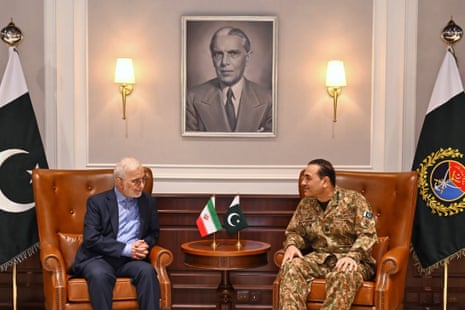
Amidst these escalating tensions, Iranian Interior Minister Eskandar Momeni embarked on a high-stakes visit to Pakistan, a nation recognized as a key mediator in the protracted conflict. However, the substance of any potential new arrangement to end the war remained opaque, with the immediate focus of the conflict increasingly centered on the battle for control over the Strait of Hormuz, a choke point for a significant portion of the world’s oil supply.
A New Front: The Houthi Naval Blockade and its Economic Ripples
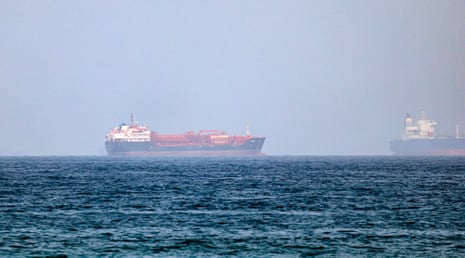
The Houthi movement’s declaration of a naval blockade on Saudi Arabian ports in the Red Sea marks a critical and dangerous new phase in the regional conflict. This bold move directly threatens global energy supplies and freedom of navigation. The Red Sea route has become an indispensable artery for Saudi oil exports, especially given the ongoing instability and effective partial blockage of the Strait of Hormuz. With Iran already posing threats to shipping in the Gulf, the Houthi action extends this maritime insecurity to the western side of the Arabian Peninsula, impacting the vital Suez Canal trade route.

The gravity of the Houthi threat was immediately evident in global shipping patterns. According to Kpler data, three oil tankers, which had loaded Saudi crude earlier this week destined for China and India, abruptly executed U-turns on Tuesday. These vessels diverted away from the Houthi-controlled coast at the mouth of the Red Sea, opting instead for the longer and more expensive route via the Suez Canal, a clear indication of the perceived danger. The Houthis, through their Saba news agency, claimed that a total of six ships had been forced to alter course following their warnings, although this could not be independently verified.
The broader impact on the Strait of Hormuz itself is equally concerning. Shipping data from Kpler indicates a continued decline in vessel transits through the strait. On Tuesday, only three commodity vessels navigated the strait, a decrease from four on Monday. Notably, no very large crude carriers (VLCCs) or liquefied natural gas (LNG) tankers were observed passing through on Tuesday, highlighting the chilling effect of the heightened security risks on major energy shipments. The Kaiser, a general cargo ship, exited the strait loaded with cargo, while the dry bulk carrier H7 Smb8 entered in ballast, anticipating a cargo pickup in the Gulf. The Hsin Ocean entered carrying refined palm olein.
The international community swiftly reacted to these developments. US Secretary of State Marco Rubio, addressing Southeast Asian leaders in Manila, issued a stark warning. He emphasized that Iran’s demand to control the Strait of Hormuz, and by extension the Houthis’ blockade in the Red Sea, posed an existential threat to the global economy and fundamental freedom of navigation. "If we create a precedent in the Middle East where a nation state can decide that they are going to control an international waterway, charge a toll and if you don’t pay them, blow up your ships, we have created a very dangerous precedent which will repeat itself in other parts of the world, including in this region," Rubio stated, implicitly drawing parallels to potential maritime disputes in the South China Sea. Rubio also reiterated accusations that Iran had reneged on its commitments under a failed peace deal, though he acknowledged that Iran had "been reaching out to the United States, both directly and indirectly, to engage in talks about settling the differences," offering no indication that the US was considering a return to peace negotiations.

The economic ramifications were immediate and significant. Brent crude, the international oil benchmark, saw its price surge by 1.2% to $92.09 a barrel at around 0130 GMT, marking its highest intraday price since June 11. Similarly, West Texas Intermediate (WTI), the main US oil benchmark, climbed by 1.1% to $85.23. This upward trend in oil prices reflects deep market anxiety over potential supply disruptions from two of the world’s most critical maritime chokepoints.
The Broader Regional Unrest and Diplomatic Maneuvers
The US-Iran conflict is not isolated but deeply interwoven with broader regional dynamics, exacerbating existing tensions and creating new flashpoints.
Jordan’s Defense and Missile Interceptions: Amidst the regional tumult, Jordan found itself directly impacted by the escalating conflict. The Jordanian army reported that it successfully intercepted four Iranian missiles on Wednesday. Two additional missiles, which the army could not intercept, landed in "remote, uninhabited areas" without causing any human casualties or material damage, according to an official statement. This incident highlights the expanding geographical reach of the conflict and the inherent risks of regional spillover.
Lebanon’s Stance and Israeli Withdrawal: In Lebanon, a delicate diplomatic dance is underway to manage the country’s own security concerns vis-à-vis Israel and Iranian-backed Hezbollah. Lebanese Interior Minister Ahmad Hajjar affirmed that the United States remains the most influential actor capable of pressuring Israel into a complete withdrawal from Lebanon. Hajjar underscored that a full Israeli withdrawal is Lebanon’s paramount priority, noting that despite continuous Israeli attacks in the south, the country’s security situation remained "very good." Lebanese Prime Minister Nawaf Salam further reinforced this commitment during a visit to Zawtar al-Gharbiya, one of several "pilot zones" established to demonstrate the Lebanese army’s capacity to remove and disarm Hezbollah, a key component of a Washington-sponsored deal with Israel. Salam stated, "We will continue mobilising our political and diplomatic efforts to secure a complete Israeli withdrawal from the south." These statements reflect Lebanon’s precarious position, caught between regional powers and internal factions, and its reliance on external mediation to secure its sovereignty.
Saudi Arabia’s Controversial Nuclear Deal: In a development with profound geopolitical implications, President Donald Trump reportedly approved a contentious 30-year agreement with Saudi Arabia that could grant the kingdom uranium enrichment capabilities for its civilian nuclear program. News reports, citing individuals familiar with the matter, indicate that this deal is expected to involve US firms in the program’s development and could facilitate the construction of a uranium enrichment facility in Saudi Arabia following a joint US-Saudi study. Crucially, the agreement is not expected to incorporate the International Atomic Energy Agency’s (IAEA) "additional protocol," a critical safeguard that allows for enhanced monitoring, inspections, and verification of nuclear activities. This omission raises significant non-proliferation concerns, particularly given the volatile regional landscape and Iran’s own nuclear program. Critics argue that providing Saudi Arabia with enrichment technology without robust international oversight could trigger a dangerous nuclear arms race in the Middle East, further destabilizing an already fraught region.
Domestic and Human Rights Concerns
The US-Iran conflict also has profound domestic repercussions for the United States and highlights critical human rights issues within Iran.
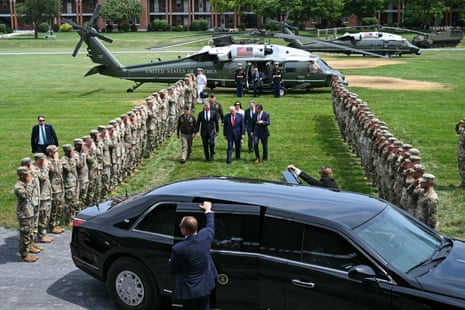
US War Costs and Casualties: The human and financial toll of the ongoing conflict continues to mount for the United States. US Defence Secretary Pete Hegseth informed the Senate on Tuesday that the war in Iran has already cost $37.5 billion. In a bid to sustain military operations, Hegseth requested an additional $67.1 billion in supplemental funding, stating it was necessary to "pay our service members, rapidly replenish equipment and munitions, and sustain vital operations without disruption." He controversially added, "The best way to create peace is to prepare for war, to deter it." This significant financial outlay comes alongside growing casualties. A US official revealed to the Associated Press that the number of wounded US personnel in the Iran war has exceeded 500 troops. Tragically, 18 US service members have been killed since the war’s inception on February 28. President Trump is expected to attend the dignified transfer of four of these service members at Dover Air Force Base on Wednesday. The fallen include two Army soldiers killed in Iranian missile and drone attacks in Jordan, a third soldier missing after the Jordan attacks (whose remains are believed to be recovered), and another soldier killed in Iraq during the detonation of an Iranian drone. These casualties and mounting costs contribute to a complex domestic debate in the US regarding the conflict’s strategy and long-term viability.

Iran’s Internal Crackdown and Human Rights: Internally, Iran’s leadership continues its severe crackdown on dissent. The Iranian judiciary’s Mizan Online news website reported the execution of Mehdi Khanaki, a man found guilty of charges related to the widespread protests that swept the country last winter. These protests, which began in Tehran at the end of December against the rising cost of living, quickly evolved into the largest nationwide uprising in years against the country’s theocratic leaders. Iran responded with "overwhelming repression" and state violence to quell the demonstrations, a brutal crackdown that human rights advocates estimate resulted in thousands of deaths. Khanaki was arrested on February 10 in Karaj, west of Tehran, allegedly in possession of a large arsenal. The judiciary accused him of "having acted in favour of the Zionist and American regimes," allegations that could not be independently confirmed. Amnesty International consistently ranks Iran as the country with the second-highest number of executions globally, after China, underscoring the severe human rights situation within the nation.
International Calls for Accountability: Separately, New York City Mayor Zohran Mamdani on Tuesday called upon US federal authorities to arrest Israeli Prime Minister Benjamin Netanyahu if he visits the US later this year. While acknowledging his own lack of authority, Mamdani described Netanyahu as "a war criminal, the architect of a horrific genocide against the Palestinian people" in a video posted to social media. He expressed belief that the international criminal court warrant for Netanyahu’s arrest over alleged war crimes was justified. Netanyahu is anticipated to travel to New York in September for the UN General Assembly, setting the stage for a potential diplomatic and legal controversy.
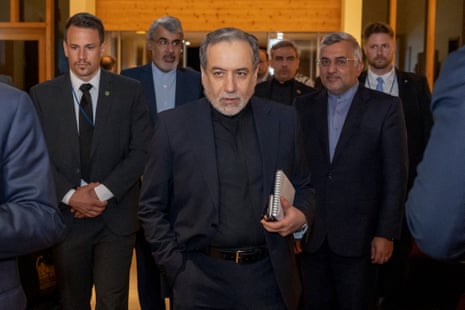
Survival of Iranian Leadership: The direct and deadly impact of the war on Iranian leadership was underscored by Iranian Foreign Minister Abbas Araghchi. He described his harrowing experience of being pulled from the rubble of a leadership compound following the US-Israeli airstrike that killed Iran’s Supreme Leader, Ali Khamenei, on the very first day of the war. Araghchi recounted surviving since then by constantly moving around Tehran, a testament to the high-stakes nature of the conflict and the vulnerability of even the highest echelons of Iranian power.
Historical Context and Future Implications
The current "US-Iran war" is the culmination of decades of strained relations, punctuated by periods of proxy conflict, economic sanctions, and heightened rhetoric. The US withdrawal from the Joint Comprehensive Plan of Action (JCPOA) in 2018, followed by a "maximum pressure" campaign, significantly deteriorated diplomatic avenues and set the stage for the direct military confrontations now observed. Iran’s consistent support for regional non-state actors, including the Houthis and Hezbollah, has further complicated the geopolitical landscape, drawing the US and its allies into a web of retaliatory actions.
The ongoing escalation carries profound implications for global stability. The direct military engagement between the US and Iran risks spiraling into a wider regional conflagration, potentially drawing in other major powers. The Houthi blockade in the Red Sea and threats to the Strait of Hormuz highlight the fragility of global supply chains and the immediate economic vulnerability to geopolitical conflict. The surge in oil prices is a stark reminder of the global interconnectedness and the potential for severe economic shocks.

Furthermore, the reported US-Saudi nuclear deal, particularly without robust IAEA oversight, introduces a dangerous new dimension to nuclear proliferation concerns in the Middle East. This could prompt other regional actors to pursue similar capabilities, undermining international non-proliferation efforts and increasing the risk of nuclear conflict. The human rights situation in Iran, exacerbated by the crackdown on protests, also remains a critical international concern, drawing condemnation and highlighting the internal pressures facing the Iranian regime amidst external conflict.
As diplomatic channels remain largely stalled and military actions intensify, the region faces an unprecedented period of uncertainty. The complex interplay of direct military engagement, proxy conflicts, economic blockades, and nuclear ambitions suggests a future defined by continued instability, with far-reaching consequences for regional populations and the global order. The urgent need for de-escalation and renewed diplomatic engagement has never been more pressing.
Related posts: