Trump braces for loss in lawsuit brought by media organizations, expects to go for appeal

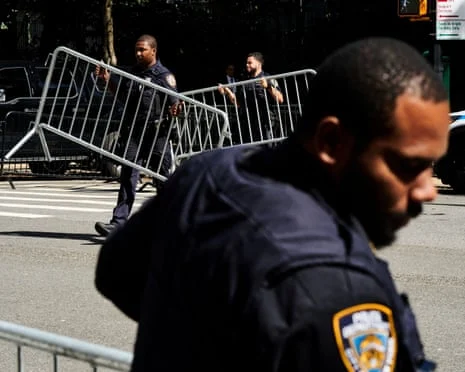
Donald Trump is bracing for a legal setback in a high-stakes lawsuit filed by three major media organizations, acknowledging that the judge presiding over the case has a history of ruling against his administration on matters involving press credentials. The lawsuit, initiated by CNN, MS Now, and Politico, challenges the president’s recent decision to revoke the White House access of these outlets, citing an unconstitutional retaliation against coverage he deems unfavorable.
The litigation centers on the constitutional protections afforded to the press under the First Amendment and the due process rights of news organizations to operate within the seat of government. Trump, taking to the social media platform Truth Social, preemptively dismissed the potential for a favorable ruling. He specifically identified the presiding judge as Tim Kelly, a jurist he appointed himself, noting with visible frustration that Kelly had previously ruled in favor of CNN journalist Jim Acosta during a 2018 dispute over White House access.
The president’s rhetoric reflects a deepening rift between his administration and the press corps. In his post, Trump labeled the affected outlets as purveyors of "Fake News" and accused them of violating national security through the publication of stories based on anonymous sources. His declaration that he would "go for appeal" suggests a prolonged legal battle that could reach the federal appellate courts, potentially setting a significant precedent for the relationship between the executive branch and the press in the modern era.

Chronology of the Escalating Conflict
The current standoff began last Friday when President Trump announced, through a surprise social media post, that he was barring Politico, CNN, and MS Now from the White House grounds. The move was framed by the administration as a necessary measure against what the president described as a "corrupt, purposeful, and coordinated" effort by these organizations to undermine his administration.
On Monday, the affected outlets formally filed their complaint in the U.S. District Court for the District of Columbia. The lawsuit argues that the ban is an unlawful exercise of executive power, designed to punish news organizations for critical reporting rather than for any legitimate security or conduct-based reason. By Monday afternoon, the legal challenge had already sparked a ripple effect across the media landscape.
The broader press corps, including the four other networks that comprise the White House TV pool—ABC, NBC, CBS, and Fox News—announced a suspension of their normal pooled coverage. This move, intended as a show of solidarity, left the White House without its standard rotation of camera crews for the first time in recent history. The Washington Post and other major institutions have similarly committed to withholding still photography from official events until the end of the day, signaling a unified front against what many in the media describe as an attempt to intimidate the Fourth Estate.
The Economic and Geopolitical Backdrop
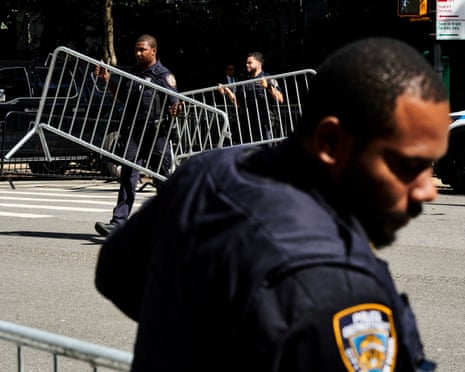
While the media battle dominates domestic headlines, the Trump administration is simultaneously managing a complex web of international and economic challenges. The president’s travel to New York for the United Nations General Assembly comes at a time when the administration is under intense pressure regarding soaring fuel costs.
As of Monday, the national average for diesel fuel reached a record $6.50 per gallon. This represents a significant surge from the $3.19 recorded at the same time last year. The spike in prices is largely attributed to the ongoing war in Iran and the subsequent closure of the Strait of Hormuz to international shipping, which has severely disrupted global energy supply chains.
The economic fallout has created political friction even within the president’s own party. Senator Chuck Grassley of Iowa, typically a stalwart ally, has publicly urged the administration to implement a 1970s-style embargo on diesel exports. Grassley argues that such a measure is essential to protect American farmers and the trucking industry, both of which are bearing the brunt of the inflated costs. "If our government can embargo chips to China, it can embargo diesel to help American farmers and truckers," Grassley wrote on social media.

The administration’s agricultural policies have also drawn criticism from rural voters who were once part of the president’s core base. Concerns over tariffs affecting fertilizer and machine parts, coupled with the decision to allow large quantities of lower-tariff beef imports, have fueled fears that the administration’s policies are undermining domestic producers. Political analysts at the Brookings Institution have suggested that these grievances, if left unaddressed, could significantly impact the electoral landscape heading into the November midterms, potentially favoring Democratic gains in Congress.
Diplomatic Tensions at the United Nations
President Trump’s visit to New York serves as a critical juncture for his foreign policy agenda. Beyond the UN assembly, the president is engaged in high-level discussions aimed at de-escalating the energy crisis. Central to these talks is an effort to pressure Ukrainian President Volodymyr Zelenskyy into an "energy ceasefire" with Russia. Trump has publicly blamed the ongoing war in Ukraine for the global shortage, specifically pointing to the destruction of Russian diesel refineries as a catalyst for the current price volatility.
However, the administration’s narrative has been met with skepticism. Despite Trump’s claims that an energy ceasefire had been agreed upon, Russian strikes on Ukrainian infrastructure have persisted. Meanwhile, the arrival of Russian foreign minister Sergei Lavrov in Washington for meetings with Secretary of State Marco Rubio underscores the delicate, multi-polar nature of these negotiations.

Complicating the diplomatic schedule, President Trump held a closed-door meeting on Monday with New York City Mayor Zohran Mamdani. The interaction between the president and the democratic socialist mayor has been described as a "strange rapport." The two reportedly discussed housing initiatives, including the potential redevelopment of the Sunnyside Yard in Queens—a project that would require significant federal support and approval.
Human Rights Concerns and Domestic Turmoil
The administration is also navigating domestic controversies that extend beyond press freedom. On Sunday, an ICE agent shot and wounded a 28-year-old Venezuelan man in Austin, Texas, during a traffic stop. The incident has reignited protests against the administration’s aggressive deportation strategies.
The victim, identified as Wilber Rafael Garcés Pérez, remains in custody in serious condition. The incident has drawn further international scrutiny following a report from a UN special rapporteur, which concluded that U.S. strikes on boats suspected of drug trafficking in the Pacific and Caribbean might constitute "crimes against humanity." The report, which challenges the administration’s claims of self-defense against terrorist organizations, notes that over 230 people have been killed in 68 such operations since September 2025.
In the legislative sphere, Representative Lauren Boebert is facing a formal House ethics complaint regarding allegations of improper relationships with staff members. Boebert has vehemently denied these claims, dismissing the complaint as a "politically motivated" smear campaign. The allegations involve multiple staff members and claims of financial payouts to ensure silence, creating a new layer of instability within the Republican caucus.
Analysis of the Political Climate
The convergence of these events—the legal battle over press access, the economic strain of high fuel prices, and the diplomatic hurdles at the UN—presents a significant challenge to the administration’s political standing. The decision to ban news outlets, while popular with a segment of the president’s base, appears to have triggered a broader institutional pushback from the media that could prove difficult to contain.
Furthermore, the public calls for an "immediate end" to the conflict in Iran by candidates like Ashley Hinson indicate that the party’s traditional unity on foreign policy is fracturing. As the midterm elections approach, the administration’s ability to reconcile its domestic and foreign policy priorities will be tested.

The legal challenge to the White House press ban will likely be the first test of the administration’s resolve in the coming months. If the courts rule that the revocation of credentials was indeed a violation of the First Amendment, it would represent a substantial defeat for the executive branch’s effort to exert control over the media. Conversely, a victory for the administration would solidify its authority to determine access to the White House, potentially altering the landscape of executive-press relations for the foreseeable future.
As the week progresses, all eyes will remain on the U.S. District Court in Washington and the ongoing deliberations at the United Nations. With the administration balancing intense public criticism, internal party dissent, and a potential legal loss, the current period marks one of the most volatile stretches of the second term. Whether these pressures will force a shift in policy or lead to an even more confrontational stance remains to be seen. The coming days will be pivotal, not only for the future of the press corps but for the stability of the president’s domestic and international agenda.