House Education and Workforce Committee Advances Title IX Clarification Act to Define Sex as Biological

The House Education and Workforce Committee on July 21, 2026, advanced the Title IX Clarification Act, a Republican-led legislative effort that seeks to narrow the definition of "sex" under the landmark 1972 anti-discrimination law to mean biological sex as determined at birth. The measure, known as H.R. 8781, represents a significant move to codify a recent Supreme Court interpretation of the law, potentially altering the landscape of civil rights protections for transgender students across the United States. The bill passed the committee following a contentious markup session and now moves to the full House of Representatives for consideration.
The advancement of this legislation follows a period of intense legal and social debate regarding the scope of Title IX, which prohibits discrimination "on the basis of sex" in any education program or activity receiving federal financial assistance. While the law was originally designed to ensure equal opportunities for women and girls, particularly in athletics and admissions, the definition of "sex" has become the focal point of a national tug-of-war between federal administrations, state governments, and the judicial system.
The Legal Catalyst: Supreme Court Rulings and the 2025-26 Term
The impetus for the Title IX Clarification Act stems largely from the Supreme Court’s joint decision in two high-profile cases during the 2025-26 term: West Virginia v. B.P.J. and Little v. Hecox. In a June ruling that reverberated through the education sector, the justices agreed that Title IX does not preclude states from separating athletic teams based on biological sex.
This ruling effectively upheld the rights of at least 27 states to maintain policies that prohibit transgender students from participating on sports teams that align with their gender identity. However, the Court’s decision was notable for what it did not do: it did not issue a nationwide mandate prohibiting transgender participation. Instead, it allowed for a bifurcated legal environment where states like California or New York could continue to permit transgender students to compete according to their gender identity, while other states could enforce bans.
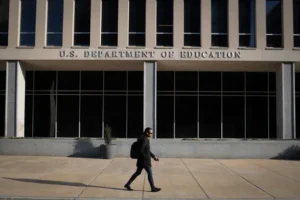
Republican lawmakers argue that the Title IX Clarification Act is necessary to provide a uniform national standard that aligns with what they describe as the "original intent" of the 1972 statute. By defining "sex" strictly as biological sex, the bill aims to prevent the executive branch—specifically the U.S. Department of Education—from expanding Title IX protections to include gender identity through administrative rulemaking.
Legislative Mechanics of H.R. 8781
The Title IX Clarification Act is more than a symbolic gesture; it proposes concrete changes to how federal law is applied in K-12 schools and higher education institutions. If enacted, the bill would:
- Define Biological Sex: Explicitly state that "sex" for the purposes of Title IX refers to the biological distinction between male and female as determined by reproductive biology and genetics at birth.
- Protect Sex-Segregated Spaces: Codify the right of schools to maintain separate bathrooms, locker rooms, and housing based on biological sex without fear of losing federal funding or facing Title IX litigation.
- Athletic Standards: Establish that maintaining separate athletic programs for "biological females" is not a violation of federal law, but rather a fulfillment of Title IX’s mandate to ensure equal opportunity for women.
- Limit Administrative Reach: Prevent future administrations from issuing guidance or regulations that interpret "sex discrimination" to include discrimination based on gender identity or sexual orientation.
The bill was part of a broader package of 10 measures advanced by the committee. According to a statement released by the committee’s Republican majority, these bills collectively aim to "protect women and girls, safeguard the rights of students and parents, prepare students and educators to use AI safely and effectively in the classroom, and encourage healthy habits among children."
A History of Title IX Interpretations
To understand the weight of the Title IX Clarification Act, one must look at the timeline of the law’s evolution. Since its inception in 1972, Title IX has been a cornerstone of gender equity. However, the interpretation of the word "sex" has shifted dramatically over the last decade.
- 2016: The Obama administration issued a "Dear Colleague" letter advising schools that Title IX protections extended to gender identity, requiring schools to allow students access to facilities consistent with their gender identity.
- 2017: The Trump administration rescinded the Obama-era guidance, arguing that the issue should be left to states and local school districts.
- 2020: The Supreme Court ruled in Bostock v. Clayton County that Title VII of the Civil Rights Act (which covers employment) protects employees against discrimination based on sexual orientation or gender identity. This set the stage for arguments that Title IX should be interpreted similarly.
- 2024: The Biden administration released a final rule that officially expanded Title IX’s definition of sex discrimination to include gender identity and sexual orientation, sparking a wave of lawsuits from Republican-led states.
- 2026: The Supreme Court’s rulings in West Virginia v. B.P.J. and Little v. Hecox provided the judicial opening that Congressional Republicans are now seeking to solidify through H.R. 8781.
Responses from Educational and Civil Rights Organizations
The advancement of the bill has met with fierce opposition from teachers’ unions and civil rights advocates. The National Education Association (NEA), the largest labor union in the United States, sent a letter to the committee on July 20, 2026, expressing grave concerns about the legislation’s impact on the school climate.
The NEA argued that the bill would "substantially narrow protections for transgender students and undermine the overall purpose of Title IX: preventing discrimination in education." The union warned that the fallout could include increased stigmatization, higher rates of bullying, and the exclusion of nonbinary and transgender students from essential school activities. Furthermore, the NEA pointed out that the bill could create a "legal quagmire" by conflicting with existing state laws in jurisdictions that have robust protections for LGBTQ+ students.
Similarly, the Human Rights Campaign (HRC) criticized the bill for what it called "reproductive reductionism." In its letter to the committee, the HRC stated that Title IX was never intended to "simply reduce kids to their reproductive functions." The organization emphasized that the law was designed to protect students from sex stereotypes—such as bullying a male student for not being "masculine enough" or denying resources to female athletes.

"The purpose of having civil rights protections in education is to ensure that every student has access to the educational opportunities they are entitled to," the Human Rights Campaign wrote. "By contrast, H.R. 8781, which seeks to write LGBTQ+ students out of Title IX’s protections, does the opposite."
Broader Policy Implications and AI Integration
While the Title IX Clarification Act took center stage, the committee also addressed the intersection of technology and education. Included in the markup were measures designed to prepare the K-12 workforce for the integration of Artificial Intelligence (AI).
Education policy experts suggest that the Republican focus on "biological sex" and "parental rights" is part of a broader strategy to reshape the Department of Education’s role. By advancing bills that address both cultural issues and emerging technologies like AI, the committee is attempting to define a new conservative vision for American schooling.
However, the path forward for H.R. 8781 remains uncertain. As of late July 2026, there were no Senate companion bills for the K-12 measures advanced by the House committee. In a divided Congress, the bill faces significant hurdles in the Senate, where Democratic leadership has signaled that any rollbacks of LGBTQ+ protections will be met with a filibuster.
Fact-Based Analysis: The Impact on Schools
If the Title IX Clarification Act were to become law, the immediate impact on school districts would be profound. Districts in states with inclusive policies would find themselves caught between federal law and state mandates. For example, a school in California might be required by state law to allow a transgender girl to play on the girls’ volleyball team, while the federal Title IX Clarification Act would define that student as biologically male, potentially creating a conflict regarding federal funding compliance.
Furthermore, the bill could influence the U.S. Department of Education’s Office for Civil Rights (OCR). Currently, the OCR investigates complaints regarding pronoun usage and bathroom access. Under H.R. 8781, the OCR would likely be prohibited from pursuing cases where a student’s gender identity was the basis for the complaint, provided the school was acting based on biological sex.

The fiscal implications are also significant. Title IX compliance is tied to federal funding. If a school district refuses to follow the "biological sex" definition mandated by a potential federal law, it could risk losing millions of dollars in federal aid—money that supports low-income students, special education, and school lunch programs.
Conclusion
The advancement of the Title IX Clarification Act marks a pivotal moment in the ongoing national debate over the rights of transgender students and the definition of gender equality. For supporters, the bill is a necessary correction that protects the integrity of women’s sports and maintains privacy in sex-segregated spaces. For opponents, it is a discriminatory measure that rolls back decades of progress in civil rights and endangers a vulnerable population of students.
As the bill moves toward a full House vote, the eyes of the educational community remain on Washington. The outcome will not only determine the future of Title IX but will also set a precedent for how the U.S. government balances the competing claims of biological definitions and gender identity in the hallowed halls of its schools.