European Commission Unveils Landmark Reform Proposals for Emissions Trading System to Balance Industrial Competitiveness with 2040 Climate Targets

On July 17, the European Commission presented a comprehensive and long-awaited proposal to reform the European Union’s Emissions Trading System (ETS), signaling a strategic shift in how the bloc intends to navigate its transition toward a carbon-neutral economy. The proposal, introduced by EU Climate Commissioner Wopke Hoekstra, outlines a vision for the post-2030 period that prioritizes industrial stability and "savvy" business-friendly policies while ostensibly maintaining alignment with the EU’s legally binding climate goals. Central to the reform is a plan to decelerate the rate of emission cuts from 2031 onwards and extend the duration of free carbon permits for heavy industry, a move that has sparked intense debate between industrial lobby groups and environmental advocates.
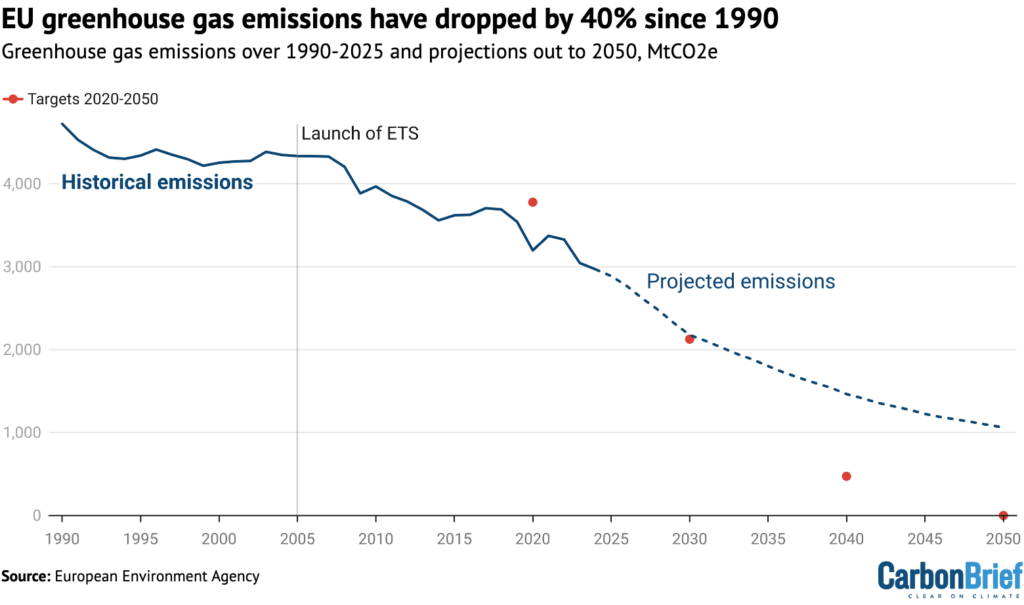
The EU Emissions Trading System, established in 2005, serves as the primary instrument for reducing greenhouse gas emissions across the continent. Operating on a "cap and trade" principle, it sets an absolute limit on the total amount of greenhouse gases that can be emitted by regulated sectors, including power generation, energy-intensive industry, and aviation. Since its inception, the system has been credited with halving emissions in the sectors it covers, contributing significantly to the EU’s broader success in reducing total emissions by 40% relative to 1990 levels. However, as the bloc moves toward its ambitious 2040 target of a 90% net reduction in emissions, the Commission argues that the "low-hanging fruit" of decarbonization has been plucked, necessitating a more nuanced approach to prevent industrial flight.
The Deceleration of Emission Reductions
The most significant technical change in the proposal concerns the "Linear Reduction Factor" (LRF), the annual rate at which the total number of emission allowances in the market is reduced. Under current regulations, the cap is set to decrease by 4.3% annually between 2024 and 2027, rising to 4.4% from 2028. The new proposal suggests that maintaining such aggressive reduction rates into the next decade would be "unrealistic" for many industrial players.
Instead, the Commission recommends a two-stage deceleration: reducing the cap by 3.7% per year between 2031 and 2035, and further slowing the reduction to just 1.7% annually from 2036 through 2040. This trajectory would allow new allowances to remain in the system well into the 2040s, whereas previous projections suggested the cap would hit zero by 2039. Commissioner Hoekstra defended this "more gradual" path, asserting it remains "completely climate-law proof" and provides the necessary breathing room for industries to implement complex, long-term decarbonization technologies.
Conditional Free Allowances and Industrial Competitiveness
To address the existential concerns of heavy industry—particularly in the steel, chemical, and cement sectors—the Commission has proposed extending the phase-out of free allowances. Originally scheduled to be fully eliminated by 2034 to make way for the Carbon Border Adjustment Mechanism (CBAM), the new plan extends the availability of these permits until 2038.

However, this extension comes with significant "green strings" attached. From 2031, 80% of free allowances will be contingent upon companies submitting and adhering to detailed climate investment plans. The remaining 20% will be withheld until firms can demonstrate they have achieved specific, verified emission reduction milestones. Furthermore, the Commission proposed reintroducing 15% of the allowances that were slated for removal under the CBAM transition, starting in 2028. This move is designed to mitigate "carbon leakage"—the risk of companies relocating to regions with laxer environmental regulations—as the EU transitions to a full carbon border tax system.
Expanding the Scope: Aviation, Maritime, and Waste
The reform also seeks to broaden the ETS’s reach to include previously exempt or under-regulated sectors. In the aviation sector, the Commission proposes a significant geographic expansion. From 2029, all flights departing from the European Economic Area (EEA) and landing within 5,000 kilometers of central Europe would be subject to the carbon price. While this captures most medium-haul international traffic, it strategically avoids immediate conflict with major trading partners like the United States and China by excluding ultra-long-haul routes. Additionally, for the first time, private jets and business aviation would be integrated into the system, addressing long-standing criticisms regarding the disproportionate carbon footprint of the wealthy.
The maritime sector, which accounts for roughly 4% of total EU emissions, will see its coverage expanded to include smaller vessels (400–5,000 tonnes). Furthermore, the proposal outlines a phased entry for the waste incineration sector. Starting in 2031, waste-burning facilities will be required to surrender allowances for 25% of their emissions, a figure that will rise to 100% by 2034.
Financial Architecture and Revenue Recycling
One of the most impactful elements of the proposal is the mandatory "recycling" of auction revenues. In 2025 alone, the EU generated approximately €43 billion from carbon auctions. Under the new rules, member states would be legally required to funnel 50% of their ETS revenues directly back into the decarbonization of the sectors covered by the system. This could unlock over €100 billion in targeted industrial investment before the end of the decade.
The proposal also introduces a framework for integrating "permanent" carbon removals, such as Direct Air Capture with Carbon Storage (DACCS), into the trading system. By allowing companies in hard-to-abate sectors to purchase removal credits to offset their emissions, the Commission hopes to stimulate a nascent carbon removal industry. Furthermore, the plan opens the door for the use of "high-integrity" international carbon credits starting in 2036, allowing up to 5% of the EU’s 2040 target to be met through global market mechanisms.
Market Stability and International Linkages
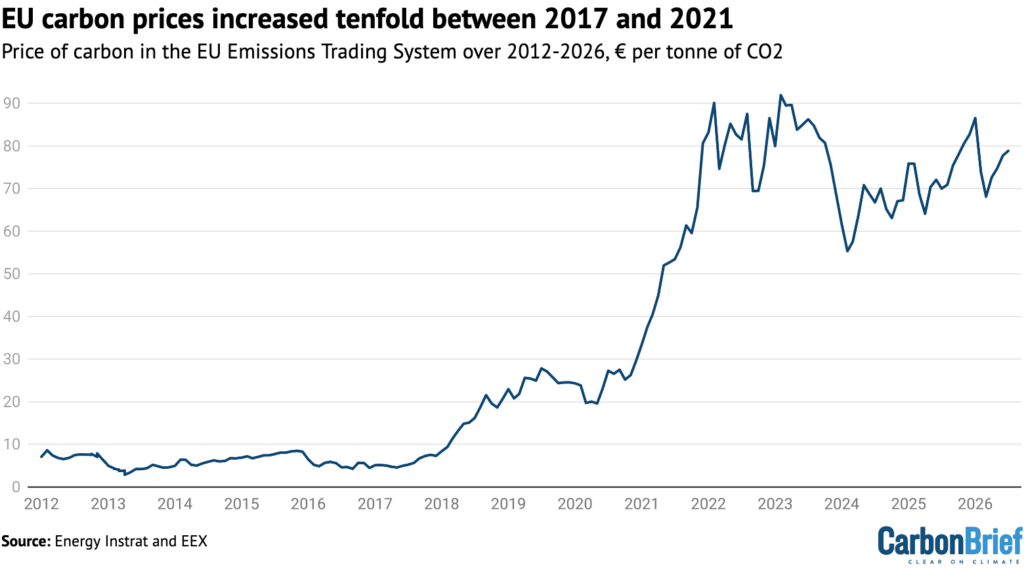
To prevent the extreme price volatility that saw carbon prices surge tenfold between 2017 and 2021, the Commission has proposed reforms to the Market Stability Reserve (MSR). The MSR acts as a "buffer" that absorbs excess allowances or releases them during shortages. The new proposal suggests reducing the withdrawal rate of allowances from 24% to 12% starting in 2028, effectively allowing more liquidity to remain in the market and preventing artificial price spikes that could cripple industrial recovery.
On the international front, the proposal acknowledges ongoing negotiations to link the EU ETS with the UK’s post-Brexit carbon market. While a deal remains "under progress," the Commission signaled that a future agreement would likely involve financial contributions from the UK to the EU system. Such a link is highly sought after by cross-border energy and carbon-capture projects that currently face regulatory fragmentation.
Environmental and Political Backlash
Despite the Commission’s claims of alignment with climate targets, the proposal has faced fierce criticism from environmental organizations. Analysis by the WWF and other think tanks, such as Agora Energiewende, suggests that the slower reduction trajectory and the extension of free permits could result in an additional 2 billion to 2.4 billion tonnes of CO2 being released into the atmosphere by 2050.
"Every extra tonne of CO2 allowed under the ETS makes Europe’s climate challenge harder and more expensive," warned Chiara Martinelli, Director of CAN Europe. Critics argue that by easing the pressure on heavy industry, the EU will be forced to demand even more drastic and politically difficult cuts from other sectors, such as agriculture and domestic heating, to stay within the overall 2040 carbon budget. Michael Bloss, a prominent Green MEP, went as far as to label the proposal "climate vandalism," arguing it undermines the very investment signals needed for a green industrial revolution.

Conversely, some member states and industry groups remain wary of the costs. While Italy, Hungary, and Poland have previously described the ETS as an "existential risk," lobby groups like IATA expressed frustration over the expansion of aviation costs, warning of increased ticket prices and reduced European competitiveness.
Chronology and Next Steps
The journey of this proposal is far from over. It now enters the "trilogue" phase of EU lawmaking, where member state governments in the Council of the EU and representatives of the European Parliament will negotiate the final text.
- July 17, 2026: Formal presentation of the proposal by the European Commission.
- Q3–Q4 2026: Initial review by the European Parliament’s Environment Committee and the Council of the EU.
- End of 2026: Ireland, holding the rotating presidency of the Council, aims to reach a "general approach" among member states.
- Early 2027: Expected commencement of final negotiations (trilogues) to reconcile the positions of the Parliament and the Council.
- 2028: Implementation of initial reforms, including MSR changes and the start of the waste sector phase-in.
The outcome of these negotiations will determine the economic and environmental landscape of Europe for the next two decades. As the bloc attempts to reconcile its role as a global climate leader with the realities of an increasingly competitive and energy-expensive global market, the fate of the ETS reform will serve as the ultimate litmus test for the "European Green Deal."