European Commission Unveils Strategic Reforms for Emissions Trading System to Align Industrial Competitiveness with 2040 Climate Targets

The European Commission has introduced a comprehensive proposal to recalibrate the European Union’s Emissions Trading System (ETS), signaling a strategic shift in how the bloc intends to manage its carbon market from 2031 through the next decade. Presented on July 17, the reform package aims to harmonize the EU’s flagship climate tool with the recently established target of reducing net greenhouse gas emissions by 90% by 2040. While the proposal maintains the system’s core objective of driving decarbonization, it introduces a more gradual reduction in emission caps and extends protections for heavy industry, sparking a heated debate between business advocates and environmental organizations.
Core Pillars of the ETS Reform Proposal
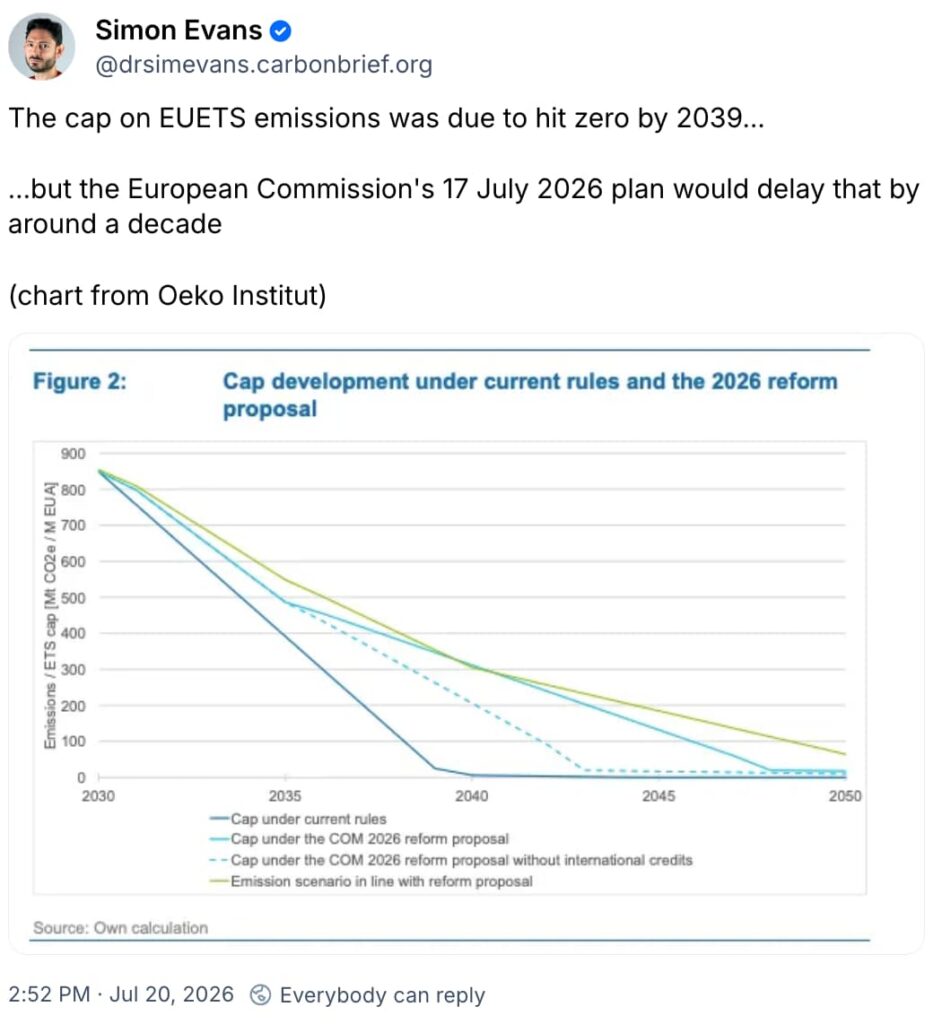
The cornerstone of the Commission’s new plan is a deliberate adjustment of the "linear reduction factor"—the rate at which the total number of emission allowances in the market decreases each year. Under current regulations, the cap is set to drop by 4.3% between 2024 and 2027, increasing to 4.4% from 2028. However, the new proposal suggests that maintaining such steep declines after 2030 may be "unrealistic" for the European industrial base.
Instead, the Commission proposes a tiered deceleration: the cap would fall by 3.7% annually between 2031 and 2035, and further slow to a 1.7% annual reduction between 2036 and 2040. This adjustment effectively pushes the date for a "zero-cap" scenario into the 2040s, a decade later than the previously anticipated 2039 deadline. EU Climate Commissioner Wopke Hoekstra defended the move as a "business-friendly" and "savvy" approach designed to prevent industrial flight while keeping the 2050 climate neutrality goal within reach.
In tandem with these market adjustments, the Commission announced an ambitious electrification target. The proposal calls for electricity to account for 46% of total energy consumption by 2040, nearly double the current level of 23%. This transition is projected to save the EU approximately €260 billion annually in avoided fossil fuel imports, reinforcing the economic rationale behind the green transition.
Industrial Safeguards and Free Allowances
A significant point of contention in the proposal is the extension of free emission allowances. Originally, these permits—intended to prevent "carbon leakage," where companies move production to regions with laxer environmental laws—were scheduled for a complete phase-out by 2034. The new framework proposes extending these allocations until 2038, albeit with strict strings attached.
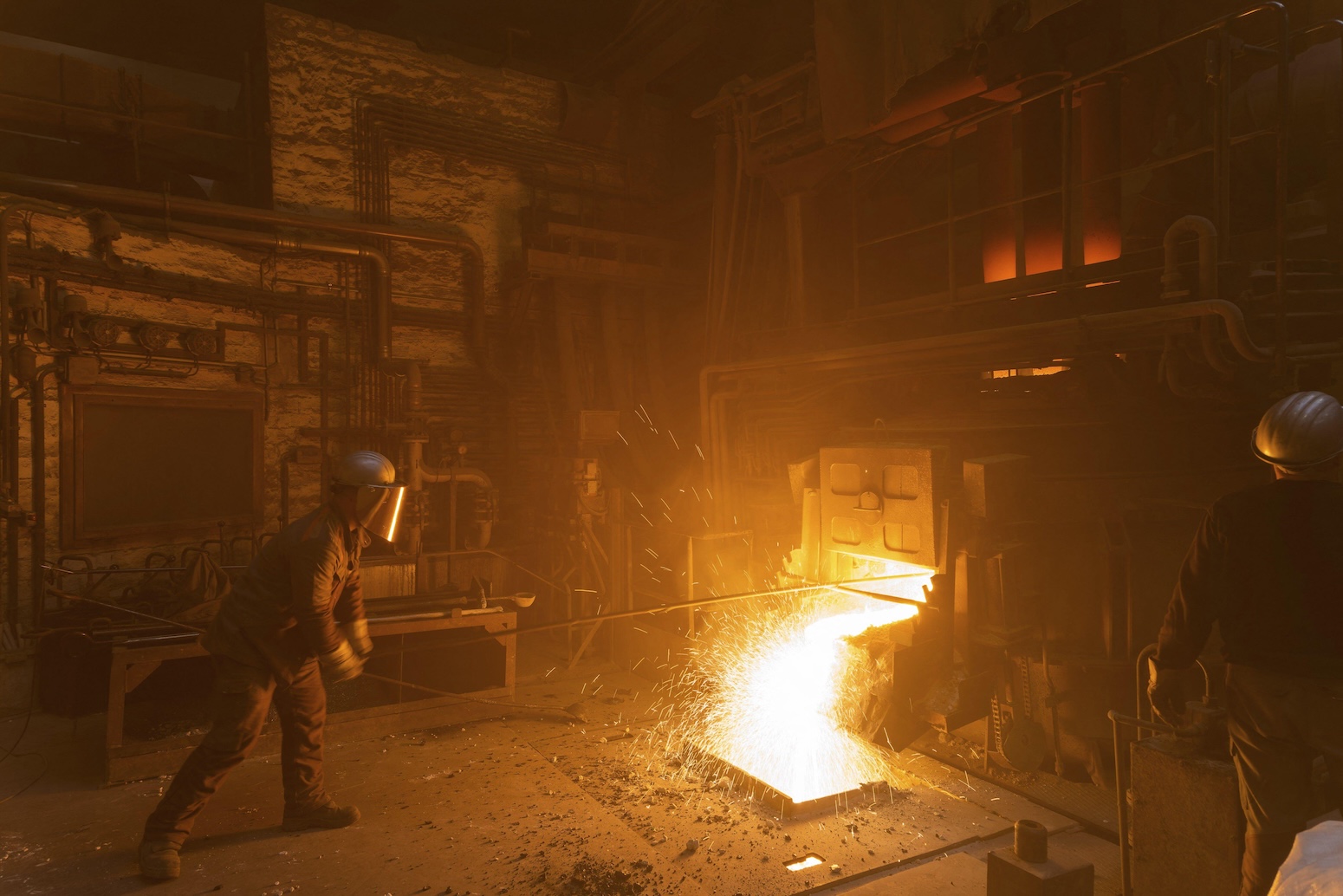
Starting in 2031, 80% of a company’s free allowances will be contingent upon the submission of a detailed climate investment plan. The remaining 20% will only be granted if the company can prove it has successfully implemented these plans and achieved the stipulated emission reductions. Furthermore, the Commission plans to reintroduce 15% of the free allowances that were previously earmarked for removal under the Carbon Border Adjustment Mechanism (CBAM). This move is intended to mitigate the "residual carbon leakage risk" as the EU transitions to a full carbon tariff system.
Dr. Kirsten Scholl, Director for EU Affairs at the thinktank Epico, noted that while these flexibilities are a "step in the right direction" for competitiveness, they must not result in "excessive administrative burdens" that stifle the very innovation they aim to encourage.
Expansion into Aviation, Maritime, and Waste Management
The reform package also seeks to broaden the scope of the ETS to cover previously exempt or under-regulated sectors. In the aviation sector, the Commission proposes including all flights departing from the European Economic Area (EEA) that land within 5,000 kilometers of central Europe. This 5,000km threshold is a strategic calculation; it excludes long-haul flights to the United States and China—nations that have historically protested the extraterritorial application of EU carbon prices—while capturing a significantly larger portion of international traffic than the current intra-European model.
Additionally, the proposal targets "business flights" and private jets, which have faced increasing public scrutiny for their high per-passenger carbon footprint. In the maritime sector, the ETS will be expanded to include smaller vessels (400 to 5,000 tonnes). Perhaps most notably, the waste incineration sector will be phased into the system starting in 2031. Companies in this sector will be required to hold allowances for 25% of their emissions in 2031, scaling up to 100% by 2034.
Financial Reinvestment and Market Stability
The proposal introduces a more rigorous mandate for how Member States utilize the revenues generated from carbon auctions. In 2025 alone, the ETS generated roughly €43 billion. Under the new rules, EU countries would be required to funnel at least 50% of their auction proceeds specifically toward the decarbonization of sectors covered by the ETS, such as steel, chemicals, and cement. This is a significant shift from current practices, where only about 5% of funds are directly reinvested into industrial transformation.
To ensure price predictability, the Commission also proposed reforms to the Market Stability Reserve (MSR). The MSR acts as a "buffer" that absorbs or releases allowances based on market supply. The new plan suggests reducing the withdrawal rate of excess allowances from 24% to 12% starting in 2028, allowing permits to remain in the market longer to prevent sudden price spikes that could destabilize industrial operations.
The Integration of Carbon Removals and Global Credits
In a move praised by scientific communities but criticized by some environmentalists, the Commission proposed integrating permanent carbon removals into the ETS. This includes technologies like Direct Air Capture and Carbon Storage (DACCS). By allowing these removals to create "additional emission space," the EU hopes to provide a lifeline for "hard-to-abate" sectors like heavy shipping and aviation.
Furthermore, from 2036 onwards, companies may be allowed to use "high-integrity" international carbon credits to meet a small portion of their obligations. While the International Emissions Trading Association (IETA) welcomed this as a way to establish a credible demand signal for global carbon markets, groups like the Bellona Foundation warned that such credits should be a "strategic last resort" rather than a substitute for domestic emission cuts.
Chronology of the EU ETS Evolution
The EU ETS has undergone several transformations since its inception, and the current proposal represents the beginning of "Phase 5."
- 2005–2007 (Phase 1): The pilot phase established the system but suffered from an over-allocation of permits, leading to a price collapse.
- 2008–2012 (Phase 2): Inclusion of aviation (intra-EU) and the linking of the system to Iceland, Liechtenstein, and Norway.
- 2013–2020 (Phase 3): Introduction of a single EU-wide cap and the transition from free allocation to auctioning as the default method.
- 2021–2030 (Phase 4): Current phase focused on achieving a 55% reduction in emissions by 2030, introducing the MSR and the initial phase-out of free permits.
- 2031–2040 (Proposed Phase 5): The current proposal, focusing on the 90% reduction target and industrial "safeguarding."
Divergent Reactions and Political Obstacles
The reception of the proposal has been deeply polarized. On the political front, countries like Italy, Poland, and Hungary—who previously described the ETS as an "existential risk" to industry—view the slower reduction rates as a necessary concession. Conversely, Spain and the Netherlands have expressed concern that "gutting" the system could undermine the long-term investment signals necessary for a green transition.
Environmental NGOs have been scathing in their assessment. Carbon Market Watch and WWF estimate that the slower reduction in the emission cap could result in an additional 2 billion tonnes of CO2 being released into the atmosphere by 2040. Michael Bloss, a Member of the European Parliament for the Greens, labeled the proposal "climate vandalism," arguing that it rewards polluters who have delayed investment in clean technology.
Industry groups are equally divided. While some industrial sectors welcomed the extension of free allowances, the International Air Transport Association (IATA) expressed "deep frustration" over the expansion of aviation coverage, warning of "harmful consequences" for European competitiveness and rising ticket prices. Meanwhile, WindEurope cautioned that the plan might fail to channel sufficient revenues into the massive electrification projects required to meet the 2040 goals.
Implications and the Path to Legislation
The proposal now enters a complex negotiation phase between the European Commission, the European Parliament, and the Council of the EU (representing Member State governments). Ireland, which currently holds the rotating presidency of the Council, has expressed a desire to reach a preliminary agreement by the end of 2024, though most analysts expect "months of arguing" that could push a final deal into 2027.
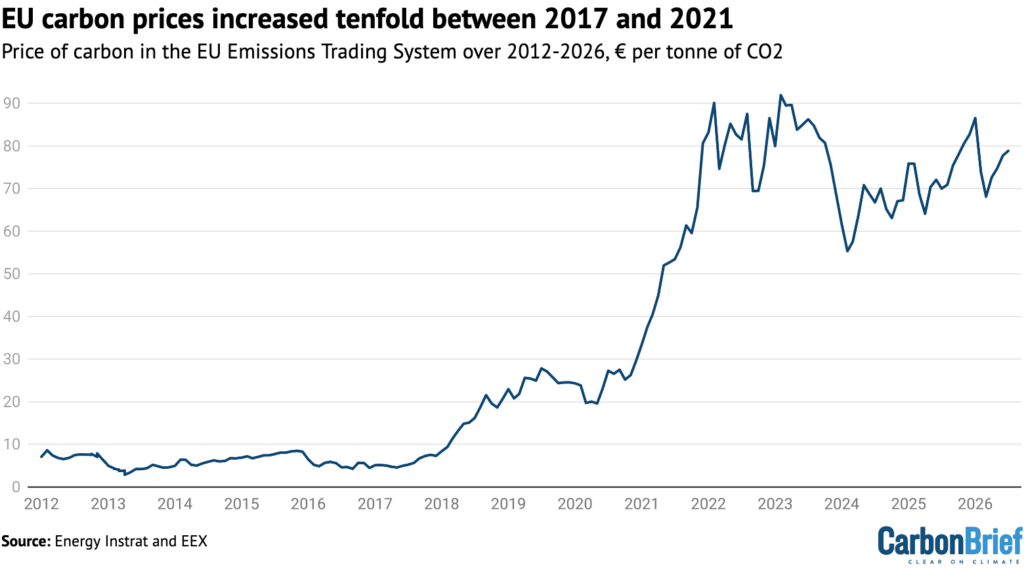
The stakes are high. The EU ETS remains the world’s largest and most successful carbon market, having contributed to a 41% reduction in industrial emissions since 2005. However, the current challenge is one of balance: how to maintain the aggressive trajectory required to lead the global fight against climate change without hollowing out the European industrial base.
If the proposal is adopted in its current form, it will represent a "soft landing" for heavy industry but will require other sectors—or carbon removal technologies—to over-perform to meet the bloc’s legal climate obligations. As the "cornerstone" of EU climate policy, the final shape of these reforms will determine not only the price of carbon in Europe but also the viability of the EU’s claim to global climate leadership in the mid-21st century.