Soho House Expands Cities Without Houses Program with Creative Reset Retreat in Valle de Guadalupe

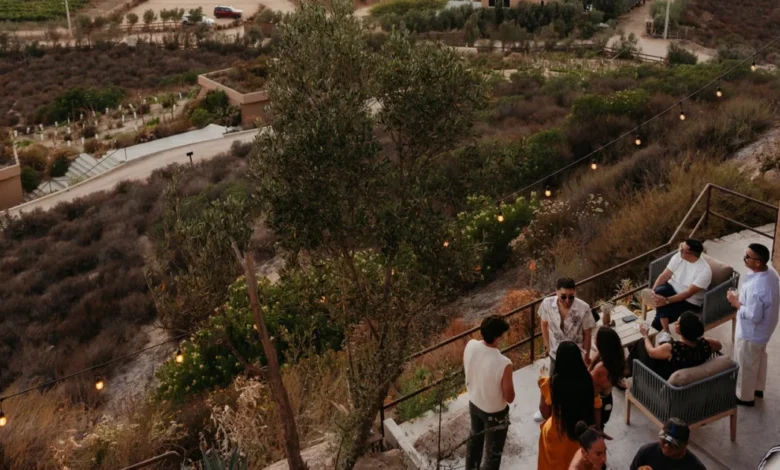
The global private members’ club Soho House recently concluded its latest "Cities Without Houses Weekender" in the burgeoning wine region of Valle de Guadalupe, Mexico, signaling a strategic shift toward curated wellness-focused travel for its international membership. The three-day event, held from July 20 to July 22, 2026, brought together 40 creative professionals from across North America for a "creative reset" designed to bridge the gap between professional networking and intentional rest. Centered at the Banyan Tree Veya resort, the retreat highlighted the organization’s commitment to its "Cities Without Houses" (CWH) program, which caters to members living in metropolitan hubs like San Francisco and Seattle where the club does not yet maintain a physical property.
The excursion to Baja California represents a growing trend in the hospitality sector where exclusive memberships are no longer defined solely by access to physical lounge spaces, but by high-touch, experiential travel itineraries. For Soho House, an organization founded in London in 1995 to serve the "creative class," these weekenders serve as a vital touchpoint for a community that primarily interacts via digital platforms. The Valle de Guadalupe event focused on three core pillars: communal connection, wellness-driven restoration, and local cultural immersion.
The Strategic Importance of the Cities Without Houses Program
The Cities Without Houses membership is a unique tier within the Soho House ecosystem. Unlike the "Local House" or "Every House" memberships, CWH is specifically designed for individuals who reside in cities without a brick-and-mortar clubhouse. This segment has become one of the organization’s fastest-growing demographics as remote work and the decentralization of creative industries have moved talent away from traditional hubs like New York, Los Angeles, and London.
Current membership data suggests that CWH members pay between $4,300 and $4,950 annually, with a significant discount offered to those under the age of 27 to ensure a generational pipeline of creative talent. These fees grant access to the club’s global properties when members travel, but the Weekender events are the primary vehicle for fostering local community. By hosting events in regions like Valle de Guadalupe, Soho House effectively creates a "pop-up" clubhouse experience, reinforcing brand loyalty in markets where they lack a permanent footprint.
:quality(85):upscale()/2026/07/22/823/n/43463692/96330e936a610fd4eaef39.17911153_.jpg)
Chronology of the Creative Reset: July 20–22, 2026
The retreat followed a meticulously planned itinerary that balanced high-engagement social activities with periods of scheduled isolation.
Day 1: Arrival and Integration
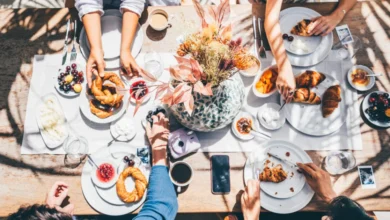
The group convened in San Diego, California, on the morning of July 20 at the Hotel Lafayette, a historic property that served as the staging ground for the cross-border transit. From there, participants were transported south into Mexico’s premier wine country. Upon arrival at Banyan Tree Veya, the afternoon was dedicated to "melting social norms." Initial networking sessions were structured to avoid the transactional nature of traditional professional mixers, instead focusing on shared experiences. The evening concluded with a communal welcome dinner overlooking the vineyard-strewn hills.
Day 2: Wellness and Immersion
The second day focused on the "reset" aspect of the trip. Activities included sound baths and yoga sessions led by local practitioners, designed to lower the cortisol levels of high-output professionals. The afternoon transitioned into cultural exploration, featuring mezcal tastings and tours of the region’s avant-garde tasting rooms. Valle de Guadalupe, often referred to as "Mexico’s Napa Valley," provided a backdrop of architectural innovation and sustainable viticulture, which served as a focal point for discussions on creative inspiration.
Day 3: Reflection and Departure
The final day emphasized the importance of "intentional rest." Organizers encouraged participants to disconnect from digital devices, a move aimed at combating the "always-on" culture of the modern creative industry. After a final group brunch and a closing ceremony focused on collective reflection, the members returned to San Diego.
Regional Context: The Rise of Valle de Guadalupe
The selection of Valle de Guadalupe as the site for the creative reset is a testament to the region’s soaring status in the global luxury travel market. Located approximately 90 miles south of the U.S. border, the valley produces nearly 90% of Mexico’s wine. Over the last decade, it has transformed from a rustic agricultural zone into a world-class destination for oenophiles and architecture enthusiasts alike.
:upscale()/2026/07/22/768/n/43463692/tmp_2111GF_6798bef0688385c9_Untitled_-_March_04_2026_at_13.21.46-4-Main_2_up_-_1456x970_1_.png)
The Banyan Tree Veya, where the Soho House group was stationed, exemplifies the "wellness-forward" luxury that now defines the area. The resort’s design integrates minimalist structures into the rocky, arid landscape, offering a sense of seclusion that aligns with the "creative reset" theme. For Soho House, the choice of location is as much about the "vibe" and aesthetic appeal as it is about the facilities. The region’s sumptuously designed tasting rooms and sunset vistas provide the visual currency that is essential for a membership base largely comprised of visual artists, filmmakers, and creative directors.
Economic and Social Implications of Creative Retreats
The 2026 Weekender highlights several broader shifts in the global economy and the psychology of work. As professional burnout reaches record highs among the creative class, the demand for "wellness tourism" has surged. According to the Global Wellness Institute, the wellness tourism market is projected to reach $1.3 trillion by 2027. Soho House is positioning itself at the intersection of this market and the "experience economy."
Industry analysts note that for organizations like Soho House, these retreats serve a dual purpose. First, they justify high annual membership fees by providing "money-can’t-buy" experiences. Second, they address the "loneliness epidemic" by facilitating deep, albeit brief, human connections. Participants at the Valle de Guadalupe event reported that the most valuable aspect of the trip was not the luxury accommodations, but the "unexpected joy and connection" found in conversations with strangers.
Analysis of the "Creative Reset" Philosophy
The concept of a "creative reset" is based on the psychological principle that "flow state"—the mental state of being fully immersed in an activity—is contingent upon periods of total disengagement. The Soho House itinerary reflected this by prioritizing sleep and "offline" time.
Key takeaways identified by participants included:
:upscale()/2026/07/22/769/n/43463692/tmp_btDj3D_b088ca600e5aedfe_sohohouse-cwh-valle-previews-social-46.jpg)
- Vulnerability as a Networking Tool: By removing the pressure of traditional professional introductions, members were able to engage in more authentic dialogue, covering topics from politics to personal transitions.
- Rest as a Productivity Metric: The retreat challenged the "hustle culture" narrative, suggesting that creativity is a finite resource that requires physical rest and environmental changes to replenish.
- Cross-Disciplinary Inspiration: By mixing filmmakers with visual artists and designers, the event fostered a "collective moment" of inspiration, where members learned from the diverse aesthetics and perspectives of their peers.
Official Responses and Future Outlook
While Soho House leadership maintains a policy of discretion regarding specific member interactions, the organization has indicated that the "Weekender" model will continue to expand. A spokesperson for the club noted that the goal of the Cities Without Houses program is to create a "borderless community" where the spirit of the club exists independently of its physical walls.
Critics of the model point to the inherent exclusivity of such events. With annual fees and additional trip costs reaching into the thousands of dollars, these resets are accessible only to a privileged segment of the creative workforce. However, supporters argue that the club provides a necessary support system for independent creators and entrepreneurs who lack the traditional corporate infrastructure for professional development and wellness.
As Soho House continues to scout new locations for its 2027 calendar, the success of the Valle de Guadalupe trip suggests that the future of the organization lies in these "intentional" gatherings. By blending the rugged beauty of Baja California with a curated social environment, Soho House has successfully demonstrated that for the modern creative, the ultimate luxury is not just a seat at the table, but the space to step away from it.
The broader hospitality industry is likely to follow suit. The move away from "transactional travel" toward "transformational travel" is becoming a standard for luxury brands. As the creative class becomes increasingly mobile, the ability of a brand to facilitate genuine human connection in a high-design setting will remain its most valuable asset. The Valle de Guadalupe Weekender was more than just a trip; it was a blueprint for the future of community-building in a fragmented, digital world.
Related posts: