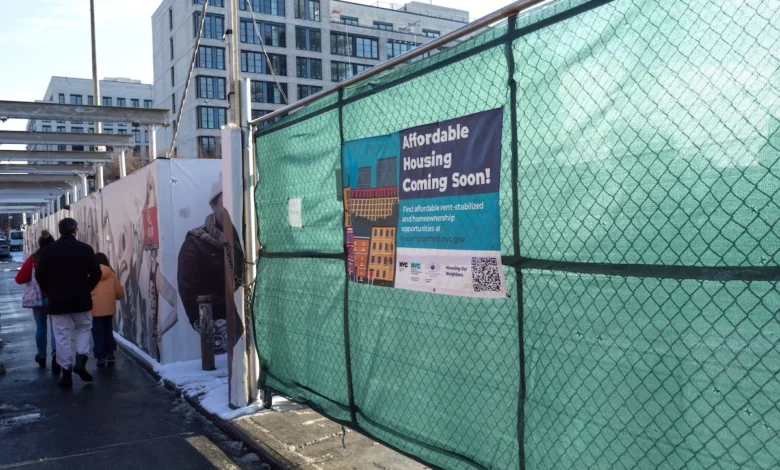
In a landmark shift for American urban development and climate policy, New York has officially become the first state in the United States to enact a comprehensive mandate requiring new buildings to be constructed entirely without fossil fuel infrastructure. Finalized by the State Fire Prevention and Building Code Council in late July 2025, the regulation marks the culmination of a multi-year legislative and legal struggle to decouple the state’s building sector from natural gas and oil. This policy represents a pivotal component of New York’s broader strategy to meet the aggressive greenhouse gas emission reduction targets outlined in the Climate Leadership and Community Protection Act (CLCPA).
A Timeline of the All-Electric Building Act
The path to this mandate began in 2023 with the passage of the All-Electric Buildings Act. The legislative intent was clear: to curb the carbon footprint of the state’s built environment, which currently accounts for approximately 31% of all greenhouse gas emissions in New York. While the legislation was signed into law, the path toward full implementation faced significant friction.
The regulatory framework was finalized in July 2025 following a favorable ruling by the U.S. District Court for the Northern District of New York. The court’s decision cleared a major hurdle by rejecting arguments from building and fossil fuel industry groups, who had attempted to challenge the law using the same legal strategies that previously led to the overturning of a similar municipal gas ban in Berkeley, California. By late July 2025, the State Fire Prevention and Building Code Council provided the final administrative approval necessary to integrate the mandate into the state’s building codes.
The phase-in schedule is designed to allow the construction industry time to adapt:
- December 31, 2025: Residential buildings up to seven stories and commercial/industrial buildings up to 100,000 square feet with permit applications filed on or after this date must comply with the electrification requirements.
- 2029: Larger commercial and industrial buildings exceeding 100,000 square feet are mandated to comply with the all-electric standard.
Understanding the Scope and Exemptions
The mandate fundamentally alters the future of New York’s real estate development by prohibiting gas hookups for space heating, water heating, cooking, and clothes drying in most new construction. However, recognizing the technical limitations of certain specialized facilities, the state has provided a list of exemptions. These include agricultural facilities, critical medical infrastructure, laboratories, crematoriums, and specific types of restaurants where the immediate adoption of electric-only technology may be currently infeasible or detrimental to public health and safety.
Despite these narrow exemptions, the regulation forces a massive pivot toward electric heat pumps, induction cooking surfaces, and high-efficiency electric water heating systems. For developers and architects, this requires a fundamental redesign of mechanical, electrical, and plumbing (MEP) systems, prioritizing building envelope efficiency to ensure that electric heating remains cost-effective during the state’s harsh winters.
The Economic and Environmental Case
Proponents of the legislation argue that the transition is not only an environmental necessity but an economic imperative. Data from the New Buildings Institute suggests that building electrification can yield substantial long-term savings. For instance, the construction of a 100% electric single-family home can result in initial savings of $7,500 to $8,200 compared to conventional homes that require the installation of complex gas piping and venting infrastructure.
Over a 30-year horizon, residents are projected to see a reduction in energy usage by approximately 17%, with average household savings estimated at nearly $5,000. These figures are bolstered by the increasing efficiency of modern heat pump technology, which can provide effective heating and cooling even in sub-zero temperatures, effectively decoupling residential comfort from the volatility of global fossil fuel markets.

Legal Challenges and Industry Resistance
The journey to this point has been defined by intense litigation. Industry groups, primarily representing fossil fuel interests and certain construction trade associations, have argued that the state’s move oversteps its authority and conflicts with federal energy standards. The legal strategy employed by these groups mirrored the successful challenge against Berkeley, California’s municipal ordinance, which centered on the preemption clause of the federal Energy Policy and Conservation Act (EPCA).
However, the Northern District of New York’s July 2025 ruling signaled that state-level mandates may occupy a different legal space than municipal ones, providing the state the necessary breathing room to enact its climate policy. Despite this victory, the battle is not entirely over. Reports indicate that various industry coalitions have petitioned the U.S. Department of Justice to intervene and block the implementation of the act. As of August 2025, the mandate remains in full force, but the threat of federal litigation remains a variable in the long-term rollout of the policy.
Reactions from Policy Advocates
The environmental community has hailed the ruling as a victory for public health and climate justice. Dawn Wells-Clyburn, executive director of PUSH Buffalo, characterized the court’s decision as a definitive message to the fossil fuel industry, stating that the health and affordability of local communities must be prioritized over corporate profits.
Similarly, Alex Beauchamp, the Northeast region director at Food & Water Watch, emphasized the political significance of the win. "When New Yorkers come together, we can win even in the face of opponents with an almost-limitless budget," Beauchamp stated. Advocates view this policy not just as an end-state, but as a foundation for future legislative efforts, such as the potential retrofitting of existing buildings, which remains the most difficult challenge in decarbonizing the state’s entire housing stock.
Broader Implications for the Built Environment
New York’s policy creates a template for other states, particularly those in the Northeast and Pacific Northwest, that are currently grappling with similar decarbonization goals. By codifying electrification into the state’s building code rather than relying on municipal ordinances, New York has established a robust legal framework that is significantly harder to dismantle.
The policy also places immense pressure on the state’s electrical grid. As the demand for electricity grows due to the shift from gas to electric appliances, the New York State Energy Research and Development Authority (NYSERDA) and utility providers will face the challenge of upgrading the distribution network to handle increased loads. This shift is expected to accelerate the state’s transition toward renewable energy sources, as the environmental benefits of all-electric buildings are magnified when the electricity powering them is sourced from wind, solar, and hydro power rather than legacy gas-fired power plants.
Conclusion: A New Standard for Urban Living
The implementation of the all-electric mandate is more than a technical change in building code; it is a fundamental shift in how New York envisions its urban future. As the state moves toward a 2025 implementation date for the first wave of projects, the focus will shift to workforce development—training a new generation of HVAC technicians and electricians capable of installing and maintaining these high-efficiency systems.
While legal risks persist, the state’s commitment to this transition underscores a growing consensus among policymakers that the path to a sustainable future is inextricably linked to the electrification of the domestic environment. For New York, the era of the gas-connected building is coming to a close, replaced by a modernized, electric-first standard that prioritizes long-term efficiency and climate resilience. The success of this policy will likely be measured not only by the reduction in carbon emissions but by the ability of the state to ensure that these new, cleaner buildings remain affordable and accessible to all New Yorkers, regardless of their socioeconomic status. As the industry moves forward, the eyes of the nation will remain fixed on New York, observing how it navigates the technical, legal, and economic complexities of building a fossil-free future.