Unlocking the Ancient Defense Mechanisms of Bacteria: A New Frontier in Phage Therapy and Evolutionary Biology

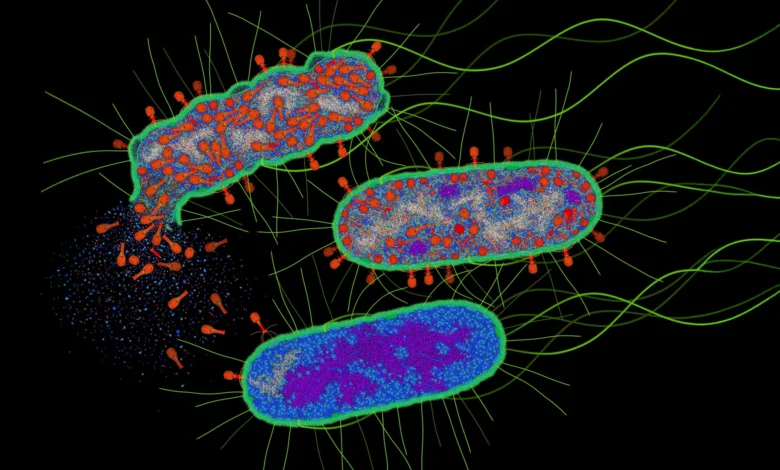
The global crisis of antibiotic resistance has pushed medical researchers to reconsider a century-old medical strategy: bacteriophage therapy. Phages, which are specialized viruses that infect and destroy bacteria, represent one of the most promising alternatives to traditional pharmaceuticals. Unlike broad-spectrum antibiotics that often decimate the body’s beneficial microbiome, phages are precision instruments, capable of targeting specific pathogenic bacteria while leaving human cells and commensal flora unharmed. However, the path to clinical integration is fraught with biological hurdles. New research published in the journal Science has unveiled a critical discovery regarding how bacteria detect and neutralize these viral invaders, potentially transforming our approach to developing next-generation antimicrobial treatments.
The Evolutionary Arms Race
For billions of years, bacteria and bacteriophages have been locked in an intense evolutionary arms race. As phages evolved mechanisms to hijack bacterial machinery for their own replication, bacteria developed sophisticated immune systems to preemptively stop these infections. One such system, known as CBASS (Cyclic Oligonucleotide-Based Antiphage Signaling System), serves as a bacterial "last resort." When a bacterium detects a viral intrusion, the CBASS system triggers a scorched-earth response: the infected cell initiates programmed cell death, or apoptosis-like suicide, effectively cutting off the virus’s supply of hosts and protecting the surrounding bacterial colony from further spread.
Until now, the exact molecular trigger that activates this high-stakes defense remained elusive. A team of researchers led by Dr. Sam Hobbs, an assistant professor of biochemistry at University of Utah Health, has finally deciphered this signal. The study reveals that the activation of CBASS is not a passive event but a sophisticated response to a specific viral protein.
The Mechanism of Detection: A Viral Self-Sabotage
The research team discovered that the virus, in its quest to replicate, unwittingly provides the very signal that seals its fate. Certain bacteriophages utilize enzymes called proteases to break down proteins within the host cell, a process essential for their life cycle. Dr. Hobbs and his colleagues found that these viral proteases act as a double-edged sword. When the protease enters the host cell, it targets and cleaves a specific sensor molecule within the bacterial CBASS system.
This act of cleavage is the proverbial "alarm bell." Once this sensor molecule is damaged by the viral enzyme, the CBASS pathway is immediately activated, leading to the rapid destruction of the bacterial cell. This finding is revolutionary because it demonstrates that the immune system is not necessarily looking for the virus’s genetic material or its outer shell; instead, it is monitoring the functional impact of viral proteins on its own internal machinery.
This mechanism is distinct from other known antiviral pathways. In many other immune systems, the host detects the presence of foreign DNA or RNA. Here, the detection is indirect—the bacteria monitor the enzymatic activity of the intruder, allowing for a nuanced and highly specific immune response that minimizes the risk of false positives.
Scientific Implications and Data
The implications of this discovery extend far beyond basic microbiology. By understanding the precise protein interactions that trigger bacterial immunity, scientists can begin to engineer "evasive" phages. These modified viruses could be designed to lack the specific protease sequence that triggers the CBASS alarm, or they could carry "inhibitor" proteins that mask their presence from the host’s sensor molecules.
The study also provides a bridge between bacterial immunity and human health. The CBASS system has been shown to share structural and functional similarities with the cGAS-STING pathway in humans—a critical component of our innate immune system that detects cytosolic DNA and alerts the body to viral infections or cellular damage. This conservation suggests that the fundamental logic of antiviral defense has remained stable across at least three billion years of evolution. The fact that this pathway persists in organisms as diverse as humans and single-celled bacteria underscores its biological necessity.
The Chronology of Discovery
The study of phage therapy has undergone a resurgence over the last decade, particularly as the World Health Organization (WHO) has declared antimicrobial resistance (AMR) one of the top ten global public health threats.
- 1917: Felix d’Herelle discovers bacteriophages, but the subsequent advent of penicillin in the 1940s leads to the widespread abandonment of phage research in the West.
- 2010s: The rise of "superbugs" like MRSA and multidrug-resistant Acinetobacter baumannii forces a re-evaluation of phages.
- 2022–2023: Research focus shifts toward the "arms race" between phage enzymes and bacterial defense systems, leading to the identification of CBASS functionality.
- 2024: Publication of the findings in Science provides the first clear evidence of how phage proteases inadvertently trigger the bacterial "suicide" switch.
A New Era for Clinical Therapy
For clinicians working in the field of precision medicine, the discovery offers a roadmap for optimizing phage cocktails. Currently, phage therapy often relies on "trial and error," where various phage strains are tested against clinical samples to see which ones successfully kill the target bacteria. By mapping the immune defenses like CBASS, researchers can move toward a more predictive model.
If a target bacterium is known to utilize the CBASS system, clinicians can select phages that are already "blind" to that specific sensor or that carry countermeasures to deactivate the system. This level of customization is the "holy grail" of phage therapy, promising a future where infections that are currently untreatable could be neutralized with high-precision viral agents.
Broader Context and Funding Support
The depth of this research was made possible through a diverse coalition of funding, including the Pew Biomedical Scholars program, the Burroughs Wellcome Fund, and the National Institutes of Health (NIH). The collaborative effort behind this work highlights the growing recognition that basic research—often termed "blue-skies research"—is essential for solving the most pressing clinical challenges of the modern era.
While the study is a milestone, the team emphasizes that it is only the beginning. Bacteria possess a wide array of other defense systems, such as CRISPR-Cas and various restriction-modification systems, many of which remain poorly understood in the context of therapeutic phage delivery. The next phase of research will likely involve screening a wider library of phage-host interactions to determine how universal this "protease-trigger" mechanism is across different bacterial species.
Conclusion: The Future of Infectious Disease Control
As we face a future where conventional antibiotics become increasingly ineffective, the integration of phage therapy into the medical mainstream seems inevitable. The findings by Dr. Hobbs and his colleagues offer more than just a mechanistic explanation of bacterial defense; they offer a template for victory in the molecular war between virus and host.
By understanding the "eureka" moment when a bacterium detects its attacker, we are better positioned to outmaneuver the most resilient pathogens. This research reinforces the idea that the secrets to curing modern diseases often lie hidden within the ancient, microscopic battles that have been raging since the dawn of life on Earth. As science continues to bridge the gap between bacterial immunity and human biology, the prospect of personalized, effective, and sustainable phage therapy becomes a tangible reality, offering a beacon of hope in the fight against the silent pandemic of antimicrobial resistance.