Bugatti’s Final W16 Mistral Has Paint Called ‘Sparkle’ And A Falcon Head Sculpture In The Shifter

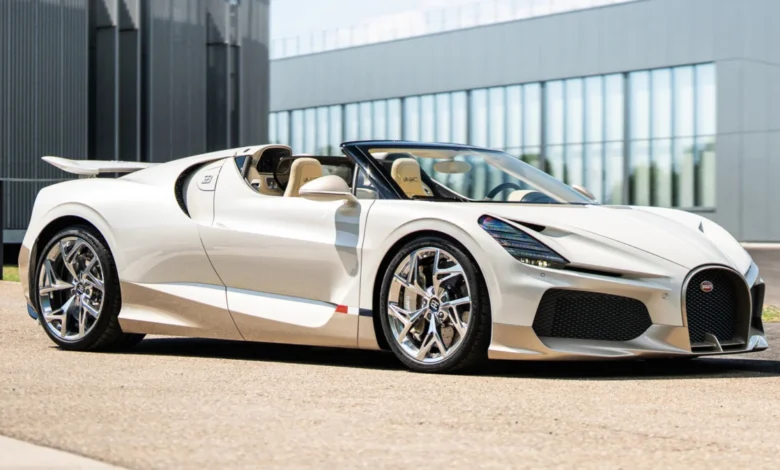
The completion of the final series-production Bugatti W16 Mistral marks the definitive conclusion of an era that redefined the boundaries of automotive engineering. As the last of the 99-unit production run departs the historic Atelier in Molsheim, France, it carries with it the legacy of a sixteen-cylinder powertrain that has powered more than 1,140 vehicles over the past two decades. This specific Mistral, commissioned with a highly personalized suite of features through Bugatti’s Sur Mesure program, serves as a rolling testament to the brand’s transition from the pure internal combustion dominance of the W16 to the hybridized future of the upcoming Tourbillon.
The Significance of the W16 Legacy
The W16 engine, often referred to as Ferdinand Piëch’s "moonshot," was first conceptualized by the legendary Volkswagen Group chairman on a train journey, famously sketched on the back of an envelope. The engine, comprising two VR8 blocks joined at a 90-degree angle, debuted in the Bugatti Veyron in 2005. Since then, it has evolved through various iterations, culminating in the 8.0-liter quad-turbocharged powerhouse found in the Mistral.
While a handful of one-off projects and track-only Bolide units remain in the final stages of assembly, this Mistral represents the last road-going series-production model to utilize the W16 architecture. The Mistral itself was designed as the ultimate roadster—a spiritual successor to the Veyron Grand Sport Vitesse—engineered to deliver 1,578 horsepower and a top speed capability exceeding 260 mph, making it one of the fastest open-top vehicles ever produced.
A Masterpiece in ‘Sparkle’ and ‘Pearl’
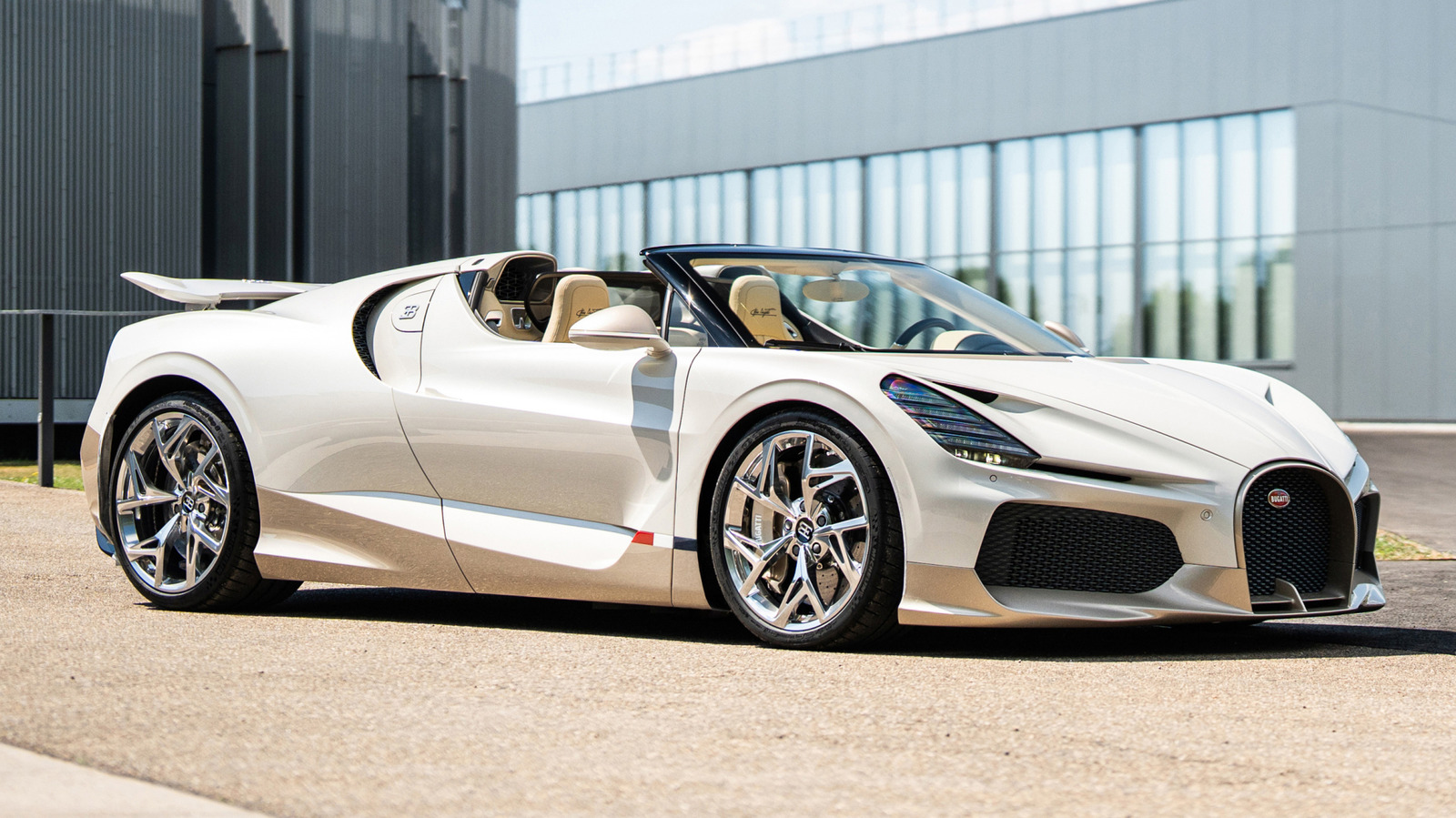
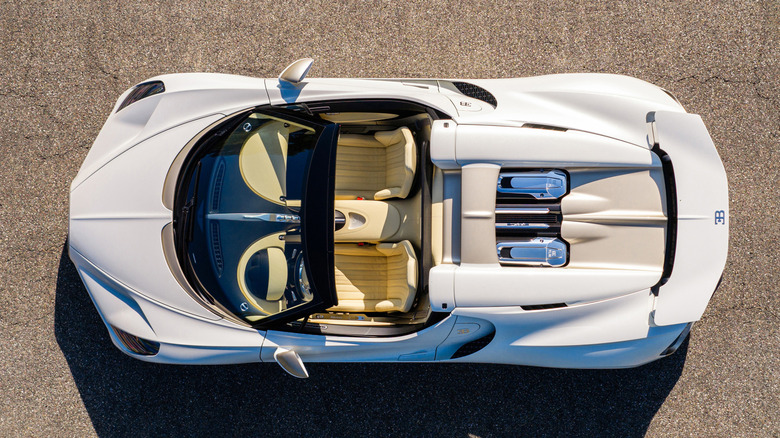
The aesthetic configuration of the final Mistral is a study in understated elegance and bespoke craftsmanship. The exterior features a sophisticated two-tone livery. The primary bodywork is finished in "Pearl," a creamy, iridescent white that provides a neutral canvas for the car’s more flamboyant accents. Contrasting this is a secondary color with the surprisingly whimsical name of "Sparkle."
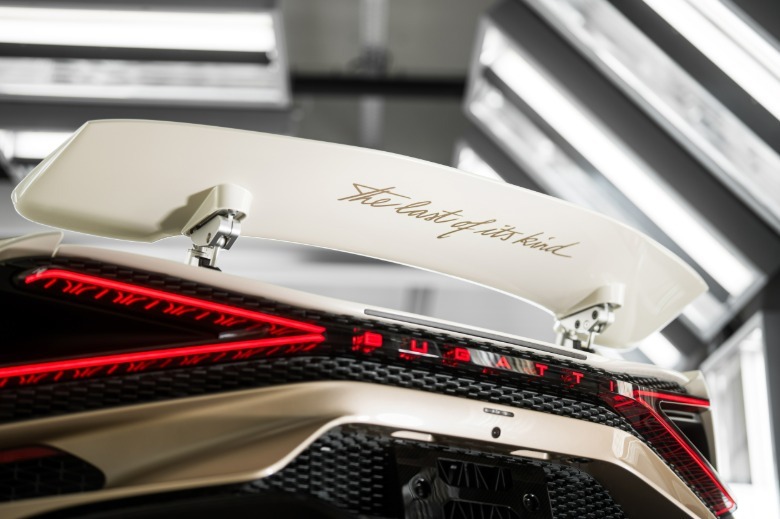
This "Sparkle" finish, a rich, metallic gold, is applied to the lower aerodynamic elements, the side mirrors, the hood accents, and the engine bay surroundings. Perhaps most notably, the phrase "The last of its kind" is hand-painted in Sparkle script on the underside of the active rear wing. This same inscription is replicated on aluminum plaques mounted to the sides of the center console, ensuring the vehicle’s historical status is documented both inside and out.
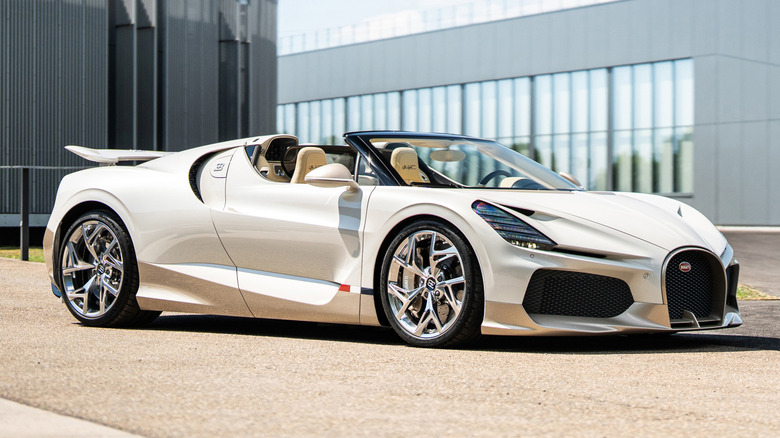
The exterior is further distinguished by the inclusion of polished chrome finishes on the wheels and the iconic horseshoe grille. In a move that highlights the owner’s preference for classic luxury over modern carbon-fiber trends, the engine covers are crafted from polished aluminum. According to Jascha Straub, Bugatti’s Lead Designer for Sur Mesure, this is an exceptionally rare choice. While most customers opt for painted or carbon-fiber covers to avoid the visible patina and maintenance associated with raw metal, the polished aluminum offers a mechanical honesty that harks back to the early days of the Bugatti marque.
Interior Artistry and the Lalique Collaboration
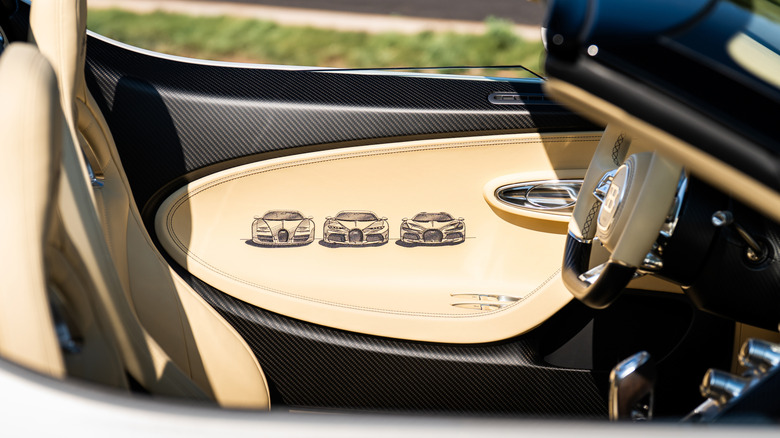
The cabin of the final Mistral is swathed in Magnolia leather, providing a bright, airy atmosphere that complements the exterior’s "Pearl" finish. Gray carbon fiber is utilized for the door panels and dashboard to provide structural contrast, but the true highlights of the interior are the intricate, hand-stitched details.
Embroidered into the door panels are black sketches depicting the silhouettes of the three pillars of the modern W16 era: the Veyron Super Sport, the Chiron Super Sport, and the Mistral itself. This visual timeline serves as a tribute to the evolution of the platform. Furthermore, Ettore Bugatti’s personal signature is stitched into the headrests and engraved into the aluminum door sills, a nod to the founder’s enduring influence on the brand’s DNA.
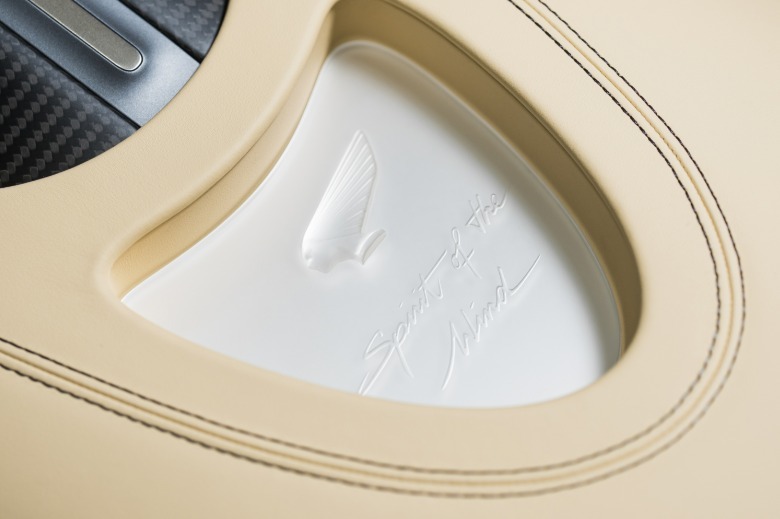
The most avant-garde feature of the interior is found within the center console. Bugatti has maintained a century-long relationship with the French glassmaker Lalique, a partnership that began with the friendship between Ettore Bugatti and René Lalique. For this final Mistral, a custom plaque cast in frozen crystal glass is set into the console. The piece depicts a stylized figure reminiscent of early 20th-century hood ornaments, accompanied by the inscription "Spirit of the Wind." This is a direct reference to the Mistral wind of southern France, for which the car is named.
The Falcon in the Shifter: A Cultural Signature
The centerpiece of the cockpit’s bespoke elements is the gear shifter. When the Mistral was first unveiled as a concept, it featured a "Dancing Elephant" sculpture encased in amber—a tribute to Rembrandt Bugatti’s famous hood ornament for the Type 41 Royale. For the production run, Bugatti allowed owners to customize this element with various materials and inserts.
This final unit features a shifter crafted from high-grade wood, housing a meticulously detailed falcon head sculpture. Bugatti representatives noted that the falcon is an animal of immense cultural significance in the Middle East, indicating the likely home of this historic vehicle. Previous customers have utilized this space for a variety of personal artifacts, ranging from 3D-printed metal roses and miniature Statues of Liberty to authentic 100-year-old Bugatti screws and vintage coins. The use of glass instead of the concept’s amber allows for greater clarity and durability, turning the shifter into a literal jewel box of personal history.
Technical Prowess: The W16’s Final Performance
Underneath the bespoke aesthetics, the Mistral remains a feat of extreme engineering. To compensate for the lack of a fixed roof, Bugatti engineers had to fundamentally redesign the Chiron-based monocoque to ensure structural rigidity without adding excessive weight. The air intakes for the massive engine were moved to the roofline, positioned just behind the occupants’ heads, which not only improves airflow but also creates a unique acoustic experience, allowing the turbos and induction system to be heard with unprecedented clarity.
The 8.0-liter engine utilizes four turbochargers to produce its 1,600 PS (1,578 hp) and 1,600 Nm of torque. This power is sent to all four wheels via a seven-speed dual-clutch transmission. In recent testing, the Mistral solidified its place in history by reaching a top speed of 453.91 km/h (282.04 mph) at the Papenburg proving grounds in Germany, setting a new world record for the fastest open-top car.
Chronology of the Molsheim Transition
The delivery of the 99th Mistral coincides with a pivotal moment in the company’s history. Just days before this car was completed, Bugatti officially inaugurated "La Manufacture," a significant expansion of its Molsheim headquarters. This new facility is specifically designed to handle the increased complexity of the upcoming Tourbillon production.
The Tourbillon, which replaces the Chiron/Mistral lineage, will move away from the quad-turbo W16 in favor of a naturally aspirated 8.3-liter V16 engine developed in collaboration with Cosworth, paired with a sophisticated triple-electric motor hybrid system. While the W16 era was defined by sheer displacement and boost, the next era will be defined by high-revving internal combustion and electric torque fill.
Market Implications and Collector Value
The "final" car of any Bugatti series invariably becomes a blue-chip asset in the collector market. The 99th Mistral is expected to appreciate significantly, not only because of its status as the last series-production W16 but because of its unique "Sur Mesure" specifications.
The hypercar market has seen a surge in demand for vehicles that bridge the gap between mechanical purity and modern performance. As global emissions regulations push manufacturers toward full electrification, the Mistral represents the absolute peak of what was possible with pure gasoline power. For collectors, the falcon-head shifter and the "Sparkle" paint are more than just design choices; they are markers of a specific moment in automotive history when bespoke luxury and extreme mechanical engineering were indistinguishable.
As this final Mistral leaves the gates of the Château St. Jean, it closes a chapter that began in 2005. The W16 engine saved the Bugatti brand from obscurity and elevated it to a position of undisputed dominance. While the Tourbillon promises a new kind of excitement, the Mistral remains the ultimate expression of the "Piëch era"—a car that refuses to compromise on power, luxury, or the sheer audacity of its existence.