Trump’s Rescheduled White House Correspondents’ Dinner Speech Met With Silence and Scrutiny

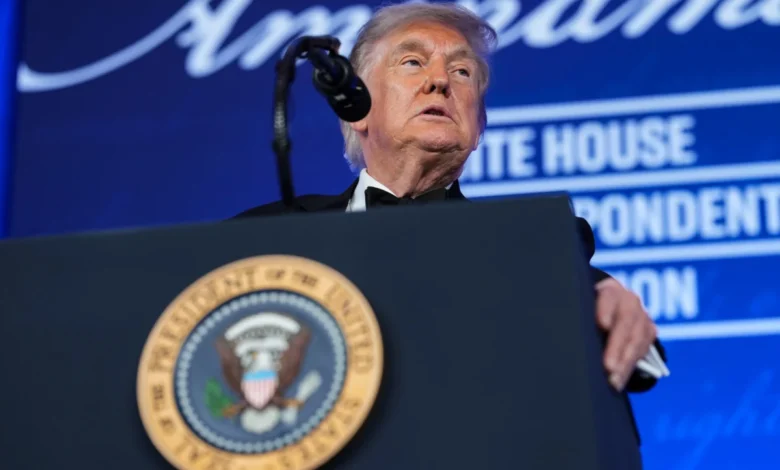
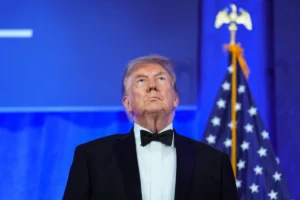
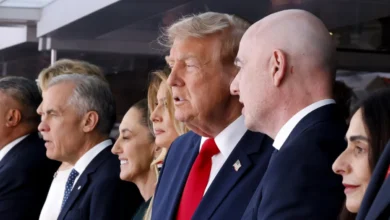
Donald Trump delivered an hour-long address at the rescheduled White House Correspondents’ Association Dinner on Friday, a speech that many observers characterized as a blend of familiar campaign rhetoric and humor that failed to resonate with the audience. This marked Trump’s inaugural appearance as president at the esteemed annual gathering, an event that had been postponed from its original April date due to a security incident involving an attempted breach of the ballroom. While presidential addresses to the White House Correspondents’ Association have historically included lighthearted jabs at the press, Trump’s remarks largely eschewed traditional roast elements in favor of what appeared to be repurposed rally material, interspersed with pointed personal criticisms directed at members of the media, sometimes referencing their physical appearance.
The evening, held at the Waldorf-Astoria, a venue with a past connection to the Trump Organization, was fraught with a palpable tension that permeated the ballroom. The rescheduled dinner followed a significant security scare in April, when an individual attempted to rush the ballroom where the event was to take place. Secret Service agents successfully subdued the assailant, preventing a potential crisis. The incident led to the postponement of the dinner, underscoring the evolving security landscape surrounding high-profile public events. The decision to move the rescheduled event to the Waldorf-Astoria, a venue Trump himself once owned and operated, added another layer of symbolic weight to the evening.
Trump’s speech, which stretched for an entire hour, seemed to struggle to elicit genuine laughter or engagement from the assembled journalists and their guests. At one point, a joke about the alleged sex life of an elderly U.S. senator was met with a noticeable lack of response, prompting Trump to remark, "Does anybody get that? I thought that was actually great. That was actually the only thing I thought was good in this whole frickin’ stupid speech. It was the only good one, and that went down with not exactly great laughter." This candid self-assessment highlighted the apparent disconnect between the president’s intended humor and the audience’s reception.
The extended duration of the address and its often rambling nature led to prolonged periods of silence, punctuated only by the fidgeting and shifting of attendees. Trump’s commentary meandered through a variety of topics, often in a stream-of-consciousness fashion, leaving many to question the coherence and purpose of his remarks. He made a point to mention that CBS News CEO David Ellison had informed him that "next year, they’re going to call it the Trump White House Correspondents’ Dinner," adding that changing the name was "the only way you’re going to get me back here." This statement, seemingly intended as a humorous jab at his own perceived indispensability, further underscored the self-referential nature of his address.
A History of Presidential Engagement and Presidential Distancing
Historically, the White House Correspondents’ Dinner has served as a unique platform for presidents to engage with the press corps, offering a rare opportunity for direct, albeit often lighthearted, interaction. Presidents from both parties have utilized this occasion to deliver keynote addresses, typically employing humor to acknowledge the adversarial yet essential relationship between the executive branch and the media. The tradition, dating back to the 1920s, evolved to include a comedic element, with presidents often trading barbs with journalists and lampooning political figures.
However, the dynamic has shifted significantly in recent years. While President Barack Obama was known for his witty and self-deprecating performances at the dinner, President Trump’s relationship with the press has been marked by frequent criticism and open hostility. He notably skipped the event during his first term and in the previous year, often opting for counter-programming that aligned with his base. His decision to attend this year, therefore, was viewed as a significant departure and an attempt to seize the spotlight at an event dedicated to celebrating journalism, an industry he has frequently characterized as "fake news" and an "enemy of the people."
The Shadow of Security Concerns and Political Undercurrents
The backdrop of the April security incident loomed large over the rescheduled event. The attempted breach, which occurred just outside the Washington Hilton ballroom, sent shockwaves through the attendees and necessitated the swift evacuation of President Trump and Vice President JD Vance by the Secret Service. The audible sounds of the confrontation during the dinner underscored the vulnerability of such public gatherings and the constant threat landscape faced by security personnel.
The White House Correspondents’ Association, led by outgoing president Weijia Jiang, had urged for the rescheduling of the dinner, a testament to their commitment to maintaining the tradition despite the unsettling circumstances. The move to the Waldorf-Astoria, with enhanced security measures, was a direct response to the April scare. However, the underlying tensions between the President and the press remained palpable, amplified by a flurry of recent legal actions and pronouncements from Trump targeting media organizations.
A Night of Uneasy Exchanges and Legal Battles
The evening was not without its moments of profound awkwardness, particularly during the presentation of annual awards. Several journalists were honored for their investigative reporting, including those from The Wall Street Journal whose work delved into a controversial letter reportedly bearing Trump’s signature and linked to Jeffrey Epstein. Upon presenting the award, Wall Street Journal reporters were met by Trump, who shook their hands before raising his arms in a gesture that some interpreted as dismissive or defiant. Wolf Blitzer, who was presenting the award, did not shy away from mentioning Trump’s subsequent $20 billion lawsuit against The Wall Street Journal over the story, a stark reminder of the president’s litigious approach to critical reporting.
Trump’s direct engagement with some of the award recipients, notably Josh Dawsey of The Wall Street Journal and CNN host Kaitlan Collins, devolved into what were described as "highly personal digs." The intended comedic effect of these remarks was largely lost on the audience, which responded with near-complete silence. Jiang, the outgoing president of the WHCA, maintained a stoic demeanor throughout these segments, highlighting the somber mood that had descended upon the room. In response to the pointed remarks, CNN issued a statement during the speech, publicly defending its journalists and reaffirming their commitment to reporting.
Unscripted Moments and Familiar Attacks
Despite appearing to have a prepared set of jokes, Trump frequently veered off script, allowing his train of thought to lead him down tangents. These digressions often led to extended riffs on familiar political attacks, such as criticisms of Adam Schiff’s appearance, and even detailed discussions about his plans for a White House ballroom. He pointedly remarked on the chandeliers at the Waldorf-Astoria, noting his own involvement in their construction and the venue’s past as a Trump hotel. While his insults towards the press were noted, the sheer length and the often-unfocused nature of his speech may have diluted their impact.
The juxtaposition of Trump’s presence at an event honoring journalists, whom he has often criticized, created an atmosphere of inherent contradiction. The Justice Department’s recent decision to withdraw subpoenas issued to New York Times reporters, who had covered the security flaws in the new Air Force One, added another layer of complexity. This action followed a federal judge’s criticism of the government’s handling of the subpoenas, suggesting a continued pattern of governmental pressure on news organizations.
A Lingering Sense of Disquiet
As the evening drew to a close, mentalist Oz Pearlman took the stage, offering a stark contrast to the preceding political discourse. Pearlman humorously remarked on Trump’s attendance, noting, "I thought he was going to be speaking until next year, actually," a wry observation on the extended nature of the presidential address. He also mentioned Trump’s announcement that he would attend next year’s event, a statement that seemed to elicit more bewilderment than enthusiasm from some quarters.
The broader implications of Trump’s participation and his speech extend beyond the immediate confines of the dinner. His continued attacks on the media, coupled with his willingness to engage directly with journalists at an event designed to foster a more collegial relationship, highlight the persistent challenges facing the press in the current political climate. The event, which had already been marked by a security scare and a significant shift in presidential attendance patterns, ultimately served as a microcosm of the complex and often contentious relationship between the White House and the news media in the United States. The attendees, accustomed to a certain rhythm and tone at this annual gathering, found themselves in an evening that was both a continuation of tradition and a stark departure from it, leaving many to ponder the future of presidential engagement with the press.
Related posts: