Dropkick Murphys frontman Ken Casey says Ed Sheeran’s treatment of Macklemore does not sit right

The music industry is currently grappling with a significant cultural and political rift following the decision to remove rapper Macklemore from Ed Sheeran’s ongoing tour. The move, prompted by Macklemore’s public stance on the humanitarian crisis in Gaza, has triggered a wave of artist resignations, public rebukes from industry veterans, and a broader debate regarding the intersection of performance, corporate ownership, and freedom of expression.
The controversy centers on a performance at Gillette Stadium in New Jersey, where Macklemore used his platform as an opening act to call for a “free Palestine.” The rhetoric, which addressed the ongoing conflict and the mounting death toll in the region, drew immediate condemnation from various entities, including the Israeli American Council and prominent figures within the entertainment industry. Gillette Stadium owner Robert Kraft, who has been a vocal proponent of Jewish causes, characterized the remarks as “deeply offensive and hurtful to the Jewish community.” Consequently, Macklemore was dismissed from the tour, a decision that has since snowballed into a major logistical and public relations crisis for the Sheeran camp.
Chronology of the Conflict
The timeline of the fallout began with the initial remarks at Gillette Stadium. Macklemore, known for his socially conscious music and activism, spoke directly to the audience about the plight of Palestinians. Within days, the backlash intensified. Pressure mounted on organizers to distance the tour from the rapper’s political statements.
By mid-week, it was confirmed that Macklemore would no longer be supporting Sheeran on the remainder of the tour. This decision was met with immediate pushback from other artists scheduled to support the tour. Following the announcement of the dismissal, a cascade of supporting acts—including FINNEAS, Lukas Graham, Aaron Rowe, and the band Beoga—withdrew their participation in protest of the decision. The exodus of these artists has effectively left Sheeran’s tour without its scheduled support lineup, raising questions about the stability of the remaining dates.
Industry Voices and the Code of Brotherhood
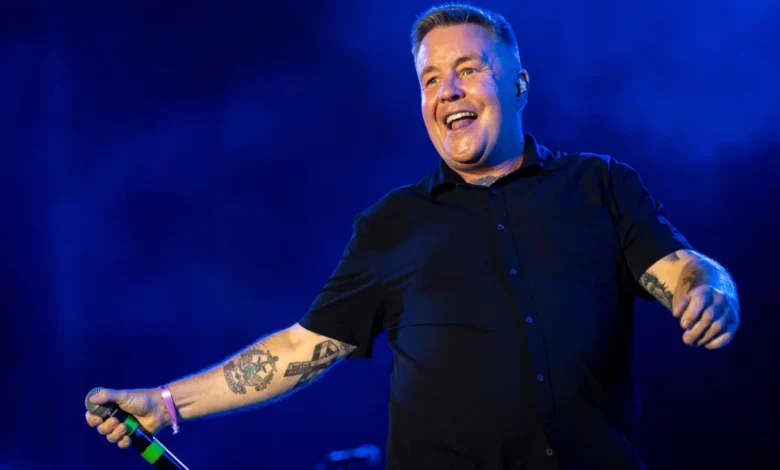
Ken Casey, the long-standing frontman of the Celtic punk band Dropkick Murphys, provided a sharp critique of the situation during a recent appearance on Boston Public Radio. Casey, whose band has spent decades cultivating a reputation for political transparency and loyalty to their touring partners, framed the incident as a failure of professional solidarity.
"I know that, as a musician for 30 years, anytime we’ve gone on tour we’ve selected the bands that have opened for us – that’s brotherhood, sisterhood, that’s family," Casey stated. "You live or die with the people you bring on the road. They’re your people. And the fact that Ed Sheeran took the knee, no matter what the cause is, and not stood with his fellow tour partner, just doesn’t sit right with me."
Casey highlighted that for artists of his generation, the value of a musician is inextricably linked to their willingness to stand by their convictions, even when those convictions come at a financial or professional cost. He cited his own experience at the Rocklahoma Festival, where his band’s criticism of the Trump administration led to a hostile reception from a significant portion of the audience and subsequent friction with venue management. For Casey, the act of performance is not merely an entertainment service; it is a platform for truth-telling that should be protected by the headlining artist.
The Financial and Social Media Landscape
The financial ramifications of the fallout have been as significant as the social ones. Macklemore took the notable step of donating his entire $1 million earnings from the tour to humanitarian efforts in Palestine. In a subsequent move, Robert Kraft, the individual who initially criticized the rapper, pledged a $2 million donation to humanitarian aid in the region, an attempt to redirect the narrative toward charitable action.
The digital impact of the controversy has been stark. Ed Sheeran’s social media presence has seen a decline, with reports indicating a loss of over 200,000 Instagram followers in the immediate aftermath of the news. Conversely, Macklemore’s public profile has surged, with the rapper gaining over 1.6 million followers during the same period. This shift reflects a broader trend of fan bases engaging in "digital activism," where followers use their support—or withdrawal thereof—as a barometer for their alignment with the artists’ values.
The "Neutrality" Debate
The controversy has drawn in high-profile figures from across the musical spectrum. Legendary band Massive Attack issued a pointed statement on the nature of neutrality, arguing that "neutrality in the face of the slaughter of more than 20,000 children can never be neutrality." Similarly, Pink Floyd co-founder Roger Waters, a long-time advocate for Palestinian rights, publicly criticized Sheeran, labeling him in disparaging terms for his role in the decision to drop Macklemore.
In response to the mounting criticism, Ed Sheeran released a statement asserting that he was “not complicit” in the geopolitical situation. He characterized the ongoing violence as a “tragedy” and expressed that he was “appalled by the conflict,” attempting to strike a tone of diplomatic neutrality. However, the intensity of the response from his peers suggests that, for many in the industry, there is no middle ground when it comes to the humanitarian crisis in Gaza.
Implications for the Touring Industry
The situation raises fundamental questions regarding the power dynamics of modern touring. When a stadium owner or a corporate stakeholder exerts pressure on an artist to remove a support act based on political speech, it challenges the autonomy of the performer.
For independent and legacy acts, the precedent is viewed as dangerous. If headliners begin to vet their support acts for political compliance, it could lead to a sanitized touring environment where dissenting voices are systematically excluded from mainstream platforms. Furthermore, the reliance on massive, corporate-owned venues like Gillette Stadium gives owners significant leverage over the content of performances, a dynamic that has traditionally been mediated by the touring artist.
As the industry watches to see how Sheeran will fill his empty support slots, the broader impact of this controversy is already clear. Artists are increasingly expected to leverage their platforms for social and political issues, and the price of silence—or of perceived complicity—is becoming harder for major stars to manage.
The incident has essentially forced a reckoning among high-level touring musicians. The solidarity shown by acts like BIIRD and Myles Smith, who stated they "stand unequivocally" behind the words spoken by Macklemore, indicates that a significant faction of the next generation of touring artists prioritizes political alignment over professional convenience.
Looking Ahead
The fallout from the Macklemore-Sheeran situation is likely to persist as long as the underlying conflict in Gaza remains at the forefront of global discourse. The event serves as a case study in the power of social media to amplify artist-to-artist disputes and the fragility of touring contracts in an era of heightened political polarization.
For now, the silence from the Sheeran camp regarding the departure of his entire support roster suggests a strategy of containment. However, the cultural cost of the incident—evidenced by the loss of his followers and the vociferous critiques from legends like Roger Waters—indicates that the damage to his public image may not be easily repaired through standard PR maneuvers. As the tour continues, the industry will be watching closely to see if other artists follow suit, or if the music world will settle into a new, more polarized normal where the politics of the performer are as scrutinized as the quality of the music itself.