Genesis GV90 Redefines Automotive Luxury with a Transformative Pop-Up OLED Cinematic Display and Flagship Electric Architecture

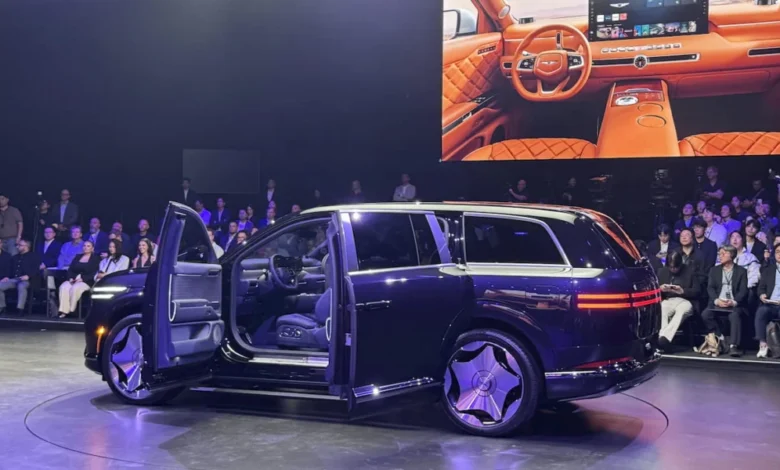
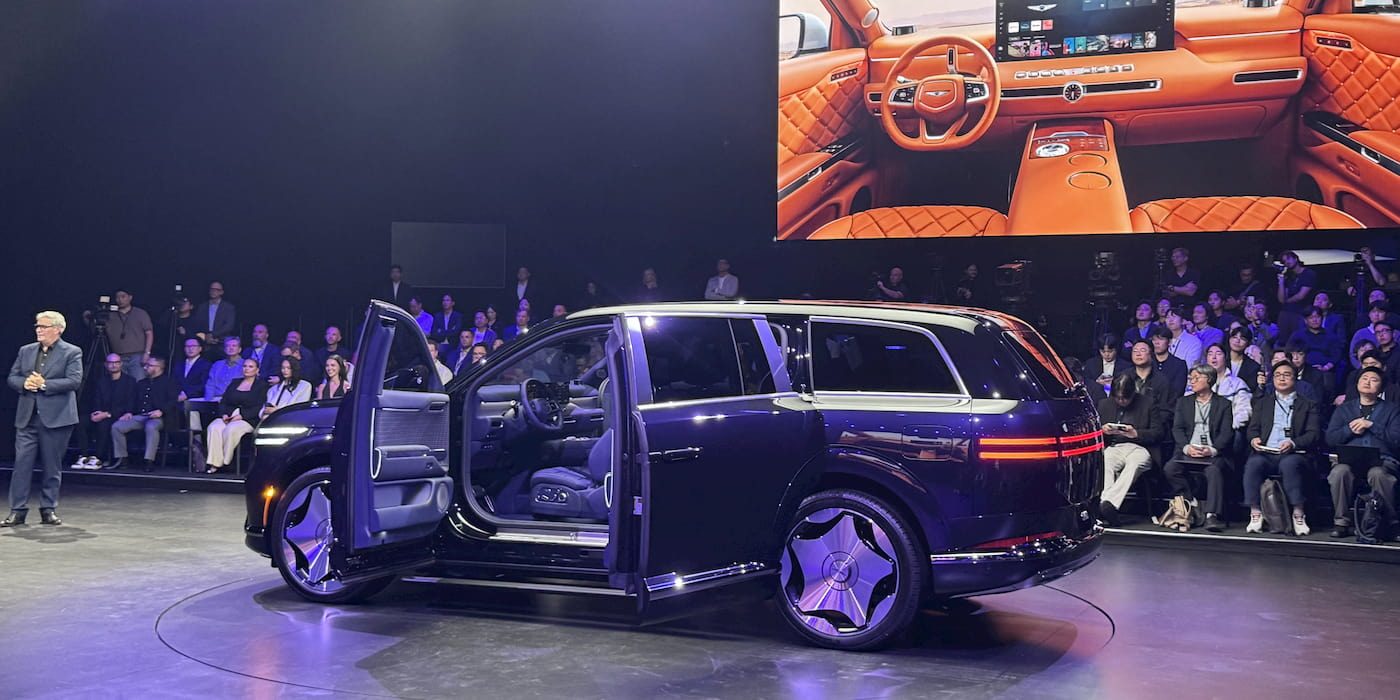
The automotive landscape has long treated the cabin of a vehicle as a functional space designed strictly for transit. However, as electric vehicles evolve into mobile energy hubs and extensions of our living spaces, luxury manufacturers are re-evaluating what it means to travel in style. Genesis, the luxury vehicle division of the Hyundai Motor Group, has firmly positioned itself at the vanguard of this paradigm shift with its latest flagship offering: the Genesis GV90. Initially unveiled to global acclaim at the historic Palace of Fine Arts in San Francisco on August 19, the GV90 is much more than a conventional ultra-luxury people mover. It is a technological showcase designed to challenge established European legacy automakers in the highest echelons of the global luxury market. While much of the initial industry commentary focused on its striking B-pillarless Neolun Arch Gate coach doors and flexible swiveling interior seats, subsequent deep dives into the vehicle have revealed an equally impressive technological marvel hiding in plain sight: a dynamic, extendable pop-up OLED cinematic display paired with an acoustic environment designed to rival a commercial movie theater.
A Detailed Look at the Genesis GV90 Unveiling and Chronology
The journey toward the debut of the Genesis GV90 has been years in the making, reflecting Hyundai Motor Group’s calculated strategy to elevate its luxury subsidiary from a promising market disruptor to a dominant force in the global premium segment. Following a series of concept vehicle teases that hinted at a radical reimagining of large-scale electric mobility, the official August 19 reveal in San Francisco served as a watershed moment for the brand. Industry analysts and automotive journalists who attended the premier were given an exclusive first look at the production-ready flagship, noting that the vehicle possessed an undeniable road presence that surpassed even its digital renderings.
In the weeks following the premiere, Genesis has systematically rolled out granular technical details regarding the vehicle’s interior architecture, infotainment ecosystem, and powertrain capabilities. This measured information campaign has allowed the brand to sustain media momentum, keeping the GV90 at the forefront of discussions surrounding future electric mobility. By demonstrating that South Korean engineering can seamlessly merge avant-garde exterior design with state-of-the-art digital architecture, Genesis has signaled that it is no longer content playing the role of a luxury market dark horse. Instead, the GV90 stands as a definitive proof point that the company possesses the technical prowess, design confidence, and financial muscle to compete directly with elite flagships from brands like Mercedes-Benz, BMW, and Range Rover.
Engineering the Ultimate In-Cabin Theater: The Pop-Up OLED Display
At the heart of the GV90’s cabin innovation is an industry-first engineering feat: a motorized, extendable pop-up OLED cinematic display. Developed as the crown jewel of the vehicle’s interior user experience, this screen redefines how occupants interact with digital media while stationary. In its standard driving configuration, the ultra-sharp OLED infotainment interface measures a highly functional 23.6 inches, seamlessly integrated into the dashboard to provide the driver and front passenger with crisp graphics, responsive touch controls, and vital telemetry data without inducing visual clutter.
However, the true magic of the system reveals itself when the vehicle is placed into Park. At the simple press of a button, the motorized display physically expands to a breathtaking 24.6 inches, transforming the front cabin area into a personalized, high-definition private theater. In this mode, the system activates Media Home mode, granting occupants immediate, high-speed access to major streaming platforms such as Netflix, live television broadcasts, and comprehensive third-party multimedia applications.
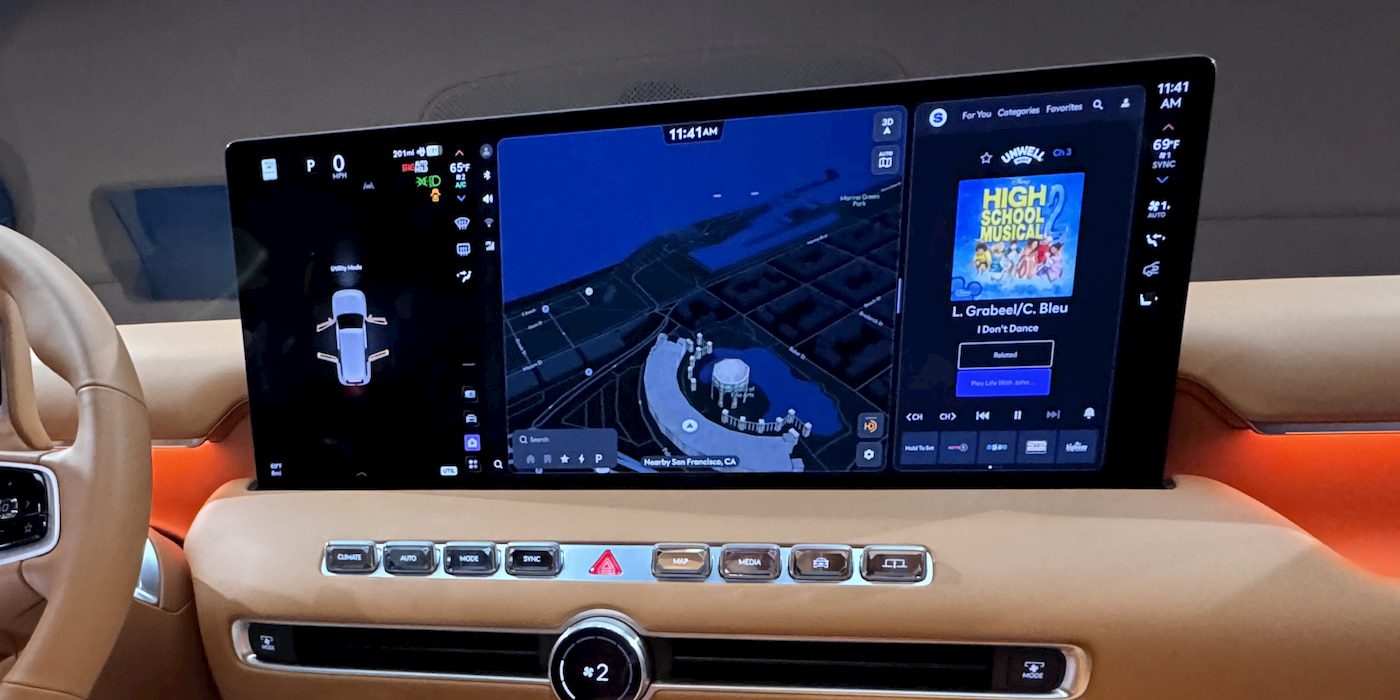
According to Inho Yoon, the lead engineer responsible for designing and developing the GV90’s Pleos Connect system, this feature was born from a fundamental shift in how consumers view personal transportation. Modern drivers and passengers increasingly spend significant amounts of time stationary—whether waiting at a charging station, resting during a long road trip, or simply unwinding before entering a destination. Because electric vehicles inherently possess massive onboard energy reserves that can function as mobile power banks, Genesis sought to capitalize on this capability by delivering an unapologetically immersive, movie theater-like audio-visual experience that transcends traditional automotive boundaries.
Acoustic Excellence and the Bang & Olufsen 3D Soundscape
A massive cinematic screen alone does not create a true theater experience; it requires an acoustic foundation capable of matching its visual fidelity. To achieve this, Genesis partnered with renowned audio specialists Bang & Olufsen to integrate a bespoke 25-speaker Premier 3D Sound System equipped with Dolby Atmos capabilities into the GV90.
This acoustic architecture is strategically mapped throughout the expansive cabin to ensure that every seat offers an optimized, three-dimensional soundstage. Whether occupants are listening to delicate classical arrangements, high-energy spatial audio tracks, or the thunderous cinematic sound design of a blockbuster film, the system delivers pristine clarity, deep bass response, and precise spatial localization. By combining the expansive 24.6-inch OLED screen with Dolby Atmos surround sound, the GV90 successfully blurs the line between a traditional automotive interior and a dedicated media consumption lounge.
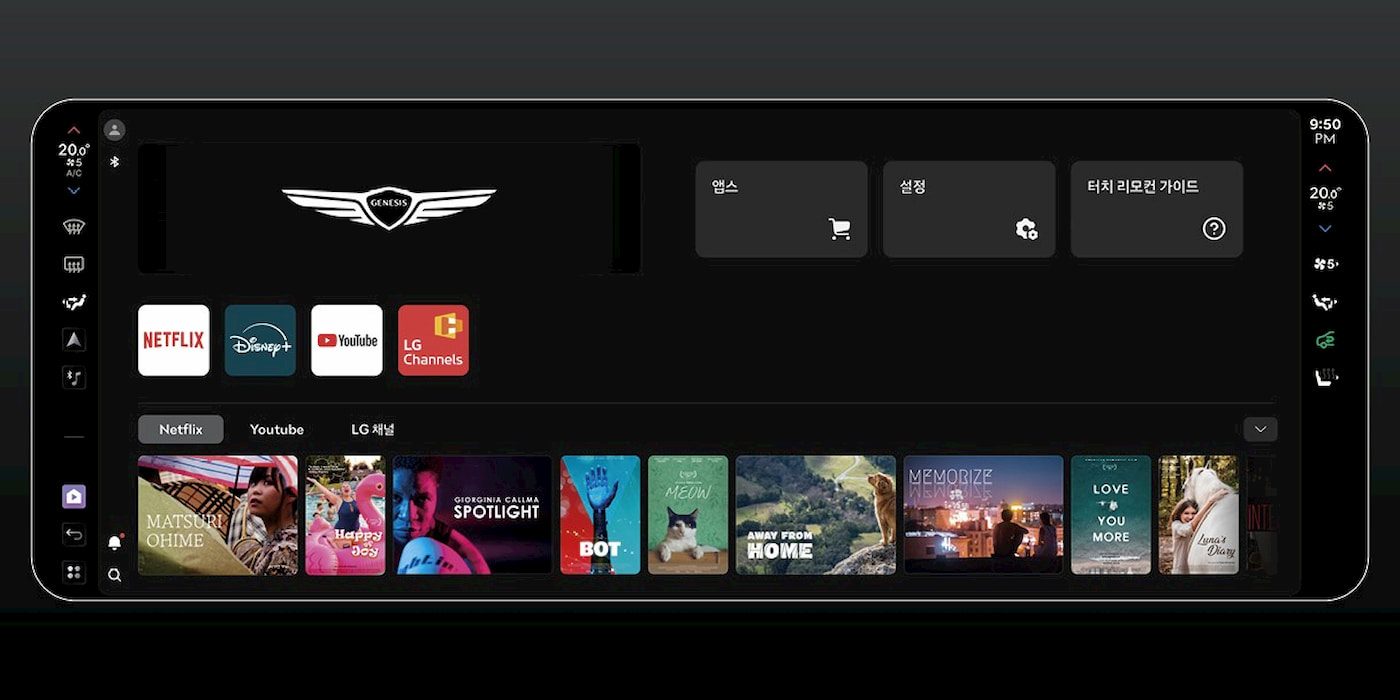
Pleos Connect and Gleo AI: Redefining Automotive User Experience
Powering the GV90’s sophisticated digital ecosystem is a customized variant of Hyundai Motor Group’s new Pleos Connect infotainment software. While other upcoming vehicles within the broader corporate family—such as the IONIQ 3—will utilize standard iterations of Pleos Connect, the version engineered for the GV90 has been meticulously tailored to meet the exacting demands of ultra-luxury buyers.
Lee Min-ah, a Senior Researcher on the Infotainment UX Development Team who spearheaded the user experience design for the GV90’s Pleos Connect, emphasized the deliberate focus on smartphone-like familiarity paired with automotive reliability. Designing the software required navigating complex app screen policies to ensure that multitasking—such as running turn-by-turn navigation simultaneously with media streaming applications—occurs with absolute fluidity and zero latency.
Unlike standard sibling platforms, the GV90’s Pleos Connect introduces a dedicated, highly intuitive menu bar running along both sides of the expansive screen, complete with integrated physical and touch-sensitive seat control buttons. The driver-side interface is optimized for mission-critical tasks, prioritizing navigation, essential vehicle functions, and climate controls. Conversely, the passenger-side interface is dedicated to multimedia curation, app management, and entertainment access.
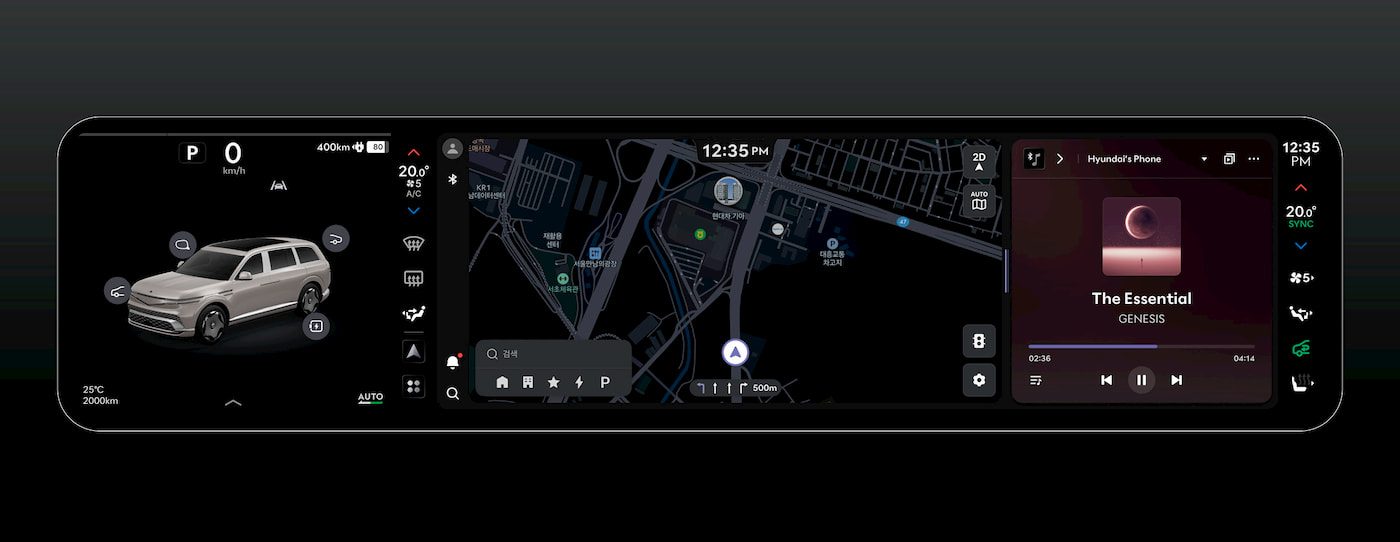
Furthermore, the system integrates Gleo AI, an advanced in-car artificial intelligence companion developed by Hyundai. Gleo AI serves as an intuitive conversational interface, allowing occupants to execute complex vehicle commands, manage climate settings, check weather reports, or query the web for real-time information using natural language. Drivers can effortlessly request commands such as locating nearby premium dining establishments, checking live sports scores, or browsing breaking news updates without ever taking their hands off the wheel or their eyes off the road.
Complementing the central display is a custom 25-inch Head-Up Display (HUD) projected directly onto the windshield. This expansive HUD feeds critical driving metrics—including real-time vehicle speed, advanced augmented-reality navigation cues, and safety warnings—directly into the driver’s natural line of sight, minimizing distraction and maximizing situational awareness. Remarkably, despite its heavy reliance on cutting-edge digital interfaces, Genesis deliberately retained physical tactile buttons directly beneath the primary infotainment screen for frequently used functions such as primary climate adjustments and audio volume, balancing futuristic innovation with ergonomic practicality.
Platform Architecture, Dimensions, and Powertrain Specifications
Beneath its luxurious veneer and technological wizardry lies a robust, highly capable electric vehicle platform designed from the ground up to support ultra-luxury proportions. The GV90 will be offered in two distinct configurations: the flagship GV90 Neolun, featuring the dramatic, pillarless coach doors that stole the spotlight at its San Francisco debut, and standard GV90 variants equipped with conventional, highly polished swing doors.

In terms of physical scale, the GV90 dwarfs both the Hyundai IONIQ 9 and the Kia EV9, cementing its status as a true full-size flagship SUV. It measures an imposing 208.1 inches (5,285 mm) in length, stands 79.9 inches (2,030 mm) wide, and reaches a height of 71.5 inches (1,815 mm)—or 71.4 inches when configured with optional 24-inch wheels. This massive footprint is supported by a generous wheelbase stretching 127.8 inches (3,245 mm), which translates directly into cavernous interior legroom, particularly for second- and third-row passengers.
To propel this substantial luxury cruiser efficiently, the GV90 is equipped with a massive 123.5 kWh battery pack—representing the largest energy storage capacity currently deployed in any electric vehicle across the entire Hyundai Motor Group portfolio. Genesis estimates that this high-capacity battery will deliver an impressive driving range of approximately 310 miles (500 kilometers) on a single charge for the seven-seater passenger configuration, ensuring that long-distance cross-country journeys can be undertaken with minimal range anxiety.
Broader Market Implications and Strategic Outlook
The introduction of the Genesis GV90 marks a pivotal milestone not just for the brand, but for the South Korean automotive industry at large. For decades, the upper-tier luxury SUV segment—traditionally dominated by established European marques such as Range Rover, BMW, Mercedes-Benz, and Bentley—has resisted incursions from Asian volume manufacturers. However, the systematic maturation of Genesis as a standalone luxury entity has systematically chipped away at traditional brand loyalties.

By combining cutting-edge EV architecture, unmatched interior craftsmanship, innovative features like the pop-up OLED cinematic display, and aggressive technological integration via Pleos Connect and Gleo AI, Genesis has demonstrated that it understands the shifting priorities of modern ultra-luxury consumers. Buyers in this echelon increasingly value experiential luxury, digital seamlessness, and progressive design over mere badge prestige.
As the GV90 prepares for its official market rollout, industry watchers will be closely monitoring how traditional luxury buyers respond to South Korea’s vision of electric flagship mobility. If early critical reception and public enthusiasm are any indication, the Genesis GV90 is poised to not only validate the brand’s rapid ascent into the premier class but to redefine the expectations of what a luxury electric vehicle can deliver on the global stage.