Nelson Racing Engines Unveils the 1,200 Horsepower Intercooled Outlaw 427 Crate Engine for Street and Strip Performance

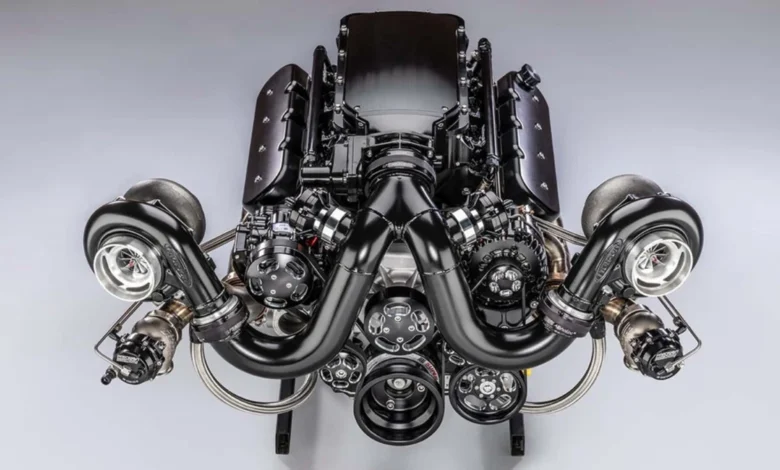
For automotive enthusiasts and high-performance builders, the quest for four-digit horsepower figures has long been associated with a demanding list of compromises. Historically, engines capable of producing 1,000 horsepower or more required specialized fuel blends, frequent tear-downs, and an obsessive level of maintenance that effectively relegated them to the drag strip. Nelson Racing Engines (NRE) is challenging this paradigm with its latest innovation: the Intercooled Outlaw 427. By engineering a high-displacement, twin-turbocharged V8 that produces 1,200 horsepower on standard 91-octane pump gasoline, the company has bridged the gap between extreme race-bred performance and daily-drivable reliability.
The Evolution of the LS Architecture
At its core, the Outlaw 427 is a masterpiece of modern American engine building, utilizing the ubiquitous GM LS-based architecture. While the designation "427" evokes memories of iconic big-block engines from the 1960s, this powerplant is a thoroughly modern, 7.0-liter unit designed for the 21st century. The transition from the traditional iron-block big-block V8s of the past to the compact, lightweight, and efficient LS platform has been the most significant trend in the custom automotive industry over the last two decades.
Nelson Racing Engines has taken this foundational architecture and fortified it to handle the immense pressures associated with forced induction. The block itself is an upgraded aluminum casting, reinforced with iron cylinder sleeves to ensure thermal stability and structural integrity under extreme load. The internal rotating assembly features a custom-machined billet steel crankshaft, forged connecting rods, and specialized pistons, all designed to maintain a 9.0:1 compression ratio. This specific ratio is critical; it is low enough to prevent premature detonation when using pump gas but high enough to ensure the engine remains responsive during off-boost driving conditions.
Precision Engineering and Turbocharger Integration
The secret to the Outlaw 427’s performance lies in its sophisticated air-delivery system. The engine is equipped with a pair of Nelson Racing’s proprietary 72.0-millimeter "Mirror Image" Generation 2 turbochargers. The term "Mirror Image" refers to the specific orientation of the turbochargers, which are designed to rotate in opposite directions. This symmetrical mounting configuration provides a clean, aesthetic engine bay layout while optimizing exhaust scavenging and intake plumbing efficiency.
These turbochargers utilize billet compressor wheels, which are lighter and stronger than traditional cast aluminum wheels, allowing for faster spooling times and improved mid-range torque. To manage the immense boost pressure generated by this setup, the system integrates a complex array of high-flow wastegates and blow-off valves. These components communicate with an engine management system to ensure that the boost curve remains predictable and linear, preventing the sudden, uncontrollable surges of power that often characterize poorly tuned forced-induction builds.
Performance Benchmarks and Calibration
The performance figures associated with the Outlaw 427 are verified through rigorous dyno testing. Nelson Racing Engines subjects every unit to a comprehensive testing protocol before the engine is crated and shipped to the customer. On standard 91-octane fuel, the engine produces 1,200 horsepower at 7,200 rpm. This is a remarkable feat of calibration, as high-horsepower engines typically require higher-octane racing fuels to prevent engine-destroying "knock" or pre-ignition.
For those seeking to push the boundaries even further, the engine possesses latent potential. When switched to a high-octane racing fuel, the engine is capable of producing up to 1,500 horsepower. This flexibility allows owners to utilize the vehicle for street driving on weekends and transition to a track-only configuration with a simple tune change and fuel swap. The ability to switch between street and track modes without internal mechanical modifications is a defining feature of modern crate engine engineering.

Market Context and Economic Implications
The release of the Outlaw 427 comes at a time when the custom car market is shifting toward high-end, turnkey solutions. As the complexity of modern engine management and turbocharger integration increases, fewer hobbyists have the time or technical expertise to build and tune these systems themselves. Consequently, there has been a surge in demand for "crate" engines—pre-assembled, tested, and ready-to-run power units.
With a starting price of $41,999, the Outlaw 427 represents a significant financial investment, comparable to the cost of a well-equipped mid-size luxury sedan. However, from the perspective of a specialized vehicle builder, this cost is often viewed as a form of insurance. By purchasing a dyno-tested, complete engine, the builder mitigates the risk of catastrophic failure associated with "home-brewed" setups. The cost covers not only the physical components but also the thousands of hours of research, development, and failure analysis that Nelson Racing Engines has invested into the platform.
Broader Industry Trends
The success of the Outlaw 427 reflects a broader trend in the automotive aftermarket: the move toward "usable" power. For years, the industry focused on peak numbers, often at the expense of driveability. Today, however, the focus is shifting toward torque curves, cooling efficiency, and the ability to maintain consistent power across a wide temperature range.
The integration of advanced materials, such as billet aluminum and high-strength alloys, has allowed engineers to extract more power from smaller displacements than ever before. This is particularly relevant as emissions regulations and fuel economy standards tighten globally. While these crate engines are intended for off-highway use, the engineering advancements they pioneer—such as better combustion chamber design and more efficient turbocharging—often influence the development of future production vehicles.
The Future of High-Horsepower Builds
As the industry looks forward, the viability of internal combustion engines at this level of performance remains a topic of intense interest. While electrification is changing the automotive landscape, the demand for high-output, sound-producing, mechanical powerhouses remains strong among collectors and performance enthusiasts.
Nelson Racing Engines’ approach to the Outlaw 427 suggests that there is still significant room for refinement within the LS platform. By focusing on the synergy between the turbocharging system and the internal engine geometry, the company has managed to provide an experience that was previously only accessible to professional race teams.
For the enthusiast planning a major project, the choice of an engine is often the most critical decision in the build process. A reliable, high-power engine serves as the heart of the machine, dictating everything from chassis requirements to cooling capacity. The Intercooled Outlaw 427 offers a solution that balances the raw, aggressive power of a race engine with the refined calibration required for modern driving standards.
While 1,200 horsepower may exceed the requirements of most street-driven projects, the market for such engines is driven by the desire for technical excellence. The Outlaw 427 is not just a collection of parts; it is a demonstration of what is possible when modern engineering is applied to a legendary engine platform. As automotive trends continue to evolve, units like the Outlaw 427 represent the pinnacle of traditional internal combustion performance, serving as a benchmark for what can be achieved in a garage-built environment. For those who prioritize performance, reliability, and the sheer satisfaction of engineering, the Outlaw 427 stands as a testament to the enduring appeal of the high-performance V8.