Reform UK and the challenge of climate discourse: A comprehensive fact-check of party leadership claims

Reform UK, the populist party currently led by Nigel Farage, has established itself as a disruptive force in British politics, frequently placing opposition to the UK’s net-zero transition and immigration policies at the center of its platform. Despite holding a limited number of seats in the House of Commons and navigating internal funding controversies, the party’s ideological stance—characterized by a skepticism toward climate science and a rejection of current decarbonization strategies—has resonated with a significant segment of the electorate. As the party continues to challenge the consensus on environmental policy, a rigorous examination of the claims made by its leadership reveals a persistent pattern of scientific inaccuracy and economic misinterpretation.

The ideological bedrock of Reform UK’s energy policy is a vocal rejection of the UK’s 2050 net-zero target. Deputy leader Richard Tice has become a prominent figure in this movement, branding current climate policies as net stupid zero. His rhetoric often mirrors long-standing climate-skeptic narratives, including the debunked assertion that human-induced warming is a result of natural cycles like solar activity or volcanic eruptions, rather than the burning of fossil fuels. While Farage often adopts a more tempered tone, he frequently links the decline of British manufacturing to the adoption of green energy policies, a claim that economists and industry experts consistently refute.

The Scientific Consensus vs. Populist Narrative
At the heart of the debate is the fundamental reality of global warming. The Intergovernmental Panel on Climate Change (IPCC), the global authority on climate science, has categorized the human influence on the climate as unequivocal. Since the dawn of the Industrial Revolution, human activities—primarily the combustion of fossil fuels and subsequent greenhouse gas emissions—have pushed CO2 concentrations to levels unseen in the past two million years.

Richard Tice has frequently cited a report by authors associated with Statistics Norway to argue that human-made CO2 does not impact climate change. However, Statistics Norway explicitly clarified in 2024 that the document did not represent the bureau’s official stance, nor was it subjected to the standard rigors of peer review. Independent fact-checks by climate scientists at RealClimate and the Norwegian University of Science and Technology have dismissed the report as a collection of standard climate-denial talking points that lack empirical support.

Furthermore, Tice’s suggestion that the climate is merely undergoing natural cycles ignores the unprecedented rate of temperature rise. Global surface temperatures are currently 1.4C higher than pre-industrial levels, a rate of warming that scientists agree is almost entirely attributable to human activity. While natural phenomena like El Niño or volcanic eruptions can cause short-term fluctuations, they do not account for the long-term, accelerating upward trend in global temperatures.

Net-Zero and the Economic Reality
Reform UK’s economic argument against net-zero centers on the claim that such policies are destroying the UK economy. Party leaders frequently assert that the cost of reaching net-zero will run into the trillions of pounds, a figure that misinterprets analysis from the Climate Change Committee (CCC).

The CCC estimates that the net cost of achieving net-zero by 2050 will be approximately £108bn, representing roughly 0.2% of GDP. Crucially, this figure accounts for the capital investment required to build a low-carbon economy, but it also reflects the significant operational savings gained by moving away from expensive fossil fuels. When the long-term benefits—such as avoiding the staggering costs of climate-related damages and shielding the UK from fossil-fuel price shocks—are factored in, the government and independent bodies like the Office for Budget Responsibility (OBR) conclude that net-zero is not just an economic necessity but the cheapest pathway for the nation.

The argument that net-zero is responsible for the deindustrialization of Britain also fails to align with historical data. The decline of major British industries, such as coal mining and steel production, began in the 1960s—decades before the introduction of modern climate legislation. This decline was driven by global competition, technological shifts, and the transition away from high-cost coal to cheaper fuel alternatives. Today, the UK steel industry identifies high electricity prices—driven largely by exposure to global gas markets—as a primary hurdle to competitiveness, a factor that a transition to renewable-dominated energy is intended to resolve by decoupling power prices from gas.

The Role of Renewables and Energy Security
The narrative that renewable energy increases consumer costs is similarly unsupported by market evidence. The UK’s reliance on gas-fired power plants means that wholesale electricity prices are frequently dictated by international gas markets. During the global energy crises of recent years, renewables have acted as a buffer, with wind and solar generation saving the UK billions of pounds in potential gas imports.

Tice’s proposal to implement a windfall tax on renewable energy generators ignores the reality of the energy market. Renewables are currently the most cost-effective source of new electricity in the UK. The latest government auctions for contracts for difference (CfDs) have secured wind and solar power at prices significantly lower than those for new gas-fired capacity. Implementing retrospective taxes on existing infrastructure would risk undermining investor confidence, potentially halting billions of pounds in future projects, as noted by the New Economics Foundation.

Adaptation and the Limit of Delay
Perhaps the most significant shift in Reform UK’s rhetoric is the emphasis on adaptation as an alternative to mitigation. Tice has argued that it is cheaper to adapt to climate change than to attempt to stop it. However, the scientific community emphasizes that adaptation and mitigation are not mutually exclusive. The IPCC warns that there are hard limits to adaptation; once global warming exceeds certain thresholds—specifically 1.5C to 2C—the effectiveness of adaptation measures diminishes drastically.

Climate-related damages are already imposing a heavy toll on the UK economy, as evidenced by the economic hit from extreme heatwaves and flooding. The CCC notes that unchecked climate change could cost the UK economy £260bn annually by 2050. Investing in an adaptation program is essential, but it remains a secondary necessity to the primary task of reducing global greenhouse gas emissions to prevent the most catastrophic outcomes.

Chronology of Climate Discourse
The debate over net-zero has intensified significantly in the UK since 2019, when the government first enshrined the 2050 target into law.

- 2019: The UK becomes the first major economy to legislate for net-zero emissions by 2050.
- 2021-2022: Global energy prices surge following the Russian invasion of Ukraine, exposing the UK’s high dependency on imported gas and sparking intense debate over energy security.
- 2024: The UK experiences record-breaking heatwaves, with summer 2026 being formally classified as the hottest on record, significantly increasing the focus on climate adaptation.
- 2025-2026: Reform UK intensifies its campaign against net-zero policies, utilizing the rising cost of living as a platform to challenge the transition to green energy, despite data showing that renewable energy is helping to stabilize prices.
Implications for Public Policy
The persistent dissemination of misleading information regarding climate change and energy policy poses a challenge for policymakers. When political discourse is disconnected from empirical data, the result is often a misallocation of public resources and a delay in the necessary transitions for a stable economy.

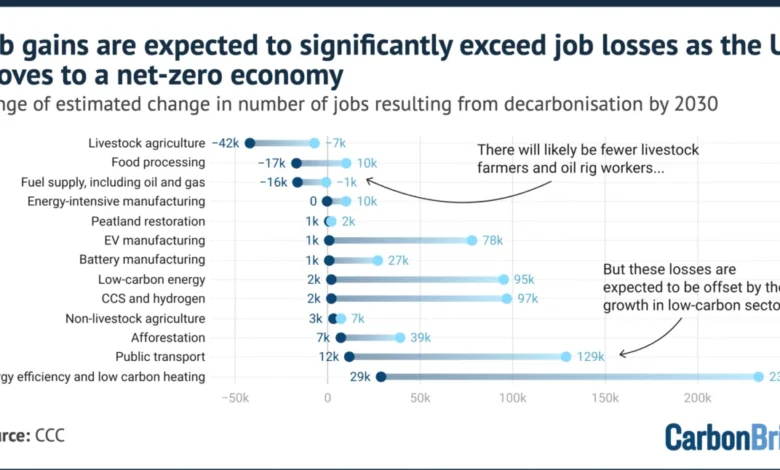
Industry groups, including the Confederation of British Industry (CBI), have underscored that the net-zero economy is a vital engine for growth, supporting over a million jobs and anchoring the UK in one of the most important industrial transformations of the 21st century. The transition requires careful management—particularly regarding the "just transition" for workers in traditional sectors—but the evidence suggests that the path forward lies in accelerating, not abandoning, the move toward clean energy.

Ultimately, the debate over Reform UK’s claims serves as a case study in the tension between populist rhetoric and the complexities of climate science and macroeconomics. As the UK faces the dual challenges of ensuring energy security and meeting its environmental obligations, the importance of grounding political debate in verifiable facts remains paramount. The scientific consensus and economic data point toward a future where renewable energy and aggressive decarbonization are the keys to prosperity, rendering the arguments against such a transition increasingly incompatible with both the environmental reality and the economic interests of the British people.