For decades, the American mortgage lending industry has relied on standard corporate talking points to signal its commitment to fair housing and equitable access to credit. Financial institutions routinely issue broad policy statements, sponsor community initiatives, and publish corporate social responsibility reports emphasizing their dedication to expanding homeownership. However, a significant chasm has persistently separated these public relations commitments from the daily operational realities experienced by everyday borrowers. While marketing materials highlight inclusivity, traditional underwriting pipelines often feature structural barriers that quietly sideline applicants who lack generational wealth or textbook credit histories.
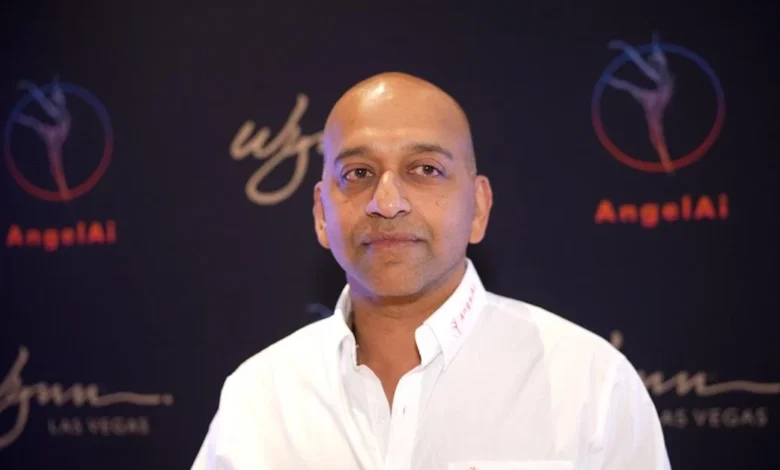
Pavan Agarwal, the leader of Sun West Mortgage Company and the innovative technologist behind Celligence LLC, has spent years attempting to close this gap not through rhetoric, but through structural reform and data-driven systems. Agarwal’s work challenges the conventional wisdom of modern mortgage lending, arguing that true fair lending requires a fundamental restructuring of how risk, policy, and technology interact. By systematically dismantling discretionary hurdles and engineering inclusive digital infrastructure, Agarwal and his enterprises have transformed the fair lending conversation from an abstract ethical debate into an empirical operational standard.
The Anatomy of Industry Overlays and Structural Inequality
To understand the radical nature of Agarwal’s approach, one must first examine the hidden mechanisms that govern modern mortgage approvals. When federal agencies such as the Federal Housing Administration (FHA), the Department of Veterans Affairs (VA), Fannie Mae, and Freddie Mac establish baseline guidelines for home loans, they create a set of minimum qualifications designed to balance risk with broader access to credit. In theory, an applicant who meets these federal thresholds should be eligible for a mortgage.
In practice, however, the vast majority of commercial lenders layer additional requirements on top of these federal baselines. Known within the industry as "overlays," these supplementary restrictions might include raising the minimum credit score threshold well above agency requirements, imposing stricter debt-to-income (DTI) ratios, or demanding cumbersome, manual documentation that exceeds standard mandates. While overlays are entirely legal and widely adopted by traditional financial institutions seeking to minimize their immediate financial exposure, they carry profound unintended consequences.
Data consistently shows that overlay policies disproportionately filter out borrowers who do not fit the traditional, generational mold of the ideal homeowner. First-generation homebuyers, non-traditional income earners—such as gig economy workers, freelancers, and small business owners—and members of minority communities that have historically faced systemic barriers to wealth accumulation are far more likely to fall victim to these extra layers of scrutiny. An applicant with a solid, verifiable payment history and adequate income might easily satisfy federal agency guidelines, only to be rejected automatically by a commercial lender’s internal overlay restrictions.
Sun West Mortgage Company’s No-Overlay Policy
Recognizing the exclusionary nature of these practices, Sun West Mortgage Company operates under a strict "no-additional-overlays" policy. Under Agarwal’s leadership, the national lender evaluates every prospective borrower strictly against the benchmark standards set by the federal agencies themselves, refusing to introduce arbitrary commercial hurdles that disproportionately disadvantage marginalized applicants.
The practical implications of this operational philosophy are substantial. By eliminating supplementary restrictions, Sun West streamlines the evaluation process and ensures that credit decisions are made on objective, standardized merits rather than risk-averse institutional guesswork. According to internal company metrics and compliance data, this straightforward policy adjustment yields remarkable results: Sun West’s mortgage decline rate for minority borrowers stands at approximately half the national average.
This statistic serves as a central pillar of Agarwal’s broader thesis: that many systemic disparities in mortgage lending are not immutable facts of the financial markets, but rather the direct result of discretionary policy choices made by individual lenders. By removing those choices, Sun West demonstrates that expanded credit access and sound risk management are not mutually exclusive.
The Genesis of a Mission: An Immigrant Background and Early Lessons
Agarwal’s acute awareness of the friction between mortgage aspirations and institutional barriers is deeply rooted in his personal history. Growing up in California within an immigrant family, Agarwal observed firsthand the complexities and frustrations associated with navigating the American financial and real estate systems.
His father, Hari Agarwal, immigrated to the United States from India in 1973, embarking on the challenging task of rebuilding a life and a career in his forties. The family eventually established a real estate enterprise, turning what could have been an isolated immigrant narrative into a family-wide operational immersion. From childhood, Pavan and his sisters worked in the family business, balancing their education at Cerritos public schools with afternoon and evening responsibilities at the office.
In interviews and public remarks, Agarwal has often reflected on those formative years. Watching prospective homebuyers—particularly first-generation immigrants and working-class families—struggle against the labyrinthine mortgage process left a lasting impression. He recognized that the traditional lending framework treated homeownership not as a fundamental economic opportunity, but as an exclusive club guarded by complex jargon, opaque requirements, and human gatekeepers prone to conscious or unconscious bias. Crucially, Agarwal concluded early on that these systemic bottlenecks were essentially technical and procedural flaws, meaning they were susceptible to systematic, technological solutions.
The Evolution of Financial Technology: Enter AngelAi and Celligence

Driven by the conviction that modern technology could democratize the mortgage process, Agarwal spearheaded the development of Celligence LLC, a proprietary technology incubator designed to fundamentally reimagine financial services. The crown jewel of this technological ecosystem is AngelAi, an advanced artificial intelligence platform integrated directly into Sun West’s operations.
AngelAi was built to address one of the most persistent variables in traditional mortgage underwriting: human subjectivity. Human underwriters, despite their best professional intentions, are susceptible to fatigue, cognitive biases, and inconsistencies in applying complex guidelines. AngelAi evaluates every single borrower against completely uniform, objective criteria, ensuring that an applicant’s race, background, or non-traditional profile does not introduce unwarranted variability into the decision-making process.
Furthermore, the platform was engineered with accessibility at its core. Operating fluently in over 100 languages, AngelAi breaks down linguistic barriers that have historically kept non-English speaking immigrants from participating fully in the housing market. Instead of forcing users to wade through dense, intimidating financial terminology and rigid document portals, the system interacts via natural conversation, guiding applicants step-by-step through the documentation requirements.
Critically, Sun West fully warrants every single underwriting decision produced by the AngelAi system. Unlike fintech platforms that merely facilitate applications before handing them off to traditional lenders who might disclaim responsibility, Sun West stands firmly behind the AI’s output. This institutional accountability bridges the gap between automated innovation and regulatory trust.
Empathetic Technology: Recognizing the Human Experience
One of the most distinctive design philosophies embedded within AngelAi is what Celligence has formally trademarked as "Empathetic Technology." Agarwal recognized that the barrier to homeownership is frequently psychological as well as financial. The mortgage application process is notoriously stressful, often inducing anxiety, confusion, and feelings of inadequacy among applicants who feel out of their depth.
To combat this, AngelAi was programmed to detect user sentiment, monitoring not just what information the user is providing, but how they are communicating it. If the system detects signs of nervousness or mounting stress, it responds with targeted reassurance and simplified explanations. More importantly, if the AI senses genuine frustration or complexity that exceeds its automated capabilities, it instantly escalates the interaction to a human executive.
This design reflects Agarwal’s holistic view of fair lending: true equity is measured not merely by whether an applicant receives an approval letter at the end of a grueling ordeal, but by how respected, supported, and empowered they feel throughout the entire journey.
The Wholesale Funding Model and the "Grandmother Test"
To ensure that AngelAi remains an instrument of inclusion rather than another cost burden for vulnerable borrowers, Agarwal structured its financial model carefully. The platform is sustained entirely through the wholesale lending volume it enables, completely shielding users from direct usage fees, subscription costs, or hidden processing charges.
To maintain unwavering focus on user-centric design, Agarwal established a strict product evaluation metric known internally as the "grandmother test." Whenever Celligence considers a new feature or interface update, the development team must answer a foundational question: Can a grandmother with no prior experience navigating financial software and no professional advisors use this successfully?
The standard is literal, not metaphorical. The system was deliberately architected for individuals with zero background in finance, minimal digital literacy, and no access to high-priced mortgage brokers or financial planners. Empirical evidence suggests this design philosophy has succeeded: numerous individuals matching that exact profile have independently completed the entire, complex home financing process from start to finish using AngelAi.
Operational Scale and Industry Implications
As of recent operational milestones, AngelAi has successfully processed more than 210,000 real-world mortgage transactions, scaling from an ambitious technological concept into a proven enterprise engine. This volume demonstrates that inclusive, automated lending models are not merely charitable experiments, but commercially viable operational frameworks capable of competing in a demanding national market.
The broader implications of Agarwal’s work extend far beyond Sun West Mortgage Company. For years, industry conferences, regulatory hearings, and academic symposiums have debated the persistent racial and socioeconomic homeownership gaps in the United States. Yet, these discussions have frequently stalled at the level of high-minded rhetoric and voluntary corporate pledges.
By tying fair lending principles directly to concrete operational choices—such as eliminating overlays, deploying bias-free artificial intelligence, absorbing platform costs, and prioritizing user empathy—Agarwal has provided a tangible blueprint for systemic reform. His work forces the broader mortgage industry to confront an uncomfortable truth: achieving equitable access to credit requires more than well-crafted statements of intent. It requires a willingness to dismantle legacy barriers, embrace technological accountability, and redesign financial architecture with the everyday borrower in mind.