Global Hunger Trends Show Regional Disparity as Africa and Western Asia Face Rising Food Insecurity Amidst Broad Global Recovery

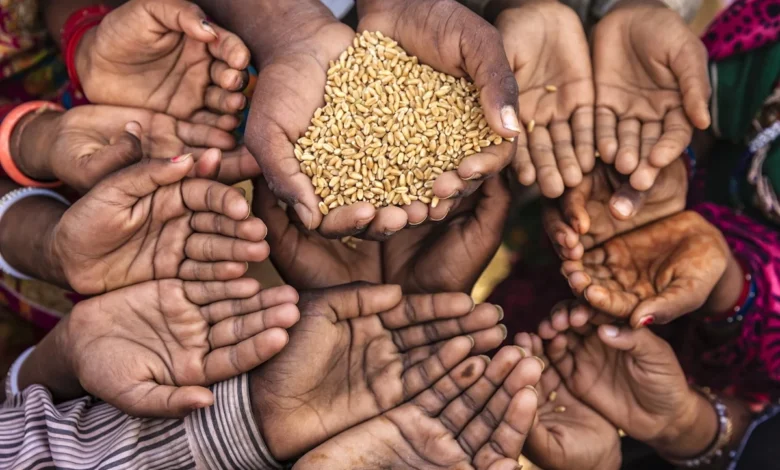
The state of global food security remains a study in stark contrasts, as the latest data reveals that while the total number of people suffering from hunger worldwide has begun a modest decline, specific regions—most notably Africa and Western Asia—are experiencing a concerning upward trend in undernourishment. According to the 2025 State of Food Security and Nutrition in the World (SOFI) report, published jointly by five specialized United Nations agencies, approximately 8.2 percent of the global population, or roughly 673 million people, faced hunger in 2024. This figure represents a marginal improvement from the 8.5 percent recorded in 2023 and the 8.7 percent peak seen in 2022. However, the Food and Agriculture Organization (FAO), the International Fund for Agricultural Development (IFAD), UNICEF, the World Food Programme (WFP), and the World Health Organization (WHO) warn that the path toward the Sustainable Development Goal of "Zero Hunger" by 2030 is fraught with systemic obstacles that threaten to leave hundreds of millions behind.
Global Hunger by the Numbers: A Fragile Recovery
The SOFI 2025 report estimates that between 638 million and 720 million people were undernourished in 2024. The mid-range of this estimate suggests that roughly 15 million fewer people went hungry compared to the previous year, and 22 million fewer than in 2022. This global reduction is primarily driven by significant progress in populous regions of Asia and Latin America. In Asia, the prevalence of undernourishment dropped to 6.7 percent in 2024, a notable decrease from the 7.9 percent reported just two years prior. Similarly, the Caribbean and Latin America saw their hunger rates fall to 5.1 percent, down from a pandemic-era peak of 6.1 percent in 2020.
Despite these gains, the broader metric of "food insecurity"—which includes those who do not necessarily face constant hunger but struggle to access adequate food for parts of the year—remains stubbornly high. Approximately 2.3 billion people, or 28 percent of the world’s population, experienced moderate or severe food insecurity in 2024. While this is a slight improvement from the 28.4 percent recorded in 2023, it underscores a reality where nearly one in three people on the planet lacks consistent access to the nutrition required for a healthy life.
Regional Divergence: The Growing Crisis in Africa and Western Asia
The most alarming finding of the 2025 report is the widening gap between regions that are recovering and those that are sinking deeper into crisis. Africa remains the region most severely affected by food insecurity. In 2024, more than 20 percent of the African population faced hunger, affecting an estimated 307 million people. This is not merely a stagnation of progress but a continued upward trajectory fueled by a combination of localized conflicts, extreme climate events, and the lingering economic shocks of the global inflation crisis.
Western Asia has also seen a troubling rise in undernourishment. The report estimates that 12.7 percent of the population in this region, or more than 39 million people, faced hunger in 2024. This surge is largely attributed to prolonged geopolitical instability and active conflicts that have decimated agricultural infrastructure and disrupted local markets. In these regions, the "Triple C" of drivers—Conflict, Climate, and Cost of living—has created a feedback loop that makes recovery increasingly difficult without massive, targeted international intervention.
A Chronology of Global Food Shocks: 2020-2025
To understand the current state of global nutrition, it is necessary to examine the timeline of events that have shaped food systems over the last five years:
- 2020-2021: The Pandemic Shock. The COVID-19 pandemic caused a sudden spike in global hunger as lockdowns disrupted supply chains and millions lost their livelihoods. Global undernourishment jumped from approximately 8 percent to over 9 percent in a single year.
- 2022: The Geopolitical Crisis. Russia’s invasion of Ukraine, involving two of the world’s largest exporters of grain, fertilizers, and energy, sent global food prices to record highs. The FAO Food Price Index reached its highest point since its inception, severely impacting import-dependent nations.
- 2023: The Inflationary Peak. While global supply chains began to stabilize, domestic food price inflation remained rampant. In low-income countries, food price inflation peaked at a staggering 30 percent in May 2023, far exceeding the global median.
- 2024: Uneven Stabilization. Global food prices began to cool, but the "cost of a healthy diet" remained out of reach for billions. Regions with strong social safety nets saw recovery, while those in conflict saw hunger rates continue to climb.
- 2025 and Beyond: The UN projects that without a radical shift in policy and investment, 512 million people will remain chronically undernourished by 2030, with 60 percent of those individuals residing in Africa.
The Economic Barrier: The Cost of a Healthy Diet
One of the most critical metrics used in the SOFI report is the affordability of a healthy diet. While "hunger" measures caloric intake, "food insecurity" and "dietary quality" measure the ability to afford nutrient-dense foods like fruits, vegetables, and proteins. The report notes that although the number of people unable to afford a healthy diet globally fell to 2.6 billion in 2024 (down from 2.76 billion in 2019), the situation in low-income nations has deteriorated.

In low-income countries, the number of people unable to afford a healthy diet rose to 545 million in 2024, up from 464 million five years ago. This means that in the world’s poorest nations, 72 percent of the population cannot afford the basic nutritional requirements for health. This disparity is often linked to the fact that while global commodity prices may drop, local currency depreciation and high transportation costs keep retail food prices high in vulnerable markets.
Official Responses and Strategic Imperatives
Leadership across the five UN agencies emphasized that the current "uneven progress" is a call to action rather than a cause for celebration. FAO Director-General QU Dongyu stated that the report serves as a "critical reminder" that efforts must be intensified to address the specific challenges faced by vulnerable populations. "We must work collaboratively and innovatively with governments, organizations, and communities to address the persistent hunger in regions like Africa and Western Asia," Dongyu noted.
From a public health perspective, WHO Director-General Dr. Tedros Adhanom Ghebreyesus highlighted the successes in reducing stunting and promoting breastfeeding but warned that malnutrition remains a silent emergency. UNICEF Executive Director Catherine Russell echoed this, pointing out that over 190 million children under the age of five suffer from undernutrition. "This robs them of the chance to live to their fullest potential," Russell said, calling for a strengthening of social protection programs and better education on locally produced nutritious foods.
Alvaro Lario, President of IFAD, focused on the economic necessity of agricultural investment. "In times of rising food prices and disrupted global value chains, we must step up our investments in rural and agricultural transformation," Lario stated. He argued that these investments are not only essential for nutrition but are "critical for global stability," as food insecurity is often a primary driver of migration and civil unrest.
Analysis: The Structural Impediments to Zero Hunger
The persistent nature of hunger in the face of global economic recovery suggests that the problem is no longer just a matter of food production, but one of distribution, affordability, and resilience. Several factors contribute to the "stickiness" of hunger rates in the most affected regions:
- Debt Distress: Many low-income countries are currently spending more on debt servicing than on social safety nets or agricultural development. This limits their ability to buffer their populations against global price shocks.
- Climate Vulnerability: Africa and Western Asia are disproportionately affected by desertification, erratic rainfall, and extreme heat. Smallholder farmers, who produce the majority of the food in these regions, lack the insurance and technology to survive back-to-back crop failures.
- Conflict-Induced Displacement: Conflict remains the single largest driver of acute hunger. When farmers are forced to flee their land and trade routes are blocked, local food systems collapse entirely, leading to famine-like conditions as seen in parts of Sudan, Yemen, and Gaza.
Policy Recommendations for a Resilient Future
The SOFI 2025 report concludes with a series of policy recommendations designed to steer the global community back toward the Zero Hunger goal. First, the UN calls for transparent and credible monetary policies to contain inflationary pressures that hit the poor the hardest. Second, it suggests that fiscal measures, such as social protection programs, must be time-bound and targeted to shield the most vulnerable households during price surges.
Furthermore, there is a pressing need for strategic investment in agrifood research and development. This includes developing climate-resilient crop varieties and improving market information systems so that farmers can make better-informed planting and selling decisions. Enhancing transportation and production infrastructure is also vital to reducing "post-harvest loss," where significant portions of food rot before reaching the market due to poor storage and bad roads.
As the world looks toward 2030, the data from 2024 serves as a sobering baseline. While the global community has proven it can reduce hunger through concerted effort and economic growth, the widening regional disparities suggest that a "one size fits all" approach will fail. The focus must now shift to the "last mile" of food security—ensuring that the most marginalized populations in the most volatile regions are not left to face the rising tide of hunger alone.