Peter Rosenberg Navigating the Complex Intersection of Hip Hop Culture Jewish Identity and Middle Eastern Politics in a Polarized Media Landscape

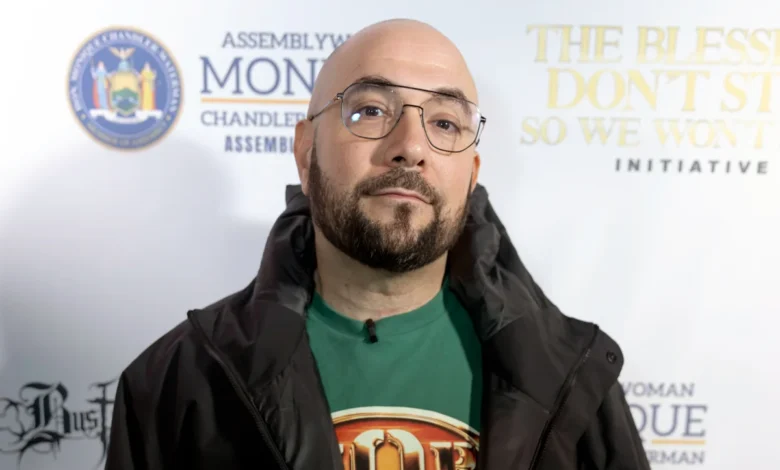
The intersection of entertainment, cultural identity, and geopolitical conflict has increasingly become a volatile space where public figures face unprecedented scrutiny. In the contemporary media ecosystem, long-standing figures within the music industry are finding themselves forced to reconcile personal heritage with polarizing global events. Among them is Peter Rosenberg, a prominent fixture in hip-hop radio and co-host of the Ebro Laura Rosenberg Show, whose career has long intertwined with the cultural fabric of New York’s urban music scene. Recently, Rosenberg sat down for an in-depth conversation addressing the escalating tensions within the music business, the fallout from high-profile political statements on tour, and the complex realities of being Jewish in an industry navigating deep-rooted international conflicts.
This heightened tension within the music industry recently manifested around pop superstar Ed Sheeran’s ongoing Loop Tour. The tour faced unexpected disruption following opening act Macklemore’s utilization of the stage to voice support for the Free Palestine movement. Following two initial performances in New Jersey that featured Macklemore, the remainder of the North American leg was thrown into uncertainty. The immediate catalyst for the tour’s disruption arrived when Robert Kraft, owner of the New England Patriots and proprietor of Gillette Stadium, publicly categorized Macklemore’s onstage rhetoric as hate speech. In response, Macklemore stood firm on his position, highlighting the devastating loss of civilian lives, particularly children, in the ongoing Gaza conflict. This stance prompted solidarity actions from other supporting acts and Sheeran’s backing band, who subsequently withdrew from the tour, exposing deep fractures among artists, promoters, and venue owners.
The Evolution of Hip-Hop Culture and Jewish Identity
To understand Rosenberg’s unique positioning in these debates, one must examine his trajectory within an industry historically dominated by distinct cultural and racial narratives. Raised in Chevy Chase, Maryland, a progressive suburb of Washington, D.C., Rosenberg was exposed to foundational hip-hop radio stations like 98.7 Kiss and WBLS during his youth. His lineage connects directly to post-World War II European history; his mother was born in a displaced persons camp in Germany after her Polish family fled Nazi persecution, while his father hailed from New York and later worked in political spheres, including a stint with the American Israel Public Affairs Committee (AIPAC).
Initially performing under the moniker PMD—standing for Peter from Maryland—Rosenberg operated within regional radio before transitioning to New York’s influential Hot 97 in 2007. It was there that program director Ebro Darden advised him to drop the generic moniker and use his actual surname. Far from facing career-derailing resistance in the hip-hop community, Rosenberg embraced the novelty of being a cultural outlier. His authentic passion for the music and its sociopolitical roots earned him credibility among peers and listeners alike. Early marketing campaigns for Hot 97 famously leaned into this multi-ethnic dynamic, placing billboards across New York City featuring the faces of a Black host, a Puerto Rican host, and Rosenberg, explicitly labeled with his surname. While conceived at the time as a celebratory acknowledgment of diversity, such public markers of identity carry a vastly different weight in today’s hyper-polarized climate.

The Tipping Point of Public Discourse
The atmosphere for Jewish media professionals shifted noticeably in the wake of public antisemitic rhetoric from high-profile artists, most notably Kanye West’s widely condemned remarks and subsequent public platforms. Rosenberg notes that the normalization of vitriolic online harassment and blatant antisemitism spiked dramatically following West’s public statements. This hostile digital environment laid the groundwork for an even more fractured public square following the events of October 7, 2023, when Hamas launched an unprecedented attack on Israeli civilians, primarily targeting attendees of the Nova Music Festival and surrounding kibbutzim.
The immediate aftermath of October 7 intensified global divisions. Rosenberg highlights the lack of initial, nuanced empathy for the victims of the unprovoked festival massacres, which quickly devolved into polarized camps where acknowledging the atrocities committed against Israeli civilians was often perceived as mutually exclusive from condemning the subsequent military actions of the Israeli government. This binary framing, amplified by social media algorithms and extremist voices on all sides, effectively drowned out the rational middle ground, leaving little room for nuanced dialogue regarding state-sanctioned violence, civilian casualties, and systemic historical grievances.
Industry Repercussions and the Ed Sheeran Tour Fallout
The controversy surrounding Ed Sheeran’s tour cancellation underscores the broader structural and public relations crises facing mainstream artists and venue operators. Rosenberg analyzes the missteps made by tour organizers and stakeholders, arguing that attempting to silence political expression or unilaterally canceling performances fails to address the underlying ideological shifts taking place in real-time. By bowing to pressure from venue owners like Robert Kraft rather than allowing contractual agreements and public discourse to run their course, the tour became a focal point for debates regarding censorship, freedom of speech, and the weaponization of political terminology.
Furthermore, Rosenberg points out the glaring inconsistencies in how political messaging is policed within the entertainment industry. While performances and public figures invoking Palestinian rights frequently face swift institutional backlash or accusations of hate speech, artists with documented histories of expressing admiration for Adolf Hitler or utilizing antisemitic tropes have occasionally found pathways back into public platforms. This double standard creates a pervasive sense of alienation for Jewish artists and media personalities who find themselves inextricably linked to geopolitical actions and policies enacted by a foreign government—policies that many American Jews actively criticize.

Reconciling Heritage, Zionism, and State Actions
Rosenberg’s personal history provides a lens through which to view the evolution of modern Zionism and political critique. His father, shaped by experiences writing for the Village Voice and observing firsthand the political machinery surrounding Middle Eastern policy, ultimately grew disillusioned with the hardline stances adopted by successive Israeli administrations, particularly following the 1995 assassination of Israeli Prime Minister Yitzhak Rabin. This ideological background fostered an environment where critical engagement with state policy was not viewed as a rejection of cultural heritage, but rather as an essential component of ethical responsibility.
Addressing the modern application of the term "Zionism," Rosenberg acknowledges how the vocabulary of the conflict has been stripped of nuance, often functioning as a blunt instrument in digital discourse. While recognizing the deep cultural and historical ties of Jewish people to the region, he emphasizes that the foundational displacement of Palestinians cannot be ignored. For Rosenberg, true moral consistency requires the capacity to hold multiple truths simultaneously: condemning the visceral reality of global antisemitism while holding state actors accountable for violence and oppression committed against Palestinian civilians.
The Future of Discourse in a Polarized World
As the global conversation surrounding the Israeli-Palestinian conflict continues to dominate cultural and political spheres, figures like Peter Rosenberg emphasize the urgent need to de-escalate the perpetual shouting matches driven by ideological extremes. The silencing of moderate, peace-seeking voices on both sides threatens to perpetuate a cycle of violence and mutual dehumanization. Navigating this landscape requires an unyielding commitment to opposing all forms of bigotry—whether manifesting as antisemitism, anti-Arab sentiment, or state-sanctioned violence—ensuring that human dignity and civilian survival remain at the forefront of international discourse.