From Margaritas to Major Studios: Producers Aaron Ryder and Andrew Swett Rebrand Their Banner to Embrace Industry Chaos

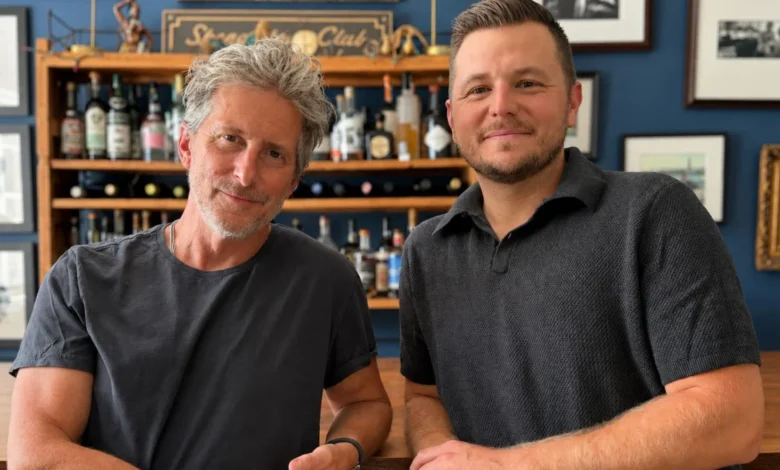
The modern landscape of Hollywood filmmaking is characterized by unprecedented market volatility, shifting distribution paradigms, and financial conservatism among major studios. Yet, amidst this widespread institutional hesitation, independent-minded producers continue to find viable pathways to bring idiosyncratic, director-driven visions to the screen. Veteran producer Aaron Ryder and his partner, Andrew Swett, have established themselves as masters of navigating this volatile ecosystem. Operating through an eclectic slate that spans high-concept genre fare, mid-budget star-driven projects, and ambitious studio collaborations, the producing duo has officially rebranded their enterprise from Ryder Picture Company to Embrace, signaling a strategic evolution beyond a traditional founder-led banner.
The Genesis of Embrace
Like many enduring creative partnerships in the entertainment industry, the formation of Embrace was born over casual drinks and cinematic ambition. The rebranding itself materialized after an extensive, year-and-a-half brainstorming and legal clearance process aimed at finding a moniker that accurately reflected the company’s operational philosophy. The decisive moment occurred during a dinner meeting when Ryder was offered a martini. Contemplating whether another drink was prudent, Ryder had an epiphany: "I will embrace it."
The word resonated immediately. It not only cleared legal hurdles with trademark registries, but it also encapsulated the duo’s overarching philosophy toward contemporary film financing and production. "It kind of meets the philosophy of what we are. We can embrace the chaos and we can embrace the process," Ryder notes. With a core staff of half a dozen employees, the newly christened Embrace represents a shift toward a collective, agile producing model designed to withstand the structural fluctuations of the modern entertainment marketplace.
From Scrappy Roots to Studio Leverage: The Making of Onslaught
The modus operandi of Embrace is vividly illustrated by their collaboration with filmmaker Adam Wingard on the upcoming feature Onslaught. The project’s inception harks back to casual margaritas at Casa Vega in Sherman Oaks, where Ryder and Swett met with Wingard and his frequent writing partner, Simon Barrett.
Wingard was fresh off directing high-profile, big-budget tentpoles within the Legendary/Warner Bros. Monsterverse, specifically Godzilla vs. Kong and its sequel. However, rather than remaining tethered exclusively to mega-budget intellectual property, Wingard expressed a desire to return to his scrappy, independent roots. He pitched a throwback genre picture inspired by the gritty, atmospheric style of John Carpenter classics such as Assault on Precinct 13 and The Fog.
Recognizing the commercial and artistic viability of a down-and-dirty genre picture, Ryder and Swett committed to the vision. Early development conversations adhered to a strict, pragmatic framework typical of the producers’ initial filmmaker consultations. "What are your non-starters? Is it a price point? Is it shooting on film? Is it the amount of days that you think that you need?" Swett recalls asking.
The resulting package was subsequently taken to A24, a studio known for championing distinctive filmmaker-driven voices. The deal not only secured financing for the production—which ultimately required shooting during freezing night shifts in New Mexico—but also granted Wingard the ultimate stamp of creative autonomy: final cut privilege, a rare concession for a filmmaker of his commercial standing.
A Diversified Slate Across Platforms and Genres
Onslaught is merely one component of a remarkably varied slate of director-driven projects that Embrace has ushered through production and post-production. Their current roster highlights a deliberate agnosticism toward genre, budget tiers, and distribution models.
Among these high-profile titles is Boots Riley’s upcoming feature I Love Boosters, set up at Neon, which continues Riley’s streak of provocative, satirical storytelling following the critical success of Sorry to Bother You and the series I’m a Virgo. Additionally, the banner partnered with A24 on The Death of Robin Hood, directed by Michael Sarnoski—a project famously hatched over whiskey and cigars. Expanding into mainstream studio romantic comedies, Embrace also shepherded Ol Parker’s Netflix feature Office Romance, starring Jennifer Lopez and Brett Goldstein.
This multi-platform versatility is a deliberate strategy. In an era where traditional theatrical windows are frequently compressed or bypassed entirely in favor of streaming metrics, Ryder and Swett position themselves as platform-agnostic facilitators. "We’re agnostic as it comes to genre. We’re agnostic as it comes to platform, whether it be studio or streamer or independent," Ryder explains. "It truly is trying to discern what would be the best version of the film and who would look after it the best."
Professional Pedigrees and Mentorship
The operational strength of Embrace is underpinned by the deep industry experience of its principals. Before founding his independent banner, Aaron Ryder was a foundational partner at FilmNation Entertainment, where he earned a reputation as a preeminent developer of prestige and independent cinema. His producing credits include formative early works by Christopher Nolan, such as Memento and The Prestige, as well as Denis Villeneuve’s critically acclaimed science-fiction drama Arrival, which garnered a Best Picture Academy Award nomination.
Andrew Swett’s entry into the industry paved a complementary path. Swett initially entered Ryder’s professional orbit as an assistant during the demanding production cycle of Arrival, where he also assisted on biographical drama The Founder, chronicling the rise of McDonald’s tycoon Ray Kroc. Moving swiftly through the executive ranks, Swett gained invaluable studio and franchise experience working for Phil Lord and Christopher Miller’s production banner during the high-water marks of The Lego Movie and Spider-Man: Into the Spider-Verse, as well as the tumultuous production of Solo: A Star Wars Story. He subsequently served as an executive at Mythos Studios, a venture originally founded by Marvel Studios architect David Maisel and super-manager Scooter Braun.
Throughout these diverse industry stints, Swett maintained a relationship with Ryder, watching their dynamic evolve from mentor-mentee to peer, before Ryder formally invited him to join forces as a full partner.
Navigating Studio Politics and the Art of Connection
Industry peers frequently cite Ryder’s formidable network and relational capital as a vital asset for the company. Filmmaker Tim Miller—who has maintained a long-standing association with both producers and attempted to bring Swett into his own company in the past—points to Ryder’s innate ability to bridge creative talent with studio infrastructure.
When Miller sought to cast Rebecca Ferguson in the dark fantasy project Best Served Cold during its development phase at MGM, Ryder personally placed a phone call to the actress, successfully securing her commitment to the project. "Aaron just knows everybody, and everybody likes him. So, when he brings something to them, they take it seriously," Miller observes. "I just saw the value of the relationships, and of having a producer that people actually wanted to pick up the phone when he called."
Miller’s current collaboration with Embrace involves the high-budget time-loop feature Shiver, starring Keanu Reeves, which Warner Bros. is slated to release next year. The production presented formidable logistical obstacles, including a grueling 45-day shoot executed within a massive water tank facility in the Dominican Republic, necessitated by the film’s marine narrative involving Reeves and sharks.
According to Miller, who did not direct his first feature film until reaching the age of 50, the presence of seasoned producers capable of absorbing and managing studio politics is indispensable. It allows directors to maintain their singular focus on the creative execution of the film. Miller notes that Ryder’s institutional memory—frequently drawing upon how directors like Nolan or Villeneuve handled comparable pressures—provides invaluable psychological and structural support during complex shoots.
Strategic Scalability and Financial Pragmatism
A core competency emphasized by Embrace is the ability to deconstruct a screenplay and evaluate its commercial viability across multiple budget parameters and financial models. When evaluating prospective material, such as the script for Shiver, the producers meticulously break down the options for the filmmaker.
"Here’s the studio version, here’s the streaming version, here’s the pre-sales version," Swett explains, articulating the company’s pragmatic philosophy toward financing. "You can tell any story for any price. You can make The Odyssey for $1 million, or you can make The Odyssey for $150 million."
This analytical approach extends across their upcoming slate, which also includes post-production on Mother’s Helper, an erotic thriller starring Shailene Woodley and directed by Bridget Moloney. By maintaining flexibility in how films are capitalized and packaged, Embrace insulates itself against the economic contractions affecting mid-budget filmmaking.
Broader Implications for Independent Producing
The evolution of Ryder Picture Company into Embrace reflects a broader structural adaptation occurring within the independent producing sector. As major studios increasingly consolidate and rely on pre-existing intellectual property, independent producers must act as financial architects as well as creative partners. By refusing to pigeonhole their company into a single genre or distribution pipeline, Ryder and Swett have constructed a resilient business model capable of pivoting between A24 prestige pictures, major studio genre releases, and streaming rom-coms.
Ultimately, navigating the current climate requires an acknowledgement that standard operating procedures no longer apply to modern Hollywood. As Ryder reflects on the diversity of their ongoing slate: "It’s not always the same. You’re a different partner to the directors, you’re a different partner to the studios. That’s kind of cool. Because there’s no one set way of doing these things, especially now." For Embrace, leaning into that unpredictability is not merely a survival tactic—it is the foundation of their business.