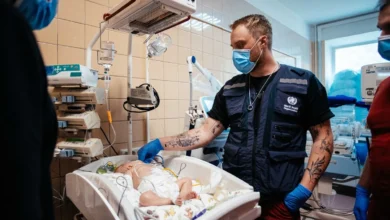
A growing outbreak of the rare Bundibugyo virus in the Democratic Republic of Congo is drawing attention to a broader problem in global health: how to prepare for dangerous diseases that appear only rarely but can still cause deadly outbreaks. As case numbers mount in the Democratic Republic of Congo (DRC) and Uganda, public health experts are sounding an alarm, suggesting that the current international framework for pandemic preparedness is dangerously skewed toward pathogens that dominate headlines, while neglecting rare but lethal viral relatives.
In a comprehensive review article published in the New England Journal of Medicine, Dr. Nancy Sullivan, a distinguished professor of biology and virology, immunology, and microbiology at Boston University, argues that the global scientific community has reached a critical juncture. According to Sullivan, outbreak preparedness strategies must evolve to account for the unpredictable nature of viral emergence, moving beyond the narrow scope of high-prevalence diseases to include the "long tail" of rare, high-consequence pathogens.
Understanding the Filovirus Family
The Bundibugyo virus is a member of the Filoviridae family, a group of filamentous viruses that includes the notorious Ebola virus (Ebolavirus) and the Marburg virus. These viruses are characterized by their ability to cause severe hemorrhagic fever in humans, characterized by internal and external bleeding, organ failure, and high mortality rates.
Historically, Bundibugyo has been an elusive entity. Unlike the Zaire ebolavirus, which has caused repeated, devastating epidemics, Bundibugyo was identified in only two isolated instances prior to this decade: an outbreak in the Bundibugyo District of Uganda in 2007 and a subsequent cluster in the DRC in 2012. Because these events were geographically contained and relatively short-lived, the virus did not receive the intensive research funding or the sustained clinical attention afforded to its more frequent cousins. This lack of research focus has left a vacuum in diagnostic tools, therapeutics, and vaccine development.
A Growing Crisis: Timeline and Escalation
The current outbreak represents a significant departure from historical trends. While the 2007 and 2012 clusters were relatively small, the 2026 event has demonstrated a worrying trajectory of transmission. As of June 11, the World Health Organization (WHO) confirmed 695 cases and 138 fatalities across the DRC and Uganda. The scale of this outbreak is unprecedented for this specific species of filovirus, challenging the assumption that Bundibugyo is merely a "low-risk" variant.
The outbreak was formally identified following the tragic death of a nurse in early 2026, a sentinel event that highlighted the vulnerability of frontline healthcare workers. Since then, the virus has moved through regional transit hubs, exploiting the porous borders and complex social dynamics of the border regions. The reliance on traditional, localized surveillance systems has been tested, as the virus spread more rapidly than initial models predicted.
Clinical Challenges and Diagnostic Hurdles
Bundibugyo manifests as a severe hemorrhagic fever, a syndrome that presents a diagnostic nightmare for clinicians working in resource-constrained environments. Symptoms typically include high fever, severe headache, muscle pain, and fatigue, which are clinically indistinguishable from common endemic diseases such as malaria, typhoid fever, and yellow fever.
The primary challenge in managing the outbreak lies in the latency between symptom onset and laboratory confirmation. Dr. Sullivan’s research highlights that in many parts of the DRC, healthcare facilities lack the on-site molecular diagnostics required to distinguish Bundibugyo from malaria. Consequently, suspected cases must be transported over rugged terrain to national reference laboratories. This logistical bottleneck can add days—or even weeks—to the confirmation process.
"Delays in specimen collection, transportation, and testing can postpone confirmation by days or weeks, which hinders the isolation of infected persons, contact tracing, and the initiation of outbreak-control measures," Sullivan noted in her review. Every day lost to testing is a day the virus can be transmitted to family members, caregivers, or additional patients within hospital settings, where infection control measures may be insufficient.
The Economic and Operational Gap
The disparity in medical countermeasures is perhaps the most glaring weakness in the current response. Over the last decade, global health initiatives—fueled by the 2014–2016 West African Ebola epidemic—have produced effective vaccines and monoclonal antibody treatments for the Zaire ebolavirus and the Sudan virus. However, these tools are not universally applicable to Bundibugyo.
There is currently no licensed vaccine or therapeutic specifically formulated for the Bundibugyo virus. While preliminary research suggests that some cross-reactive immunity might be induced by vaccines designed for other filoviruses, this remains speculative and unproven in large-scale clinical trials. The lack of a dedicated pharmaceutical arsenal means that the current response relies almost entirely on traditional, "non-pharmaceutical" interventions: rigorous isolation, contact tracing, and intensive supportive care.
These measures require significant human and financial capital. When health systems are already strained by other competing priorities, the operational burden of managing a hemorrhagic fever outbreak can lead to the collapse of local medical services.
The Case for Broad-Spectrum Preparedness
The Bundibugyo outbreak serves as a case study for the risks of "tunnel vision" in global health. For decades, the international community focused on pathogens that caused frequent, high-profile outbreaks. This approach, while logical for managing immediate crises, has left the world ill-equipped for the "rare" viruses that lurk in the shadows of the African rainforests.
Dr. Sullivan advocates for a paradigm shift toward "platform-based" preparedness. This involves developing diagnostic assays and therapeutic frameworks that can be rapidly adapted to any virus within a specific family. Instead of building a vaccine solely for one variant, research should prioritize technologies that can target the common biological structures shared by all filoviruses.
Furthermore, Sullivan emphasizes that technical tools—vaccines and diagnostics—are only half of the solution. True preparedness requires robust, multinational operational frameworks. Outbreaks do not respect national borders; therefore, the response must be integrated. This requires:
- Integrated Surveillance Networks: Developing regional systems that share data in real-time across borders, allowing for the rapid identification of unusual clusters.
- Operational Readiness: Ensuring that medical supplies, cold-chain logistics, and trained personnel are pre-positioned in high-risk zones, rather than mobilized only after a crisis has been declared.
- Capacity Building: Investing in local laboratory infrastructure so that frontline clinicians can receive diagnostic results within hours, not weeks.
Implications for Future Health Security
The current situation in the DRC is a harbinger of what may become a more common occurrence as climate change, urbanization, and human encroachment into wild habitats increase the frequency of human-animal interactions. As humans move deeper into previously isolated ecosystems, the probability of encountering rare zoonotic viruses rises.
The Bundibugyo outbreak is a clear message that the status quo is insufficient. If the global health community continues to allocate resources solely based on historical frequency, it will remain perpetually reactive, chasing outbreaks rather than preventing them.
"Preparedness planning should extend beyond diagnostics, vaccines, and therapeutics to include operational readiness for multinational outbreak response," Sullivan concludes. By broadening the scope of research and investment, the international community can create a more resilient system—one that is capable of addressing not just the diseases we know, but the ones we have yet to encounter.
As the international response continues to unfold, the metrics for success will not only be the containment of this specific outbreak but the degree to which this experience forces a change in how the world prepares for the next inevitable, rare, and dangerous viral threat. The life of a nurse in a remote region of the DRC should not be the only indicator that a new, deadly wave of infection has begun; a modernized, global health strategy must ensure that we see the warning signs long before they turn into a crisis.