Salman Rushdie and Alex Gibney Examine the Cost of Free Expression in Powerful New Documentary

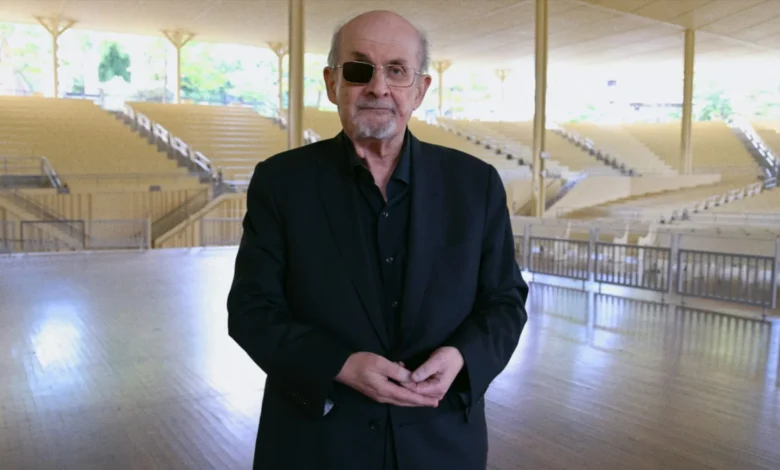
The most arresting and emotionally charged moments of the documentary centering on Salman Rushdie and his harrowing journey of survival do not stem from dramatic reenactments or external commentary, but rather from the unyielding, unflinching close-ups of the author’s wounded body. Chronicling the critical days and weeks following August 12, 2022—when the acclaimed writer was repeatedly stabbed while delivering a lecture on stage at the Chautauqua Institution in upstate New York—the film reveals a reality that is both tragic and profoundly resilient. The camera lingers over a mangled, scarred hand and a train-track pattern of surgical stitches running the length of his abdomen, while his right eye remains a bloodied, swollen bulge.
The profound impact of this cinematic portrait, which recently premiered to critical acclaim at the Sundance Film Festival, stems largely from Rushdie’s own courageous decision to showcase his trauma. By sharing intimate, unvarnished footage captured by his wife, poet and novelist Rachel Eliza Griffiths, throughout his arduous hospital stay, the project achieves a rare level of raw authenticity. This visual intimacy serves as a visceral, grounding complement to an otherwise solid, albeit conventional, biographical profile constructed by director Alex Gibney. Known for his comprehensive, methodical, reporter-style investigations into institutional power and politics—earned through an extensive catalog of Academy Award and Emmy-winning documentaries—Gibney applies his signature investigative lens to a deeply personal subject of artistic freedom and persecution.
The Contrast of Digital Recreations and Authentic Narration
Gibney’s cinematic approach in this project stands in stark contrast to his concurrent work, such as the upcoming HBO-produced mega-documentary tentatively titled Musk, which debuted at the Venice Film Festival and relies on artificial intelligence-generated talking heads to portray the technology billionaire. Fortunately, no such uncanny digital simulations or speculative technologies are employed in the Rushdie documentary. From the very opening frames, the Indian-born author maintains absolute control of his narrative. He anchors the film with a running voiceover narration that pairs seamlessly with a feverish, subjective recreation of the 2022 attack, visualized strictly from his own point of view.
In this harrowing sequence, blinding stage lights reduce his assailant—subsequently identified as Hadi Matar, a resident of Fairview, New Jersey—into an ominous, shadowy mass. Every forceful thrust of the knife is rendered as a dull, visceral thud. Notably, Matar is referred to by name only once throughout the entire feature. In Rushdie’s thoughtful retelling, the attacker transcends his individual identity to become a broader symbol of the persistent, punishing incursions directed against the author’s life, safety, and fundamental liberties spanning more than three decades. This ongoing threat traces its origins directly to the publication of his 1988 magical realist novel, The Satanic Verses, a work that provoked international outrage, mass protests, and a religious death sentence.
A Chronology of Persecution: From the 1989 Fatwa to the 2022 Attack
To fully understand the weight of the documentary, one must examine the protracted historical timeline that defines Salman Rushdie’s public and private existence. The roots of the modern crisis stretch back to late 1988, when Viking Penguin published The Satanic Verses. The novel quickly drew fierce condemnation from various orthodox religious groups and leaders who deemed passages within the book blasphemous to Islam.
The situation escalated dramatically on February 14, 1989, when Ayatollah Ruhollah Khomeini, then the Supreme Leader of Iran, issued a formal fatwa broadcast on Tehran radio. The decree called upon all zealous Muslims to execute Rushdie, as well as anyone involved in the publication of the book, offering substantial financial bounties for their assassination. This unprecedented decree forced the author into hiding under the protection of the British government’s Special Branch, initiating a decade of clandestine movement, constant security details, and deep psychological isolation.
The international fallout from the fatwa resulted in widespread violence and geopolitical tension. Throughout 1989 and the early 1990s, protests and book burnings erupted in major cities across the United Kingdom, Pakistan, India, and beyond. Bookstores carrying the title faced bomb threats and arson attacks, while translators and publishers associated with the novel became targets of lethal violence. Most notably, Hitoshi Igarashi, the Japanese translator of The Satanic Verses, was stabbed to death in July 1991, and Italian translator Ettore Capriolo was seriously wounded in a separate attack in Milan. Despite the immense danger, Rushdie gradually re-emerged into public life during the late 1990s and early 2000s, eventually establishing a relatively open life in New York City—a normalcy that was brutally shattered on that August afternoon in 2022.
Artistic Exploration and the Absurdity of Extremism
Within the documentary, Alex Gibney deftly integrates archival news broadcasts, historical photographs, and previous on-camera interviews with Rushdie to explore the author’s formative years. The narrative touches upon his identity-crisis-ridden youth divided between his birthplace of India and his adopted home of London, alongside the emotional abuse he endured from an alcoholic father during his adolescence. However, the primary focus remains firmly fixed on the period following the 1988 publication, framing the novel not merely as a piece of literature, but as the historic flashpoint for a global debate concerning freedom of speech, creative license, and the limits of state and religious tolerance.
To illustrate the literary heart of the controversy, Gibney incorporates excerpts from The Satanic Verses, accompanied by scratchy, evocative animated sequences. The novel follows two fictional Indian-Muslim actors living in London who undergo profound spiritual transformations after miraculously surviving a commercial airplane disaster engineered by terrorists. These artistic renderings echo Rushdie’s ongoing existential musings, reinforcing the fundamental premise that the book is, above all else, a product of creative imagination.
By juxtaposing this imaginative fiction against the violent realities of the backlash, the film highlights the profound absurdity of the extreme reactions exhibited by fundamentalist communities. The central, lingering question posed by the documentary is stark: how could a work of fiction generate such unrelenting rage, and what does this hostility signify for the safety of civil society? For a generation that lived through the late 20th-century culture wars, the events are familiar, yet the documentary successfully reframes them as urgent, contemporary warnings rather than distant history.
Personal Resilience and the Support System Behind the Author
Rather than merely recounting historical trauma, the documentary delves deeply into Rushdie’s internal processing of the 2022 attack. The author reflects candidly on his initial moments of vulnerability, questioning why he failed to fight back or escape, and leading him into a profound philosophical exploration of his relationship with mortality and fatalism.
In parallel with these historical and philosophical reflections, the present-day narrative tracks Rushdie’s grueling medical recovery. This is captured through Rachel Eliza Griffiths’ tender, diaristic documentary footage, which presents an intimate look at domestic life amid extraordinary circumstances. The footage documents quiet moments of rehabilitation alongside unexpected interruptions, including supportive phone calls from close family friends such as acclaimed filmmaker Wes Anderson. These scenes underscore the vital role played by Griffiths, who acted as an unwavering anchor for the author through what could easily have felt like a never-ending saga of recovery and public scrutiny.
Implications for Global Free Speech and Civil Liberties
The release of Alex Gibney’s documentary arrives at a critical juncture in contemporary sociopolitical discourse, where questions surrounding freedom of expression, censorship, and the safety of public intellectuals remain fiercely contested globally. While the core message—that artistic expression remains perpetually vulnerable to ideological violence—may seem evident to anyone closely following international news cycles, the film endows this abstract debate with immense emotional weight.
Observers and literary analysts note that the documentary serves as both a testament to individual courage and a sobering reminder of collective societal responsibilities. By placing Rushdie’s physical recovery and intellectual steadfastness at the forefront, the project transcends standard journalistic profiles. It challenges audiences to confront the ongoing costs of defending free speech, demonstrating that while physical scars may heal and institutions may adapt, the foundational right to express dissenting or imaginative ideas requires constant, vigilant protection against the forces of extremism.