Daniel Mason Explores the Intersection of Academic Stagnation and Rural Life in His Fifth Novel Country People

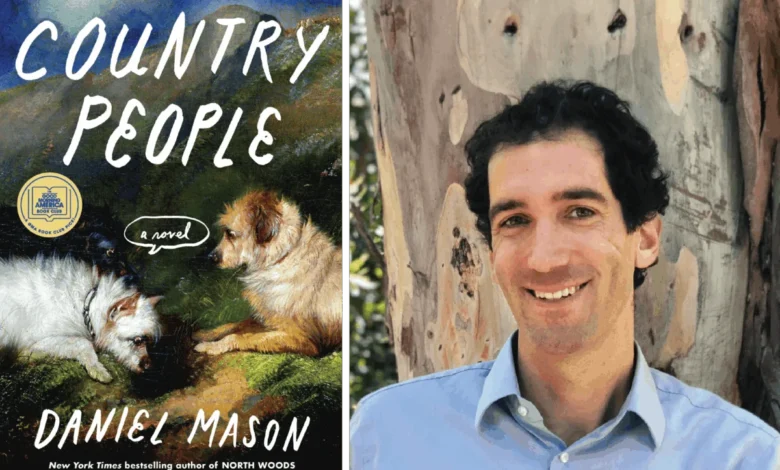
The literary landscape of contemporary America often grapples with the friction between urban ambition and rural reality, but few authors approach this tension with the clinical precision and empathetic humor of Daniel Mason. A Pulitzer Prize finalist and practicing psychiatrist, Mason has recently unveiled his fifth novel, Country People, a work that marks a significant stylistic departure from his previous historical epics. The narrative follows an academic family as they transition from the high-pressure environment of the California Bay Area to the rugged, quiet landscapes of rural Vermont. At the heart of the story is Miles, a husband and father who has spent fourteen years "nursing" a dissertation, a character study that serves as a vehicle for exploring themes of male loneliness, the elusive nature of purpose, and the comedic tragedy of the "city person" trying to find belonging in the wilderness.
The publication of Country People comes on the heels of Mason’s 2023 masterpiece, North Woods, which was a sprawling multi-generational saga centered on a single house in the forests of Western Massachusetts. While North Woods was a meditation on time and ecology, Country People is a more intimate, contemporary comedy of manners. The novel’s inception was rooted in Mason’s own experiences during the research phase for his previous book. While spending a year in the borderlands of Vermont and New York, Mason found himself captivated not just by the history of the land, but by the modern-day inhabitants and the inherent humor of his own family’s attempt to adapt to a rural lifestyle. This transition—from the "academic superstar" status of his wife to Miles’s own wandering sense of place—forms the backbone of a story that is as much about internal landscapes as it is about the physical terrain of New England.
The Narrative Arc and Character Study of Miles
The plot of Country People is deceptively simple: an academic "superstar" accepts a yearlong visiting professorship in Vermont, prompting her devoted husband, two children, and the family dog to pack up their life in California. However, the true narrative engine is the internal life of Miles. Unlike his wife, who possesses a robust network of professional and social connections, Miles is a man adrift. His fourteen-year struggle with his dissertation is not merely a plot point but a symptom of a deeper existential stalling.
Mason utilizes a literary technique known as "free indirect discourse"—a third-person narrative style that provides direct access to a character’s inner thoughts and emotional inflections. This allows the reader to witness Miles’s indecision in granular detail. Whether he is agonized over the social implications of wearing jeans versus sweatpants to meet a local orchardist or navigating the "taxonomy of imagination" through local legends, Miles’s internal monologue highlights the insecurity of the modern intellectual. Mason notes that while his earlier works focused on "big" themes like war and climate change, Country People finds its strength in the "mundane" moments—the school play, the trip to the emergency room, and the trivial choices that define a life.
Chronology of Daniel Mason’s Literary Career
To understand the significance of Country People, one must look at the trajectory of Daniel Mason’s career, which has been defined by a unique synthesis of medical expertise and historical fiction.
- 2002: The Piano Tuner. Mason’s debut novel, written while he was still a medical student, became an international bestseller. Set in 1886, it followed a British piano tuner sent to the jungles of Burma.
- 2007: A Far Country. This novel explored the migration of a young woman from a drought-stricken village to a distant city, further establishing Mason’s interest in the themes of displacement and the search for home.
- 2018: The Winter Soldier. Set during World War I, this novel followed a medical student in the Austro-Hungarian army, blending Mason’s psychiatric background with a sweeping historical romance.
- 2020: A Registry of My Passage Upon the Earth. A collection of short stories that earned Mason a finalist spot for the Pulitzer Prize in Fiction.
- 2023: North Woods. A highly acclaimed novel that traces the history of a single plot of land in New England over 400 years. It was named one of the 10 Best Books of 2023 by the New York Times and won the National Book Critics Circle Award for Fiction.
- 2024: Country People. A contemporary pivot that utilizes humor and a modern setting to explore the psychological nuances of domestic life and rural migration.
Supporting Data: The Reality of Male Loneliness and Rural Migration
Mason’s portrayal of Miles as a man struggling for connection is not merely a fictional device; it mirrors a documented societal trend. In the novel, Miles’s wife has a rich network of friends, while Miles exists as a "bunch of little islands." This reflects what sociologists and public health officials have termed the "loneliness epidemic."
According to a 2023 advisory from U.S. Surgeon General Vivek Murthy, loneliness can be as detrimental to health as smoking 15 cigarettes a day. Data from the Survey Center on American Life indicates that the percentage of men reporting they have no close friends has increased fivefold since 1990, jumping from 3% to 15%. Mason’s exploration of Miles’s struggle to find "real connection" outside of his immediate family unit provides a poignant look at the struggle for male friendship in the 21st century.
Furthermore, the "city-to-country" migration depicted in the book reflects a real-world demographic shift. Data from the Vermont State Data Center shows a significant uptick in migration to rural Vermont during and immediately following the COVID-19 pandemic. Many of these "urban refugees" brought with them the same "preconceptions and fantasies" that Mason admits his own family carried. The novel serves as a fact-based analysis of the cultural "clash" that occurs when urban expectations of rural life—often romanticized as a pastoral escape—meet the reality of small-town dynamics and the isolation of the New England winter.
The Subplot of the Hollow Earth: Legend vs. Delusion
One of the more unique elements of Country People is the inclusion of a community of "Hollow Earthers"—individuals who believe the planet is hollow and that an entrance to this inner world exists within the local landscape. For Miles, this legend becomes a point of fascination. Mason, drawing on his professional background as a psychiatrist, uses this subplot to explore the "taxonomy of imagination."
The character of "Snowflake Bentley," whom Miles meets in an emergency room, serves as a catalyst for these theoretical questions. The novel asks: Where is the boundary between a legend and a conspiracy theory? Between imagination and delusion? In a professional context, Mason deals with the clinical definitions of these states, but in the novel, he allows the lines to blur. The Hollow Earth legend provides Miles with a sense of wonder that his dissertation lacks, suggesting that sometimes "believing things that aren’t true" is a mechanism for coping with a world that feels increasingly disconnected.
Broader Impact and Implications for the Genre
Country People represents a shift in how contemporary fiction addresses the "academic novel." While classics of the genre, such as those by Philip Roth or David Lodge, often focus on the politics of the university, Mason focuses on the failure of the academic pursuit. Miles’s 14-year dissertation is a symbol of a life put on hold, a common phenomenon in a society where the "passion for an idea" does not always translate into the "execution of a project."
The novel also challenges the traditional structure of comedy. Mason admits that writing a contemporary comedy was a daunting prospect, noting that "300 pages of jokes falling flat would be really embarrassing." However, by grounding the humor in the character’s internal struggles and the "mundane" realities of life, Mason achieves a tone that is both playful and profound. This shift toward a more accessible, humorous voice may signal a new direction for Mason, who has traditionally been associated with the more somber tones of historical fiction.
Official Responses and Literary Reception
While Country People is a new release, early reactions from the literary community have praised Mason’s ability to pivot from the "epic" scale of North Woods to the "microscopic" scale of Miles’s life. Critics have noted that Mason’s dual identity as a physician and a writer allows him to observe human behavior with a level of detail that is often missing from contemporary fiction.
In his interview with the Gazette, Mason reflected on how this book allowed him to grow as a writer. "It was freeing," he stated. "It gave me an awareness that the world around me has elements which, at first, seem simple—but only because I wasn’t looking more closely at them." This philosophy of "looking closely" is what defines Country People. By examining the "stuff of everyday life"—from school plays to trips to the orchard—Mason provides a mirror for a generation of readers who find themselves caught between their professional ambitions and their personal need for belonging.
As the literary world continues to digest the impact of Daniel Mason’s latest work, Country People stands as a testament to the power of the "small" story. It suggests that in the midst of global crises and historical upheavals, the most profound insights can often be found in the quiet, awkward, and often hilarious moments of a family trying to find their way in the woods.