Europe Faces Agricultural Crisis as Climate Change Triggers Unprecedented Crop Failures and Economic Volatility

Farmers across the European continent are grappling with the catastrophic aftermath of a 2026 summer defined by record-breaking heatwaves, prolonged drought, and widespread wildfires. The convergence of these extreme weather events, which scientists have increasingly linked to human-caused climate change, has pushed the European agricultural sector into a state of deep instability. From the shrunken potato fields of the Netherlands to the scorched olive groves of the Mediterranean, the 2026 harvest season is rapidly becoming a landmark case study in how climate-driven environmental stress disrupts global food security and supply chains.
The crisis is not merely a localized agricultural issue but a systemic shock to the European economy. According to the United Nations Food and Agriculture Organization (FAO), global food prices have reached their highest levels since early 2023. This inflationary pressure is driven by a "perfect storm" of climatic extremes and volatile energy markets. The disruption of critical supply chains, including blocked fertilizer shipments through the Strait of Hormuz and elevated fuel costs, has compounded the difficulty for producers attempting to navigate a season of decimated yields.
A Chronology of Climatic Escalation
The 2026 agricultural disaster did not emerge in isolation; it followed a sequence of escalating meteorological anomalies. Throughout the spring, intermittent dry spells signaled potential water stress, but the situation deteriorated rapidly in June. That month, Western Europe experienced its hottest June on record. Rapid attribution studies conducted by the World Weather Attribution group concluded that the intensity of this heatwave would have been "virtually impossible" without the backdrop of climate change driven by fossil fuel emissions.
As the summer progressed, the lack of precipitation transformed agricultural land into a tinderbox. By July and August, the European Commission’s Joint Research Centre reported that summer crops were facing "exceptionally dry and hot weather," with widespread concern over the viability of maize, sugar beet, and sunflower harvests. The persistence of these conditions through late August cemented the projections for what many analysts now describe as one of the most difficult harvests in decades.
Quantitative Analysis of Crop Destruction
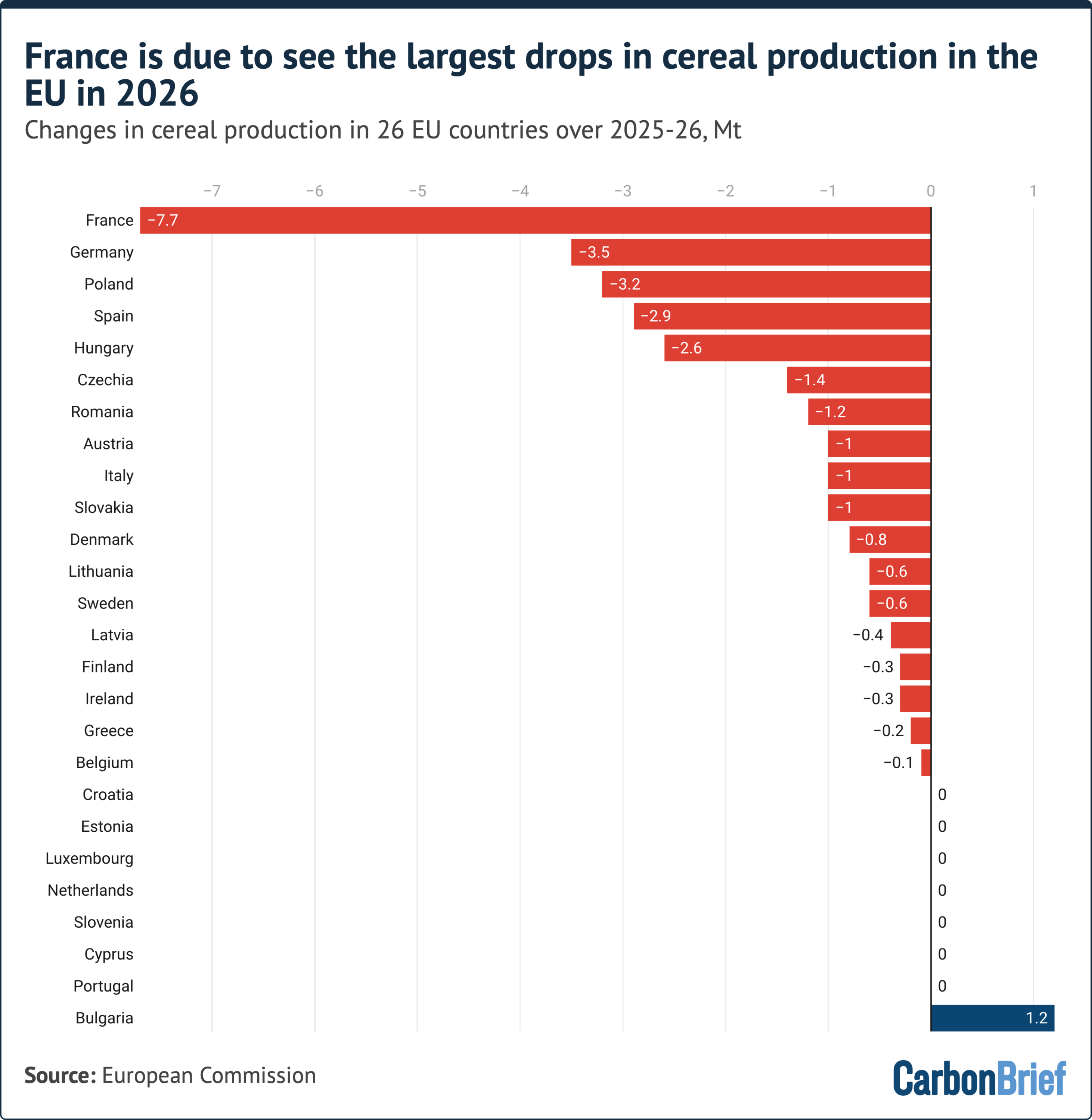
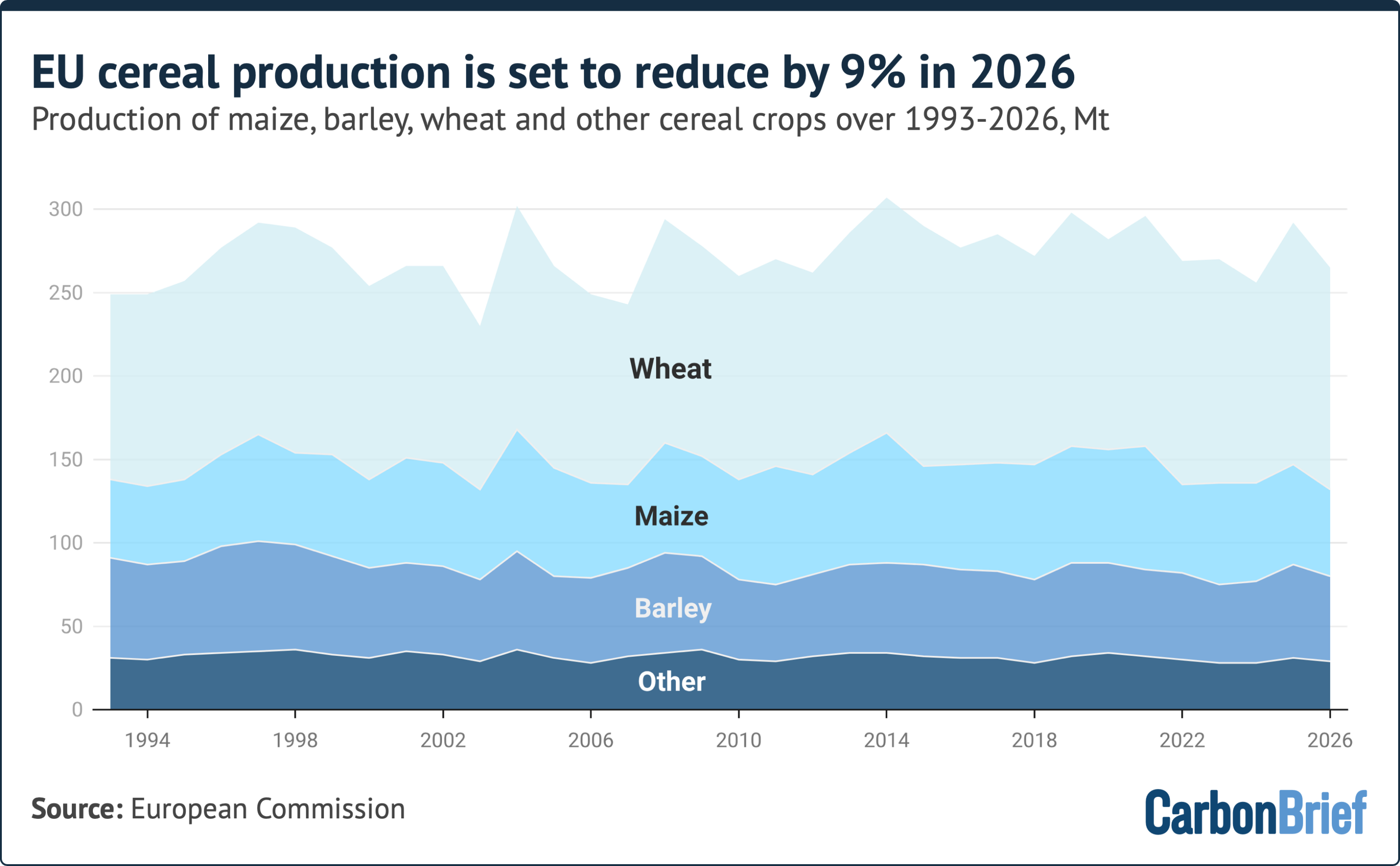
The scale of the production shortfall is evident in the latest projections from the European Commission. France, typically the engine of European cereal production, is anticipated to see output volumes drop by nearly 8 million tonnes (Mt) compared to 2025. This contraction, spanning wheat, barley, and oats, represents a severe blow to the continent’s grain security. Germany, the second-largest producer in the bloc, is facing a decline of approximately 4 Mt.
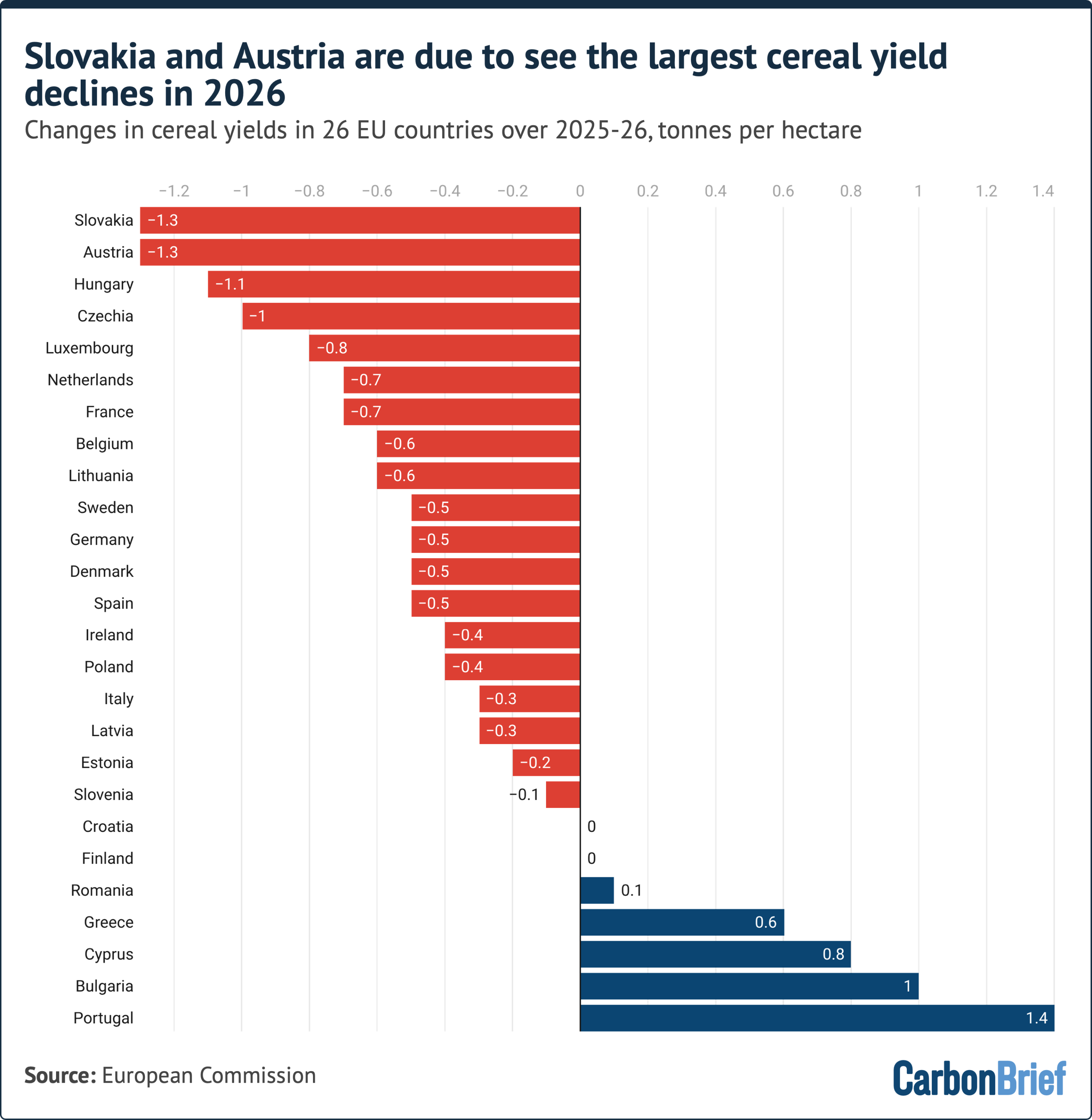
The impact is mirrored in yield efficiency—the metric of tonnes produced per hectare of land. Across the European Union, yield declines are most pronounced in Central and Eastern Europe. Slovakia, Austria, and Hungary are recording losses exceeding one tonne per hectare, a dramatic drop that underscores the severity of the soil moisture deficit. These regions, which serve as vital breadbaskets for the continent, have been unable to sustain traditional crop cycles under the strain of record-high temperatures.
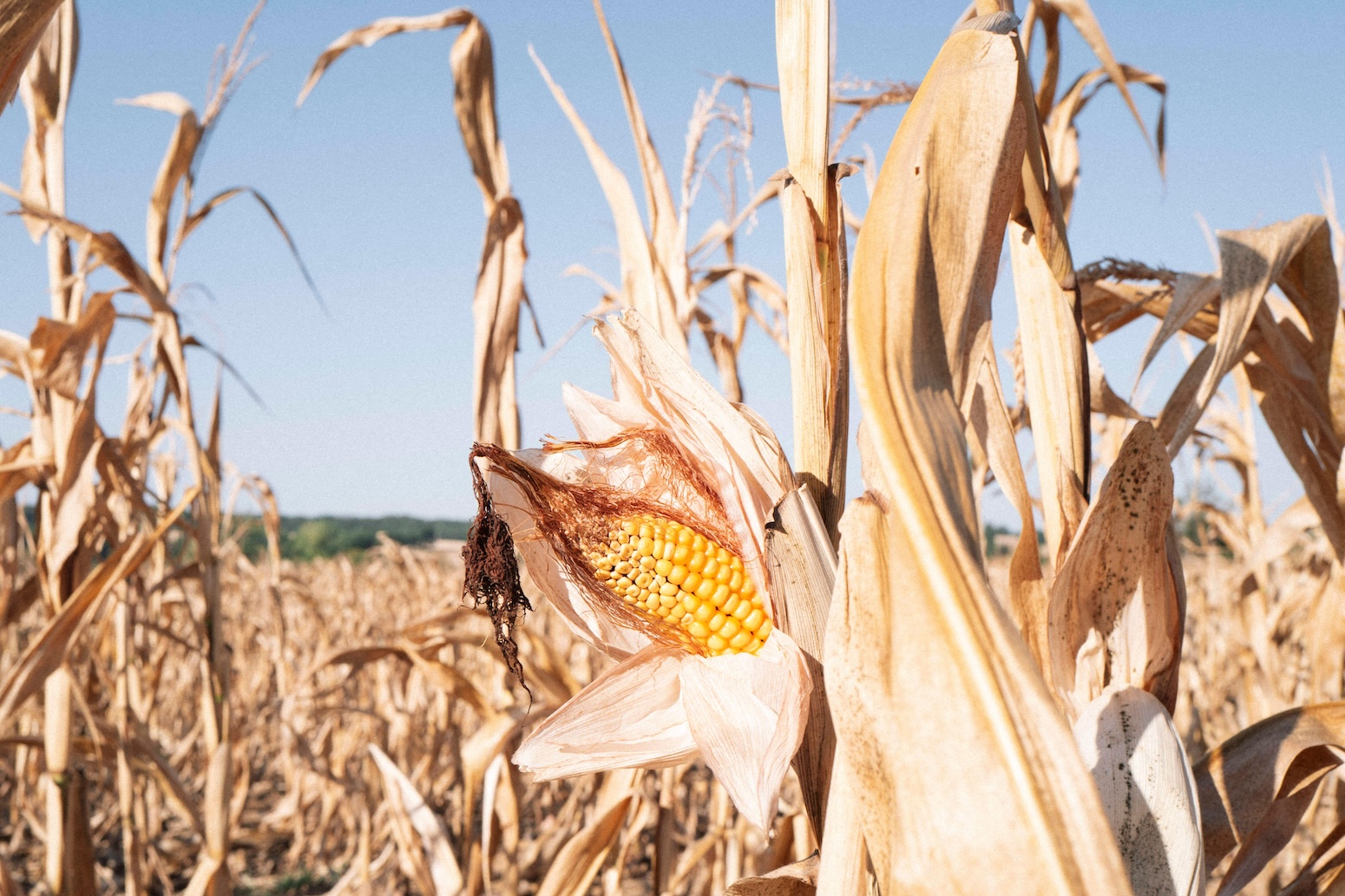
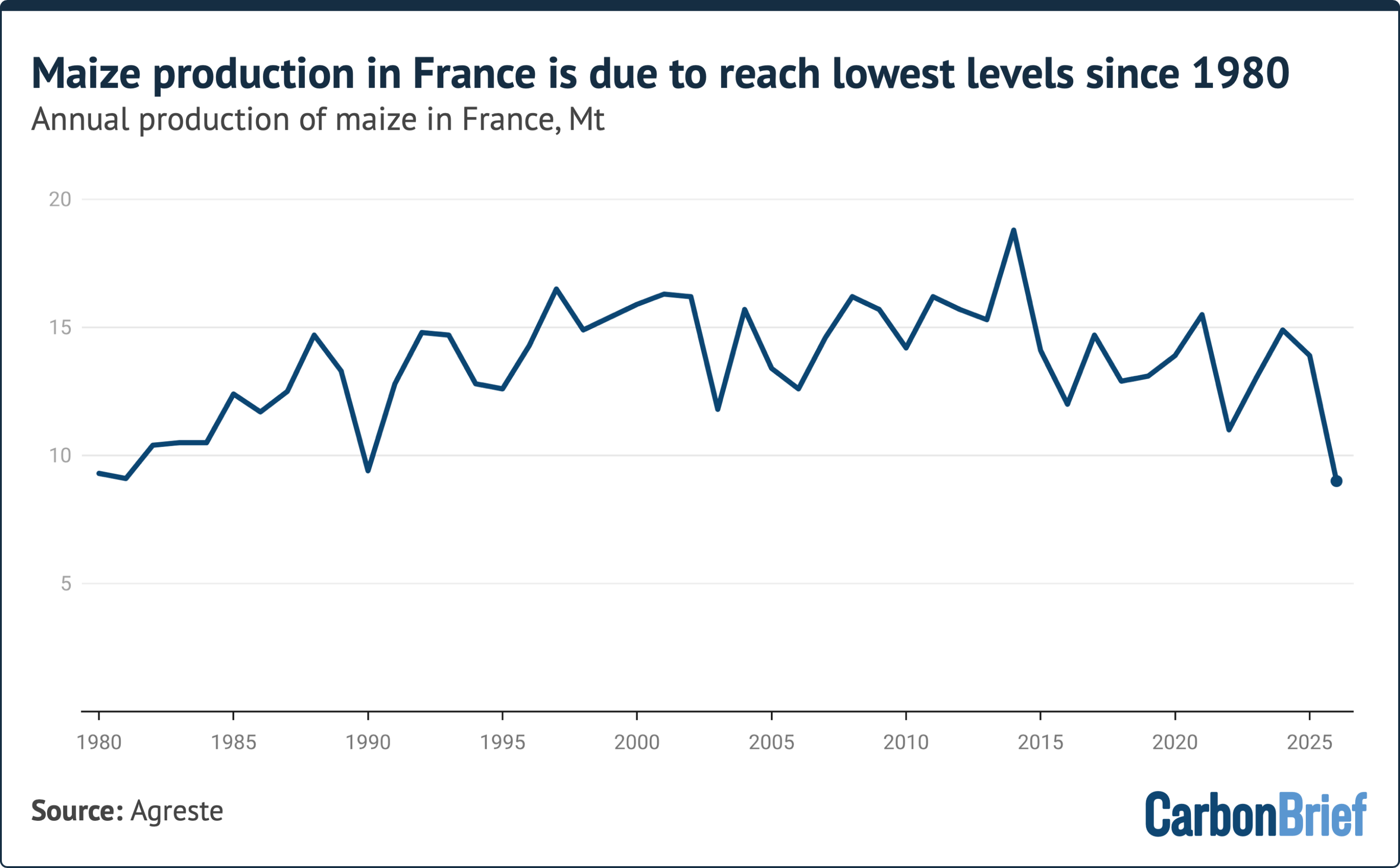
In France, the situation is particularly dire for maize. Agreste, the French agriculture ministry’s statistical service, has indicated that maize production could plummet by more than 35% year-on-year, potentially hitting its lowest level since 1980. This loss is compounded by the "record-early" grape harvest observed across French vineyards. While the harvest began sooner than in any previous year on record, the result has been smaller, less hydrated grapes, creating significant concern for the wine industry regarding both quantity and quality.
Economic Ripples and Financial Consequences
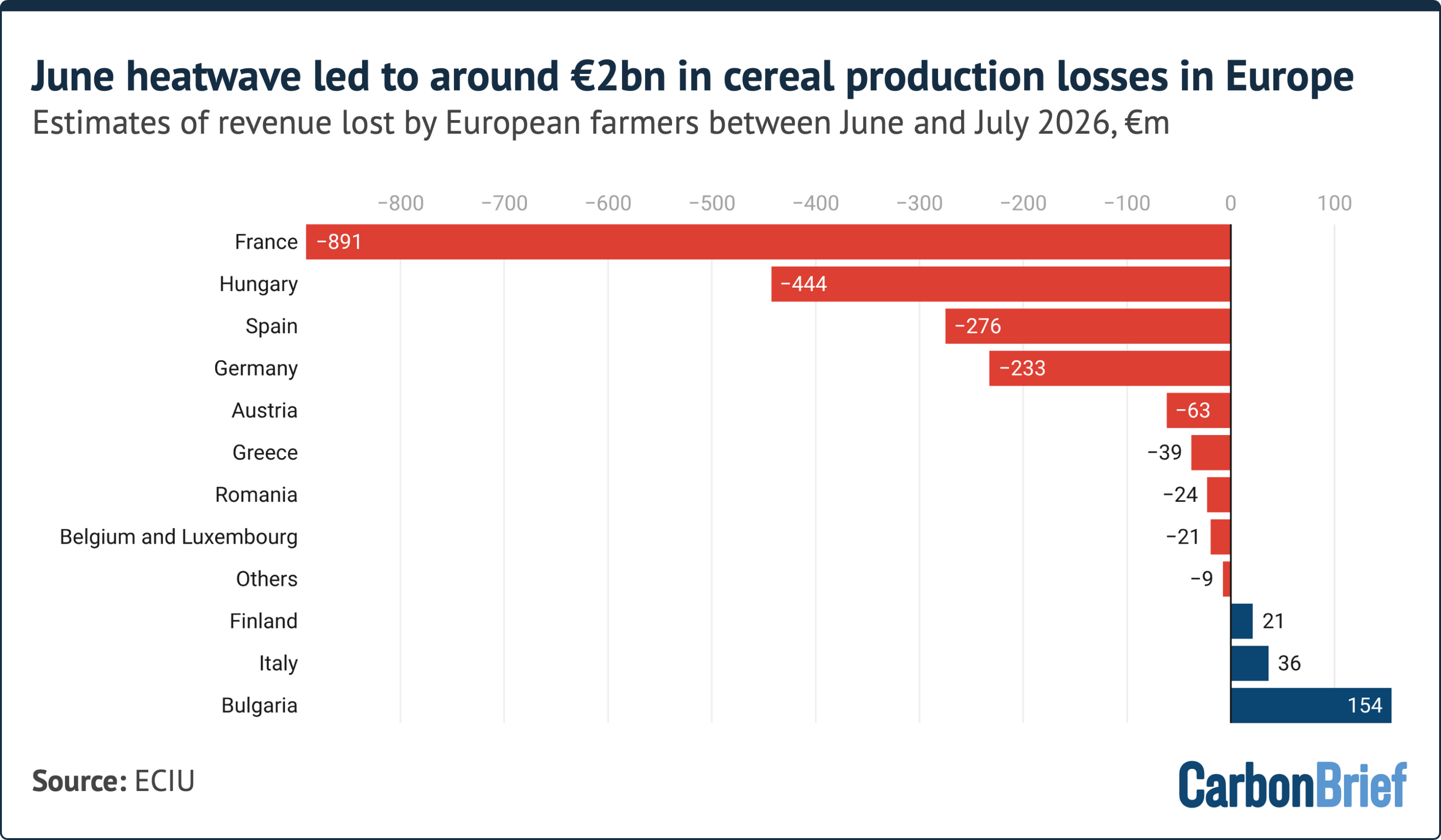
The financial implications of these agricultural losses extend far beyond the farm gate. An analysis by the Energy & Climate Intelligence Unit (ECIU) estimates that the June heatwave alone resulted in between €2 billion and €2.3 billion in cumulative grain production losses. France, Hungary, and Spain were the hardest hit, accounting for 86% of this lost revenue.
Furthermore, the broader economic fallout is being felt across the eurozone. Triodos Bank recently published analysis suggesting that the cumulative impact of this summer’s extreme weather could wipe out approximately 1% of the European Union’s total gross domestic product (GDP) for 2026, equivalent to roughly €180 billion. This figure incorporates not only direct crop losses but also the increased costs of energy, potential food import inflation, and the mitigation costs associated with managing wildfire risk and water scarcity.
The United Kingdom: A Historic Harvest Low
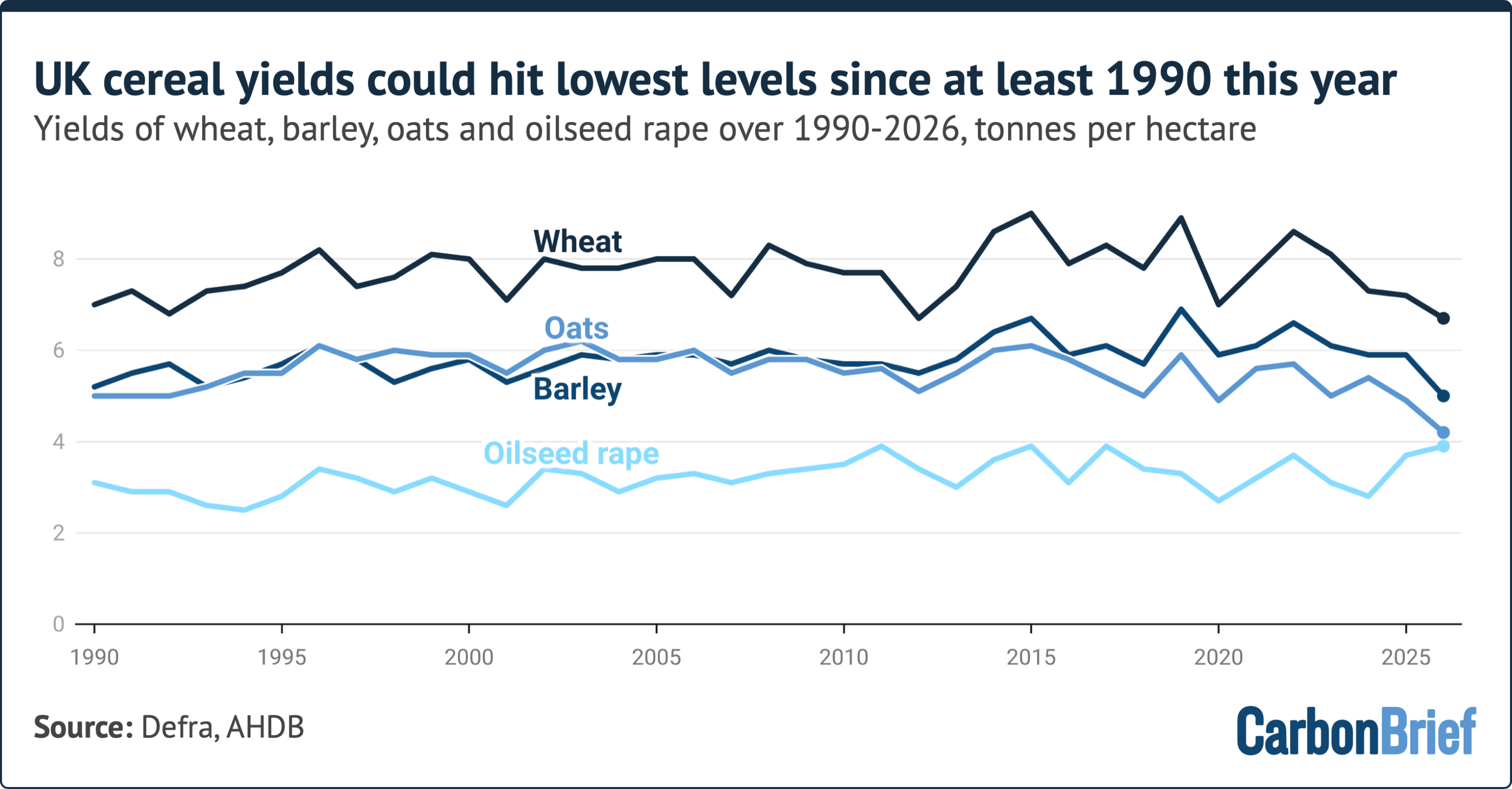
The United Kingdom has not been spared from the continental trend. The Agriculture and Horticulture Development Board (AHDB) and the ECIU have warned that current trends are putting the UK on track for its worst harvest since detailed records began in 1984. Projections show wheat yields potentially falling by 6%, barley by 15%, and oats by 14% year-on-year.
Tim O’Malley, chairman of Nationwide Produce, noted in a recent assessment that consumers should prepare for both higher prices and smaller produce as supermarkets struggle to source consistent supplies. While some specialty crops, such as berries, initially benefited from the heat, experts warn that the plants are becoming "exhausted" from the stress, raising fears of a late-season production collapse.
Official Responses and Long-Term Adaptation
The recurring nature of these crises has forced a shift in the policy discourse regarding agricultural resilience. Prof. Til Feike of the Julius Kühn-Institut emphasizes that the sector is caught in a difficult transition period. "In the long run, farming must adapt better to more extreme weather conditions, not only heat and drought, but also prolonged wet periods," Feike stated. He warned that there is no "one-fits-all" solution, noting that adaptation strategies must be localized, involving advanced irrigation, the adoption of drought-resistant crop varieties, and fundamental changes in land-use planning.
European policymakers are under increasing pressure to integrate climate-resilient farming into the Common Agricultural Policy (CAP). The EU’s recent focus on a "land-use framework" aims to reconcile the competing demands of food production, biodiversity preservation, and climate mitigation. However, critics argue that the current pace of policy reform is insufficient to meet the speed at which climate change is altering the physical environment.
Broader Implications for Global Food Security
The European crisis contributes to a larger, global pattern of agricultural volatility. When major breadbaskets experience simultaneous, climate-driven failures, the pressure on global commodity markets intensifies. As Europe moves toward the autumn, the primary concern for economists is the potential for these supply shocks to feed into a sustained food-price inflation cycle, disproportionately affecting low-income households.
The data provided by the European Commission and independent thinktanks paints a clear picture: the climate is no longer a peripheral factor in agricultural forecasting but the primary driver of production risk. As the continent reflects on the 2026 season, the focus is shifting from reactive disaster management to the structural transformation of European agriculture. Whether these changes can be implemented quickly enough to shield the continent from the increasingly frequent extreme weather events of the coming decade remains the central challenge for the region’s policymakers, farmers, and the broader global food market.
The 2026 summer will likely be remembered as a tipping point—a moment where the statistical probability of extreme heat and the reality of agricultural failure became inextricably linked, leaving behind a legacy of economic loss and an urgent mandate for systemic adaptation.