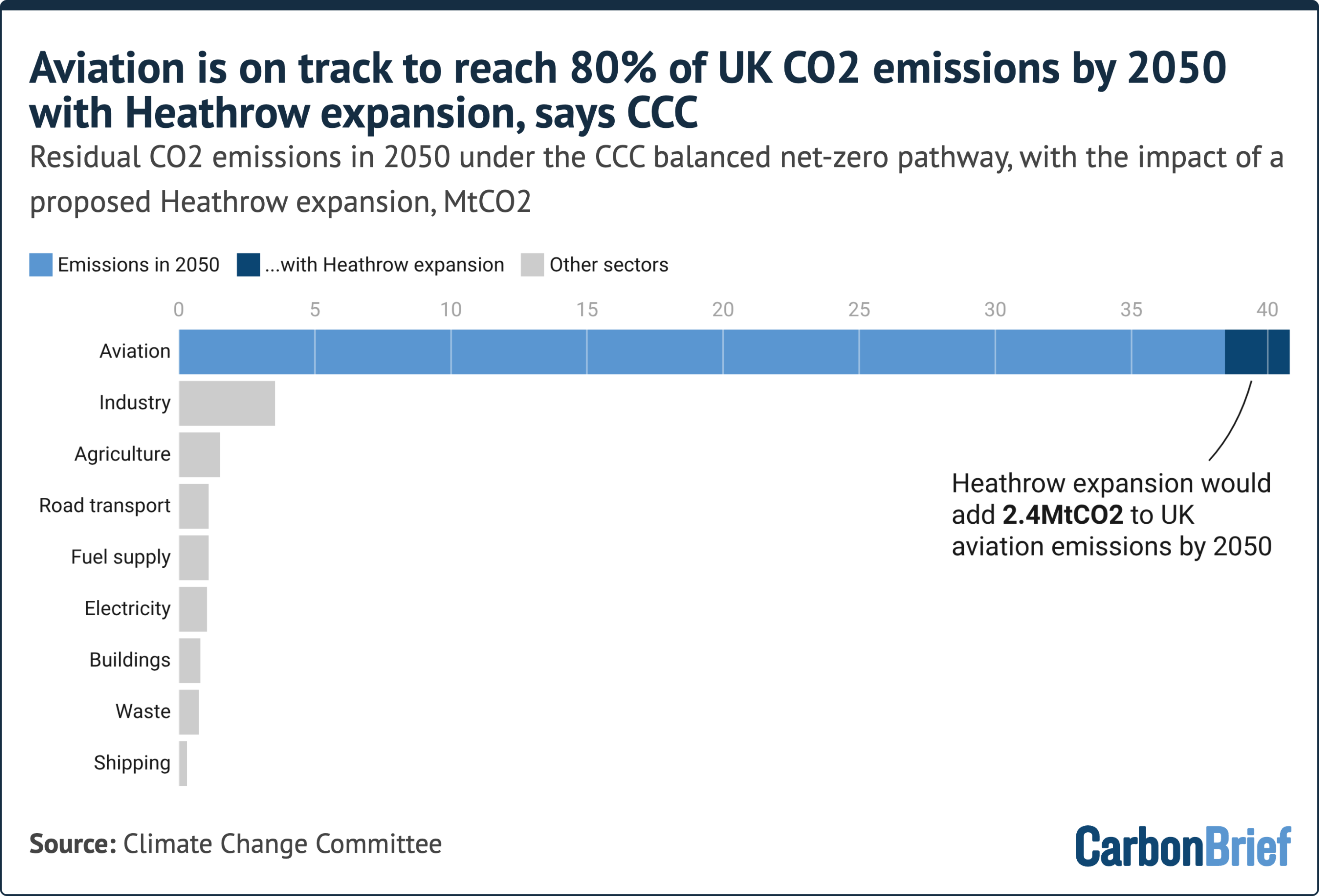
Aviation is on track to be responsible for 80% of the UK’s carbon dioxide emissions by 2050 according to the Climate Change Committee

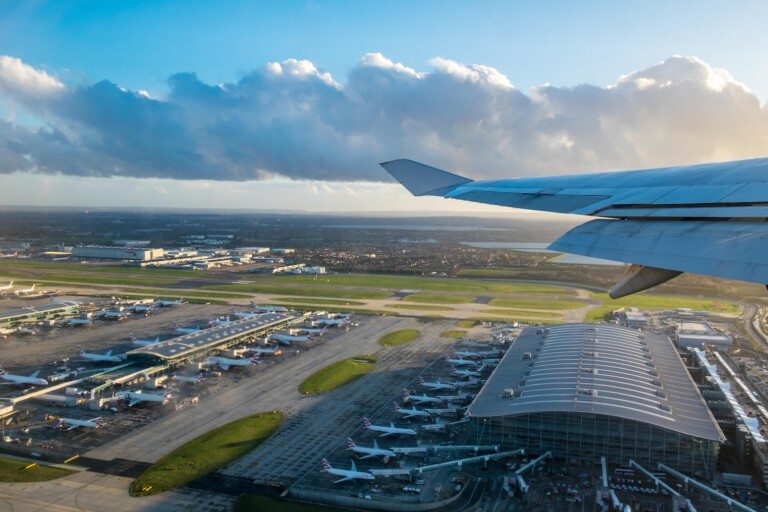
The United Kingdom faces a critical juncture in its pursuit of net-zero emissions, as the aviation sector’s footprint continues to diverge sharply from the rest of the national economy. According to the latest analysis from the Climate Change Committee (CCC), the UK’s independent statutory advisory body, the aviation industry is projected to account for a staggering 80% of all UK CO2 emissions by 2050 if current trends and policy trajectories persist. This trajectory highlights a fundamental friction between the government’s economic expansion plans—specifically the proposed growth of Heathrow Airport—and its legally binding climate commitments.
The Divergent Path of Aviation Emissions
While the UK economy has made significant strides in decarbonizing sectors such as electricity generation, residential heating, and heavy industry, aviation has remained a stubborn outlier. Since 1990, emissions from flying have more than doubled. This rise is primarily attributed to a persistent growth in passenger numbers, which has outpaced any improvements in engine efficiency or fuel technology.
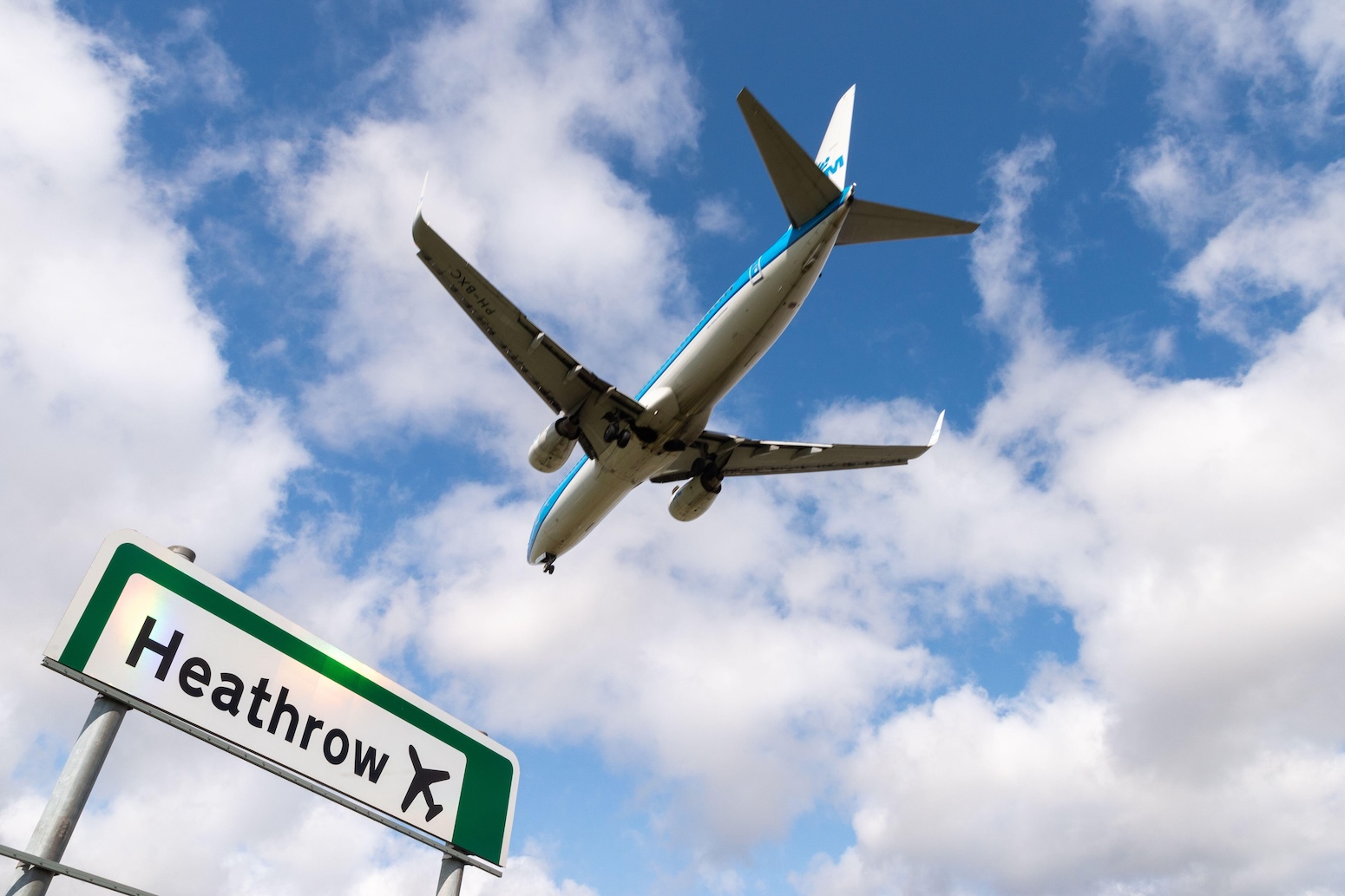
Data from the Civil Aviation Authority (CAA) indicates that UK aviation is currently experiencing record-breaking passenger volumes, even against a backdrop of geopolitical volatility in the Middle East and global economic fluctuations. In contrast, the UK’s total greenhouse gas emissions have fallen by more than 50% since 1990, driven largely by the phase-out of coal-fired power plants. However, the CCC warns that the gains made elsewhere are at risk of being neutralized by the uncontrolled growth of the aviation sector.
Chronology of Policy and Pressure
The current policy environment is defined by a reliance on what critics and environmental analysts term "techno-fixes." The "Jet Zero" strategy, introduced by the Conservative government in 2022, was intended to serve as the roadmap for decarbonizing the sector. However, its assumptions regarding the widespread availability of Sustainable Aviation Fuels (SAFs), the rapid development of electric aircraft, and significant improvements in fuel efficiency have increasingly been viewed as overly optimistic.
The current Labour government has acknowledged that the original expectations of the Jet Zero strategy were unrealistic, admitting in recent reports that aviation emissions could be 50% higher than previously anticipated by mid-century. With a final decision on the Heathrow expansion project expected by 2029, the government requested formal guidance from the CCC on whether the expansion is compatible with the UK’s 2050 net-zero target. The committee’s verdict was unambiguous: the UK lacks a credible policy framework to manage these emissions, and the expansion of the nation’s largest airport would only serve to compound the challenge.
The Mathematics of Net-Zero
The scale of the challenge is reflected in the raw data. Even without the planned Heathrow expansion, the CCC projects that aviation emissions will reach 38 million tonnes of CO2 (MtCO2) by 2050. Because the net-zero goal requires the economy to reach a state where all remaining emissions are balanced by carbon removal, this 38MtCO2 figure represents a significant portion of the total "carbon budget" available to the entire UK economy.
Expanding Heathrow would add an additional 2.4MtCO2 to the national total by 2050, a figure that would rise to 4.5MtCO2 by 2054 once the expanded infrastructure reaches full operational capacity. To meet the legal requirement of net-zero, these emissions would need to be physically removed from the atmosphere. The CCC emphasizes that this is not merely a matter of offsetting; it requires active, engineered removal.
The "Polluter Pays" Principle and Economic Realities
In its advice to the government, the CCC argues that the aviation industry must assume direct responsibility for its emissions. The committee advocates for a rigorous application of the "polluter pays" principle. This approach would necessitate that airlines and the broader aviation sector fund their own decarbonization efforts, including the procurement of SAFs and investment in carbon capture technology.
The committee specifically points to Direct Air Carbon Capture and Storage (DACCS) as a vital, albeit currently nascent, technology. While natural solutions like reforestation are essential for restoring biodiversity and managing methane emissions from livestock, they are insufficient for the scale of permanent carbon removal required to address aviation’s fossil-fuel-based output.
This transition, however, carries clear economic consequences. The CCC estimates that if the costs of carbon removal were internalized by the industry, it would result in a significant increase in ticket prices. By 2050, a return flight to Alicante, Spain, could see a price hike of £150, while a return flight to New York could increase by as much as £400 in 2024 terms. The committee defends this potential rise, noting that it is far more equitable than a public-spending model where the 50% of the UK population who do not fly would effectively subsidize the environmental costs of those who do.
Broader Implications for Government Policy
The government now faces a dilemma: it must reconcile its stated ambition to modernize the UK’s aviation infrastructure with the reality of a tightening global and domestic climate budget. Nigel Topping, the current chair of the CCC, has been vocal about the lack of a "credible plan" currently in place. During a recent briefing, he noted that the sector’s current trajectory is fundamentally incompatible with the UK’s international climate commitments.

A revised aviation strategy is scheduled for publication in 2027. Experts suggest that for this strategy to be considered "robust," it must move beyond aspirational technological targets and toward demand-management policies. This could include a mix of levies, mandatory SAF blending requirements, and potentially a reassessment of airport capacity expansion plans.
The Global Context
The UK’s challenge is mirrored internationally, as countries grapple with the difficulty of decarbonizing "hard-to-abate" sectors. While global fossil-fuel emissions are expected to fluctuate—and in some regions fall—due to geopolitical and economic crises, the aviation sector remains a notable laggard. The pressure on the UK government is amplified by the fact that it has historically positioned itself as a global leader in climate policy. Failure to bring aviation in line with its broader targets could undermine the nation’s credibility on the international stage, particularly as it seeks to influence global climate policy at upcoming COPs.
Furthermore, the economic argument for expansion—the desire to remain a global aviation hub—is being weighed against the potential for stranded assets. If the UK is forced to implement stringent carbon pricing or demand-management measures in the 2030s to meet its legal targets, the infrastructure built during the 2020s could become less economically viable than originally projected.
Conclusion: A Critical Crossroads
The path forward, as outlined by the CCC, requires a fundamental shift in how the UK approaches aviation policy. The government is essentially being asked to choose between an expansion-led model that relies on future, unproven technologies and a sustainability-led model that acknowledges the environmental constraints of the coming decades.
As the 2029 deadline for the Heathrow decision approaches, the discourse will likely intensify. The aviation industry, while acknowledging the need for change, will continue to argue for the economic benefits of connectivity and growth. However, the scientific and policy consensus provided by the CCC makes it clear that without a radical departure from the current policy trajectory, the UK’s goal of net-zero by 2050 will remain mathematically impossible. The coming years will be a test of political will, as the government determines whether it can align the growth of the skies with the limits of the planet.