Global Hunger Declines Slightly But Severe Regional Disparities Persist According to New UN Report

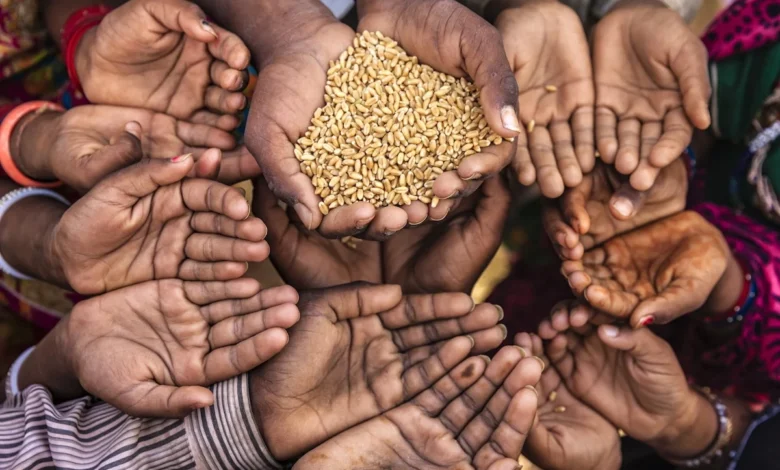
The latest edition of The State of Food Security and Nutrition in the World (SOFI) 2025, a comprehensive annual assessment published by five specialized United Nations agencies, indicates that global hunger rates experienced a marginal decline over the past year. Despite this incremental improvement, the data underscores a deeply bifurcated reality: while millions have emerged from the shadow of chronic undernourishment in parts of Asia and Latin America, the crisis is intensifying across the African continent and western Asia.
According to the report, which was released Monday by the Food and Agriculture Organization of the United Nations (FAO), approximately 673 million people suffered from hunger in 2024. This figure represents roughly 8.2 percent of the global population, a decrease from the 8.7 percent recorded in 2022 and 8.5 percent in 2023. While the trend line suggests a slow recovery from the disruptions of the early 2020s, the absolute number of people facing food insecurity remains alarmingly high, far off-track from the United Nations’ Sustainable Development Goal (SDG) 2, which aims for Zero Hunger by 2030.
A Chronology of Global Food Instability
The global food landscape has been defined by extreme volatility since the onset of the COVID-19 pandemic in 2020. The current crisis is the culmination of a "polycrisis"—a convergence of economic, geopolitical, and environmental factors that have systematically undermined global food systems.
In 2020, the onset of the pandemic triggered supply chain disruptions, lockdowns, and income losses that saw global hunger numbers spike significantly. By 2021, as the world attempted to navigate the economic fallout, food price inflation began to accelerate, driven by stimulus-heavy policy responses and shifts in global demand. This was exacerbated in 2022 by the Russian invasion of Ukraine, a conflict that crippled the export capacity of two of the world’s largest grain and fertilizer producers, causing global food prices to reach historic highs.
Throughout 2023, extreme weather events—including recurring droughts in the Horn of Africa and unpredictable flooding in parts of Asia—further compressed agricultural yields. By 2024, the data shows a stabilization in some markets, but the lingering effects of high inflation continue to trap millions of people in low-income nations in a cycle of poverty and malnutrition.
Regional Divergences and Data Analysis
The SOFI 2025 report highlights a significant, if uneven, recovery in major developing regions. In Asia, the proportion of the undernourished population fell to 6.7 percent in 2024, down from 7.9 percent in 2022. Latin America and the Caribbean have also shown resilience, with undernourishment rates dropping to 5.1 percent, or 34 million people, representing a notable improvement from the 2020 peak of 6.1 percent.
However, these gains are eclipsed by the worsening situation in Africa and western Asia. In Africa, the prevalence of hunger has now surpassed 20 percent of the total population, affecting 307 million people. This is not merely a statistical shift; it represents a humanitarian crisis that threatens the long-term stability of the region. Western Asia faces a similarly grim trajectory, with an estimated 12.7 percent of its population—approximately 39 million people—facing hunger.
The report also provides a sobering look at "moderate or severe food insecurity," a metric that tracks individuals who lack consistent access to nutritious food. While this figure fell to 2.3 billion people (28 percent) in 2024 from 28.4 percent the previous year, the absolute number of people living in uncertainty remains a massive barrier to human development.
The Economic Burden of a Healthy Diet
Perhaps the most distressing finding in the 2025 report is the widening gap in the affordability of a healthy diet. Globally, the number of people unable to afford a nutritious, diverse diet fell to 2.6 billion last year, down from 2.76 billion in 2019. However, this global aggregate masks a devastating trend in the world’s poorest nations.

In low-income countries, the number of individuals unable to afford a healthy diet rose to 545 million in 2024, an increase of 81 million from just five years prior. In lower-middle-income countries—excluding India—this figure increased by 78 million, reaching 869 million. This suggests that while middle-income nations have begun to stabilize, the poorest populations are experiencing a worsening of their economic status, driven by inflation that disproportionately affects the cost of essential staples.
FAO data confirms this disparity: while global food price inflation peaked at 13.6 percent in early 2023, it reached an staggering 30 percent in low-income countries in May of that same year.
Official Responses and Institutional Perspectives
The leadership of the five UN agencies responsible for the report—FAO, the International Fund for Agricultural Development (IFAD), the UN World Food Programme (WFP), UNICEF, and the World Health Organization (WHO)—issued a unified call for structural reform.
FAO Director-General QU Dongyu emphasized that while the global decrease in hunger is "encouraging," the progress is far too fragile. "We must recognize that progress is uneven," Qu stated. "We need to intensify efforts to ensure that everyone has access to sufficient, safe, and nutritious food through collaborative and innovative partnerships between governments and the private sector."
IFAD President Alvaro Lario underscored the importance of investment as a tool for geopolitical stability. "In times of rising food prices and disrupted global value chains, we must step up our investments in rural and agricultural transformation," Lario said. He argued that these investments are not merely humanitarian but are essential to building the resilient infrastructure required to withstand future market shocks.
UNICEF Executive Director Catherine Russell highlighted the long-term consequences of the crisis for the next generation, noting that over 190 million children under the age of five are currently suffering from undernutrition. "This robs them of the chance to live to their fullest potential," Russell stated, urging a focus on social protection programs and the promotion of local, nutritious food sources.
Broader Implications for Global Stability
The data suggests that the world is currently off-course to meet the 2030 Zero Hunger goal. Projections indicate that 512 million people could remain chronically undernourished by 2030, with nearly 60 percent of those individuals residing in Africa.
The implications of this trajectory are profound. Persistent food insecurity is a primary driver of civil unrest, migration, and political instability. When food prices rise beyond the reach of the average worker, the resulting social pressure often leads to the degradation of local governance and the erosion of health outcomes, particularly among women and children.
To reverse these trends, the report calls for a multi-pronged policy response. This includes the implementation of transparent monetary policies to curb inflation, the introduction of time-bound fiscal measures to support the most vulnerable households, and a massive scale-up in agricultural research and development. Furthermore, the report stresses the importance of strengthening market information systems to prevent the types of supply chain bottlenecks that defined the 2021–2023 period.
As the international community looks toward the remainder of the decade, the findings of the SOFI 2025 report serve as both a warning and a roadmap. Without a significant, coordinated shift in how food is produced, distributed, and subsidized, the gains made in the last year may prove to be fleeting, leaving the world’s most vulnerable populations at the mercy of an increasingly volatile global climate and economy.