The Mystery of Supplement Labels: Understanding FDA Registration, GMP Standards, and Third-Party Testing for Informed Daily Wellness Choices


The global dietary supplement market has experienced an unprecedented surge over the last decade, with industry analysts projecting its valuation to exceed $200 billion by 2030. As millions of consumers integrate vitamins, minerals, and botanical extracts like mushroom coffee into their morning routines, the complexity of product labeling has become a focal point of public health discourse. Terms such as "FDA-registered," "GMP-certified," and "third-party tested" are frequently brandished as badges of quality, yet for the average consumer, these phrases often obscure more than they reveal. Understanding the nuances of these regulatory and voluntary standards is no longer just a matter of curiosity; it is a fundamental requirement for making safe and effective wellness choices in an increasingly crowded marketplace.
A central point of confusion in the supplement industry stems from the legal framework established by the Dietary Supplement Health and Education Act of 1994 (DSHEA). Under this federal law, the U.S. Food and Drug Administration (FDA) does not have the authority to approve dietary supplements for safety and effectiveness before they are marketed. Instead, the responsibility for ensuring a product is safe falls primarily on the manufacturer. This regulatory gap has led to a reliance on various quality indicators that consumers must decode for themselves.
The Reality of FDA Registration and Facility Compliance
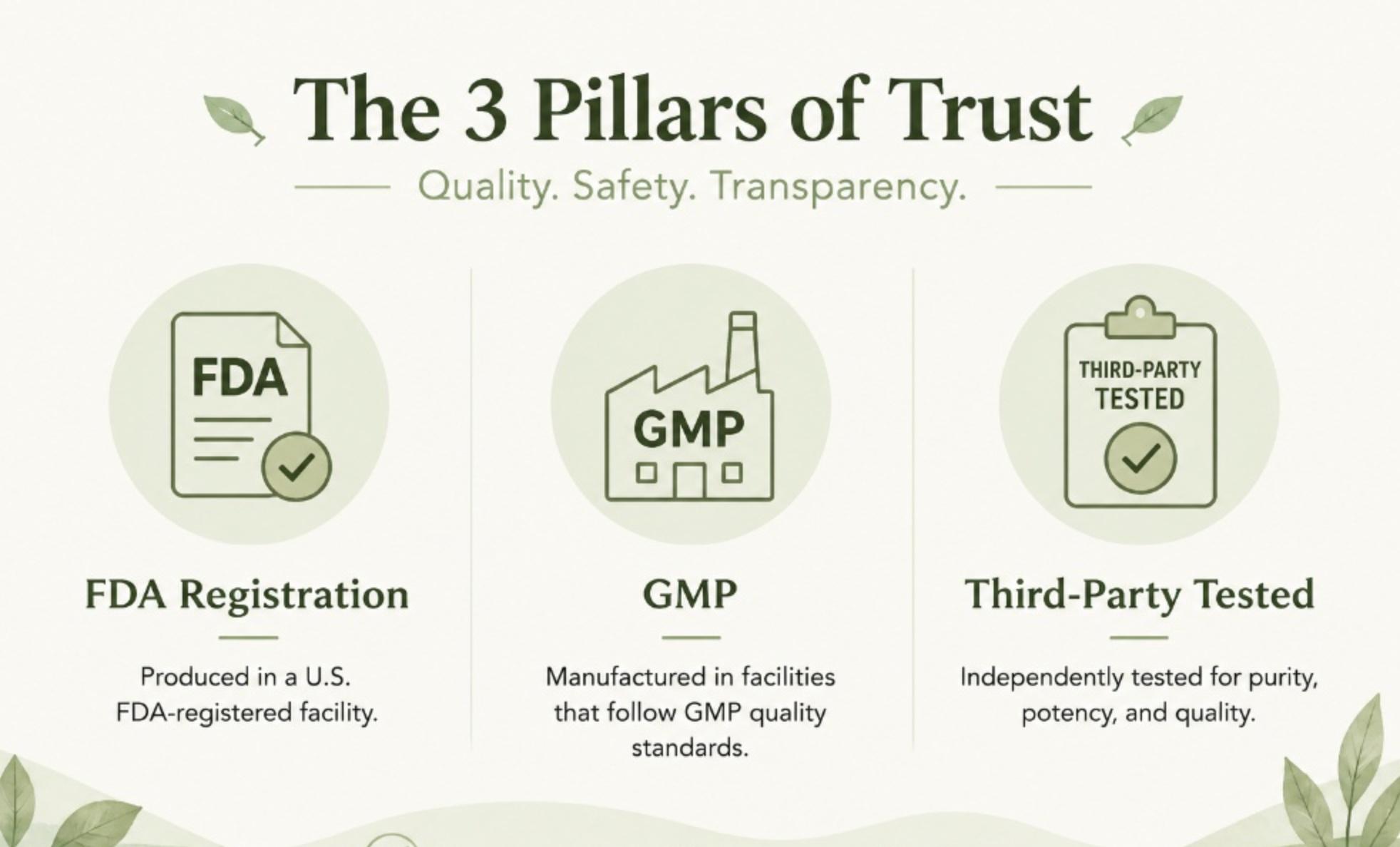
Perhaps the most common misconception among wellness enthusiasts is that an "FDA-registered" product has been vetted or endorsed by the federal government. In reality, FDA registration is a mandatory requirement for facilities that manufacture, process, pack, or hold food and supplements intended for consumption in the United States. This requirement was significantly strengthened by the Public Health Security and Bioterrorism Preparedness and Response Act of 2002.
When a brand like Nature Echo states that its products are produced in an FDA-registered facility, it indicates that the manufacturing plant has provided the agency with its location and a list of the food categories it handles. It does not mean that the FDA has tested the specific mushroom coffee formula, verified the 300 mg of ashwagandha listed on the label, or confirmed the efficacy of the 11-mushroom blend. Registration allows the FDA to know where products are made so they can conduct inspections, but it is not an "approval" of the finished goods.

Good Manufacturing Practices (GMP): The Blueprint for Consistency
While FDA registration identifies the "where," Good Manufacturing Practices (GMP) define the "how." In the United States, the FDA’s Current Good Manufacturing Practice (cGMP) regulations for dietary supplements are found in 21 CFR Part 111. These regulations are designed to ensure that products are manufactured consistently and meet specific quality standards.
GMP standards cover every aspect of the production process, from the sourcing of raw materials to the cleanliness of the equipment and the training of employees. A GMP-certified facility must implement rigorous systems to prevent contamination, minimize errors, and ensure that what is on the label is actually in the bottle. For instance, if a batch of mushroom coffee is produced under GMP standards, there should be a documented "paper trail" or electronic record showing that the 2,000 mg mushroom blend was measured accurately and that the facility was sanitized between production runs to prevent cross-contamination.
However, it is important to note that the FDA does not issue "GMP Certificates." These certificates are typically granted by private, third-party auditing organizations—such as NSF International or UL—that visit facilities to verify compliance with the FDA’s cGMP regulations.
The Role of Third-Party Testing in Consumer Safety
Because the FDA does not routinely test supplements before they reach store shelves, third-party testing has emerged as the gold standard for transparency. This process involves a manufacturer sending its finished products to an independent laboratory that has no financial stake in the brand’s success.
These laboratories screen for several critical factors:

- Identity: Does the product actually contain the ingredients listed (e.g., Lion’s Mane or Reishi)?
- Purity: Is the product free from harmful levels of contaminants such as lead, mercury, arsenic, or mold?
- Potency: Does the product contain the exact amount of the active ingredient promised on the label?
For a consumer evaluating a product like Nature Echo Mushroom Coffee, third-party testing provides an extra layer of assurance that the "11-in-1" mushroom profile is accurate and free from the heavy metals that can sometimes accumulate in fungi grown in suboptimal conditions.
Case Study: Analyzing the Label of Nature Echo Mushroom Coffee
To see these principles in action, one can look at the emerging category of mushroom-infused beverages. Nature Echo Mushroom Coffee serves as a relevant example of how a brand presents these quality pillars to the public. The product contains a total mushroom blend of 2,000 mg and 300 mg of ashwagandha per serving, priced at approximately $0.67 per cup.
In this instance, the brand discloses that its formula includes 11 different mushroom species and FOS prebiotic fiber. For the informed consumer, the value lies in the transparency of the dosage. Many "proprietary blends" in the supplement world hide the exact amounts of each ingredient, making it impossible to know if there is enough of a substance to provide a therapeutic benefit. By disclosing a 6g total formula weight and specific milligram counts for key ingredients, the brand allows consumers to compare the product against scientific research on ashwagandha or mushroom extracts.
The Critical Importance of the Certificate of Analysis (COA)
For those who wish to go beyond the marketing claims on a box, the Certificate of Analysis (COA) is the ultimate verification tool. A COA is a document issued by a laboratory that confirms a specific batch of a product has met its specifications. It typically includes the results of tests for moisture content, heavy metals, and microbial limits.
Industry experts recommend that consumers ask brands for a COA, especially when purchasing botanical products like mushroom coffee or herbal extracts. A brand’s willingness to provide this documentation is often a clear indicator of its commitment to quality. If a company refuses to share its testing data or claims it is "proprietary information," it may be a red flag for the consumer.
A Chronology of Supplement Regulation in the United States
The current state of supplement labeling is the result of over a century of legislative evolution:
- 1906: The Pure Food and Drug Act is passed, prohibiting the interstate transport of "adulterated" or "misbranded" food and drugs.
- 1938: The Federal Food, Drug, and Cosmetic Act (FD&C Act) gives the FDA more authority over food and drug safety.
- 1994: DSHEA is enacted, creating the current framework where supplements are treated more like food than drugs, shifting the burden of proof for safety away from the government.
- 2007: The FDA issues the final rule on cGMPs for dietary supplements, requiring all companies to follow standardized manufacturing procedures.
- 2011: The Food Safety Modernization Act (FSMA) is signed into law, giving the FDA more power to recall contaminated food and supplements.
Broader Impact and Implications for Public Health
The shift toward higher transparency in the supplement industry is largely driven by a more educated consumer base. As wellness becomes a multi-trillion-dollar global industry, the "wellness-literate" consumer is looking past aesthetic packaging and toward verifiable data.
The implications of these standards extend beyond individual health. When brands adhere to GMP and third-party testing, it stabilizes the industry by reducing the frequency of product recalls and adverse event reports. It also forces a competitive environment where quality, rather than just marketing budget, determines market share. For products like Nature Echo, which utilize adaptogens like ashwagandha—an herb with thousands of years of use in Ayurvedic medicine—adhering to modern manufacturing standards bridges the gap between ancient tradition and contemporary safety requirements.
Practical Steps for the Modern Consumer
As the wellness landscape continues to evolve, health-conscious individuals are encouraged to adopt a "verify, then trust" approach. To make the most of a daily routine involving supplements or functional foods, experts suggest following a simple checklist:
- Verify the Facility: Confirm the brand uses an FDA-registered and GMP-compliant facility.
- Demand Testing: Look for "Third-Party Tested" claims and ask for a COA for the current batch.
- Analyze the Blend: Avoid products that use "proprietary blends" to hide low dosages of expensive ingredients.
- Consult Professionals: Always discuss new supplements with a healthcare provider, as ingredients like ashwagandha or specific mushroom species can interact with prescription medications.
In conclusion, while the terminology of the supplement aisle can be daunting, it represents a vital framework for safety and quality. By understanding that FDA registration is a baseline for facilities, GMP is a standard for consistency, and third-party testing is a verification of purity, consumers can navigate the market with confidence. Brands that prioritize this level of disclosure, such as Nature Echo, provide a template for the transparency that is becoming the new standard in the daily wellness routine.