International Court of Justice Declares Healthy Environment a Human Right and Defines State Obligations in Landmark Climate Ruling

In a decision that fundamentally reshapes the landscape of international law and environmental advocacy, the International Court of Justice (ICJ) issued a historic advisory opinion on Wednesday, July 23, 2025. The United Nations’ highest judicial body formally declared that the right to a "clean, healthy, and sustainable environment" is an integral human right. This landmark ruling marks the first time the world’s "World Court" has explicitly linked the preservation of the Earth’s climate system to the fundamental legal protections afforded to all human beings, effectively establishing a new legal standard for state accountability in the face of the escalating climate crisis.
Presiding over the court at The Hague, ICJ President Yuji Iwasawa delivered the opinion, emphasizing that the existential threat posed by climate change is no longer a matter of mere scientific debate but a legal reality with "severe and far-reaching" consequences. The ruling clarifies that UN member states are under a legal obligation to protect the global climate system from the harmful effects of greenhouse gas (GHG) emissions. Crucially, the court outlined that failure to meet these obligations could result in significant legal consequences, including the requirement to provide full reparations to affected nations and offer guarantees that such environmental negligence will not be repeated.
A Legal Turning Point for Climate Justice
The ICJ’s opinion is the culmination of years of diplomatic maneuvering and grassroots activism led by some of the world’s most climate-vulnerable nations. By grounding its decision in existing international frameworks—such as the Kyoto Protocol, the Biodiversity Convention, and the Paris Agreement—the court bridged the gap between voluntary environmental pledges and enforceable human rights obligations. The judges reasoned that because a stable environment is a "precondition for the enjoyment of many human rights," including the rights to life, health, food, and water, states are legally bound to address climate change under the UN’s Universal Declaration of Human Rights.
The court further specified that nations must act with "due diligence and cooperation" to curb emissions. This standard of due diligence implies that states cannot simply set targets; they must implement effective, science-based policies to achieve them. If a state’s failure to act results in cross-border environmental harm, that state incurs "legal responsibility" under international law. This aspect of the ruling is particularly significant for developing nations that have contributed the least to global warming but suffer the most from its impacts, such as rising sea levels, intensified storm surges, and prolonged droughts.
The Genesis of the Case: From Vanuatu to The Hague
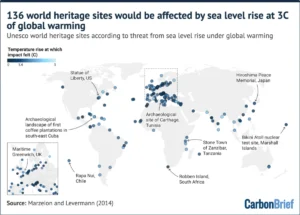
The journey to this historic ruling began in 2021 in the Pacific Island nation of Vanuatu. Facing the direct threat of total land loss due to rising sea levels, the Vanuatu government announced its intention to seek an ICJ advisory opinion. The initiative was largely inspired and driven by the Pacific Island Students Fighting Climate Change (PISFCC), a youth-led organization that argued that the legal ambiguity surrounding climate obligations was a barrier to global action.
Vanuatu’s diplomatic mission was an uphill battle. The nation spent nearly two years lobbying other UN member states to support a resolution in the General Assembly. In March 2023, the assembly successfully adopted a resolution by consensus, formally requesting the ICJ to answer two critical questions:
- What are the obligations of States under international law to ensure the protection of the environment from greenhouse gas emissions?
- What are the legal consequences for states that, through their acts or omissions, cause significant harm to the environment and the climate system?
The scale of the resulting proceedings was unprecedented. A record 97 member states participated in oral hearings at The Hague, with 91 countries submitting written statements. This level of participation reflects the global gravity of the issue, as both the world’s largest emitters and its most vulnerable populations sought to influence the court’s interpretation of international law.
Chronology of the Climate Litigation Movement
The ICJ ruling does not exist in a vacuum; it is the peak of a decades-long timeline of legal and environmental milestones:

- 1992: The UN Framework Convention on Climate Change (UNFCCC) is adopted, establishing the first global framework for climate cooperation.
- 2015: The Paris Agreement is signed, with nations committing to limit global warming to well below 2 degrees Celsius.
- 2021: Vanuatu announces its intent to seek an ICJ advisory opinion, supported by youth activists.
- March 2023: The UN General Assembly adopts the resolution requesting the ICJ’s opinion.
- December 2024: Two weeks of intense oral hearings take place at The Hague, featuring testimonies from 97 nations and various international organizations.
- July 2025: The ICJ delivers its final advisory opinion, linking environmental health to human rights and defining state liability.
Scientific and Data-Driven Context
The court’s decision arrives at a time of record-breaking environmental distress. According to data from the Copernicus Climate Change Service and the World Meteorological Organization (WMO), global average temperatures have consistently hovered near or above the 1.5-degree Celsius threshold established in the Paris Agreement. In 2024, atmospheric carbon dioxide concentrations reached a record high of 425 parts per million (ppm), a level not seen in millions of years.
Furthermore, the economic toll of climate-related disasters has skyrocketed. The World Bank estimates that climate change could push an additional 132 million people into extreme poverty by 2030. For nations like Vanuatu, where the highest point of many islands is only a few meters above sea level, the data represents an existential crisis. The ICJ noted these scientific realities, asserting that the "urgent and existential threat" of climate change necessitates a shift from discretionary policy to mandatory legal obligation.
Global Reactions and Political Friction
The reaction to the ruling has been divided along predictable geopolitical lines. For vulnerable nations, the decision is a monumental victory. Jotham Napat, the Prime Minister of Vanuatu, hailed the ruling as a "turning point in the fight for climate justice." He noted that the process has "elevated the voices of climate-vulnerable nations" and provided a legal foundation upon which future accountability can be built.
Environmental and humanitarian organizations also lauded the decision. A spokesperson for Oxfam’s news team stated that the ruling provides a "vital tool" for holding wealthy, high-emitting nations accountable for the damage they have caused to the global south.
However, the proceedings also highlighted deep-seated tensions. During the December hearings, representatives from several of the world’s top greenhouse gas emitters argued against the expansion of legal liability. These nations contended that their climate obligations are limited to the voluntary commitments made under the Paris Agreement and that the ICJ should not impose "retroactive" responsibility for historical emissions. The court’s final ruling, which asserts that breaching environmental obligations incurs "legal responsibility," directly challenges this defensive stance.
Analysis of Implications and Future Litigation
While an ICJ advisory opinion is not "legally binding" in the same sense as a domestic court order or a specific treaty enforcement, its impact is profound. In the realm of international law, an ICJ opinion carries immense moral and legal weight. It serves as an authoritative interpretation of law that influences the decisions of national courts, regional human rights tribunals, and future international negotiations.
The implications of this ruling are expected to manifest in several ways:
- Domestic Litigation: Activists and citizens may use the ICJ’s definition of a "healthy environment as a human right" to sue their own governments in domestic courts for failing to enact strict climate policies.
- Reparations and Climate Finance: The court’s mention of "full reparations" lends legal support to the "Loss and Damage" fund established at COP27. It provides a legal basis for demanding that high-emitters provide financial compensation to nations suffering from climate-induced destruction.
- Corporate Accountability: While the ICJ governs states, its findings often trickle down to corporate law. Companies may face increased litigation risks if their operations are found to be in violation of the "due diligence" standards now expected of the states in which they operate.
- Strengthening Treaties: Future UN climate summits (COPs) will likely see renewed pressure to transform the voluntary goals of the Paris Agreement into mandatory requirements, cited directly from the ICJ’s opinion.
By elevating the environment to the status of a fundamental human right, the International Court of Justice has effectively signaled that the era of viewing climate action as an optional policy choice is over. The ruling establishes a clear legal mandate: protecting the planet is no longer just a matter of environmental stewardship; it is a matter of upholding the basic rights and dignity of every human being on Earth. As the world moves forward, this advisory opinion will serve as the North Star for climate litigation and policy for decades to come.